The Treasury–Iran oil moment: a deal dressed as a leak
A Rubio rope-line clip is doing the work of a Treasury announcement. Two Telegram channels read it opposite ways, and the Iranian oil market is now pricing the gap between them.
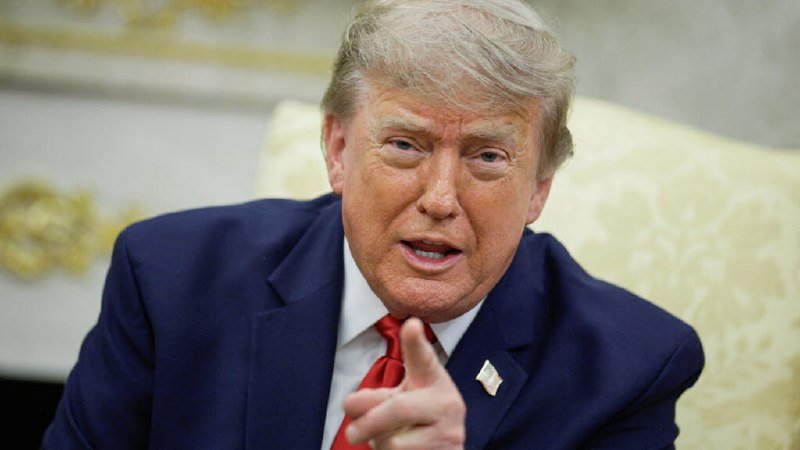
A rope-line exchange between Marco Rubio and a State Department reporter on the afternoon of 22 June 2026 has become the seed of a much larger story about American oil money, Iranian crude, and a sanctions architecture that is now visibly outrunning its enforcers. The pool clip, picked up within hours by Telegram monitors tracking U.S. policy toward Iran, captured the Secretary of State declining to characterise a specific transaction but conceding, in essence, that the Treasury Department's tolerance for Iranian barrels had shifted in a way the public had not been told. By Tuesday evening, the clip had been re-cut, subtitled, and forwarded into the same channels that trade in tanker tracking data and OFAC chatter. The administration has offered no formal read-out.
The exchange matters because it sits on top of a real structural change. Iranian crude is again moving through Gulf of Oman loaders, Chinese refineries are discounting barrels that a year ago were effectively untouchable, and a Treasury licensing regime that once treated any post-sanctions uplift as contraband is now visibly case-by-case. A leak about a deal, or a deal dressed as a leak, lands differently in that environment than it would have in 2020, when the simple fact of an Iranian export was the story.
What the clip actually says
Read closely, the Rubio exchange is narrower than the Telegram cut suggests. The Secretary did not announce a licence, did not name a counterparty, and did not concede that any specific shipment had cleared U.S. sanctions enforcement. He was asked, in effect, whether Treasury had quietly widened the aperture for Iranian oil, and he answered in the language of diplomatic reassurance: the United States would not act in a way that undermines Gulf security, and the administration's posture toward Iran remained unchanged. The most that can be drawn from the exchange is that the question itself was treated as legitimate, and that the answer was crafted to leave room for the policy that the question implied.
That is the gap Telegram monitors filled. The osintlive channel, which has built a following on real-time parsing of U.S. sanctions signalling, ran the clip with the framing that Treasury had effectively blessed a corridor of Iranian exports in exchange for de-escalation along the Gulf shipping lanes. The megatron_ron channel, a more sceptical aggregator, ran the same footage with the opposite gloss: a Secretary on a rope line refusing to deny a story that was already trading in the market. Two channels, one clip, opposite interpretations, both now part of the public record.
The structural frame
What is actually changing underneath the clip is the price. Iranian heavy has reappeared in the discount window for Chinese teapot refineries, and the spread between Brent and the sanctioned barrels has narrowed to a point where the premium for compliance no longer covers the operational cost of evasion. At the same time, the Gulf shipping environment has tightened in ways that make any uncontrolled Iranian uptick a direct pressure point on Saudi and Emirati infrastructure. The United States is, in effect, being asked to choose between a sanctions regime that is becoming self-defeating and a regional stability architecture that is becoming more expensive to maintain in its current form.
This is the bind that the Treasury–Iran file has been edging toward for two years. The sanctions architecture built between 2018 and 2022 was designed on the assumption that Iranian crude could be pushed out of legitimate markets entirely. It could not, because the marginal barrel always finds a home, and because the principal off-taker, China, has no domestic political reason to enforce U.S. secondary sanctions on its own refiners. The result is a regime that punishes the honest counterparty more than the dishonest one, and that increasingly depends on quiet exceptions to function at all.
Why the leak is doing the work of a policy
In the past, a change of this magnitude would have been signalled through a Treasury FAQ update, a delisting notice, or a coordinated readout from the State Department. None of those have appeared. What has appeared is a Secretary of State, on camera, declining to deny a story that has not officially been told, and a Telegram ecosystem that is now doing the signalling work that a formal process used to do. This is not unique to Iran; it is the general shape of how U.S. economic statecraft is being communicated in 2026, through the negative space around official statements rather than through the statements themselves.
The risk is that the negative space fills with the wrong content. Telegram aggregators carry no obligation of accuracy, and the channels most likely to be cited in the next forty-eight hours, osintlive among them, are useful precisely because they compress and amplify, not because they verify. A market that prices off the gap between what Rubio declined to say and what the channels say he meant is a market that can be moved by the next re-cut.
What to watch next
Three dates will tell us which interpretation settles into the record. The first is the next OFAC advisory, which lands on a rolling schedule and which, if it touches the Iranian oil file, will either confirm or close the corridor the Telegram clips are describing. The second is the next quarterly Treasury report to Congress on Iranian exports, which has historically lagged the market by weeks and which, in this cycle, will be the first public artefact to quantify whatever the policy is. The third is the next Gulf shipping incident, because the price of the deal, if there is a deal, is paid in the kind of escalation that any quiet licence is designed to prevent.
Rubio's own framing, that the United States will not do anything to undermine Gulf security, is the line to hold him to. If the corridor opens and the Gulf stays quiet, the Telegram channels will be treated as having been right. If the corridor opens and the Gulf does not, the same channels will be treated as having been useful early warnings, and the policy will be reversed under cover of the very instability it was supposed to prevent. Either way, the clip is now in the record, and the policy is being read off it.
Sources: pool clip circulated via t.me/osintlive and t.me/megatron_ron, 22 June 2026; Rubio remarks on Gulf security, ourwarstoday Telegram channel, 24 June 2026.
Desk note: Monexus is reporting the rope-line exchange as it was captured in the pool clip and circulated by Telegram monitors on 22 June 2026, not as a confirmed OFAC action. Where the Western wire frame and the administration's own framing diverge, the piece names both and withholds judgment on which settles into the public record.