Starmer steps down, London resets, and Berlin asks the obvious question
A German defence minister publicly recalibrating Europe's security burden three days before a British prime minister's resignation is not a coincidence. Berlin is pricing in a London that leads intermittently, and the eastern flank is recalculating along with it.
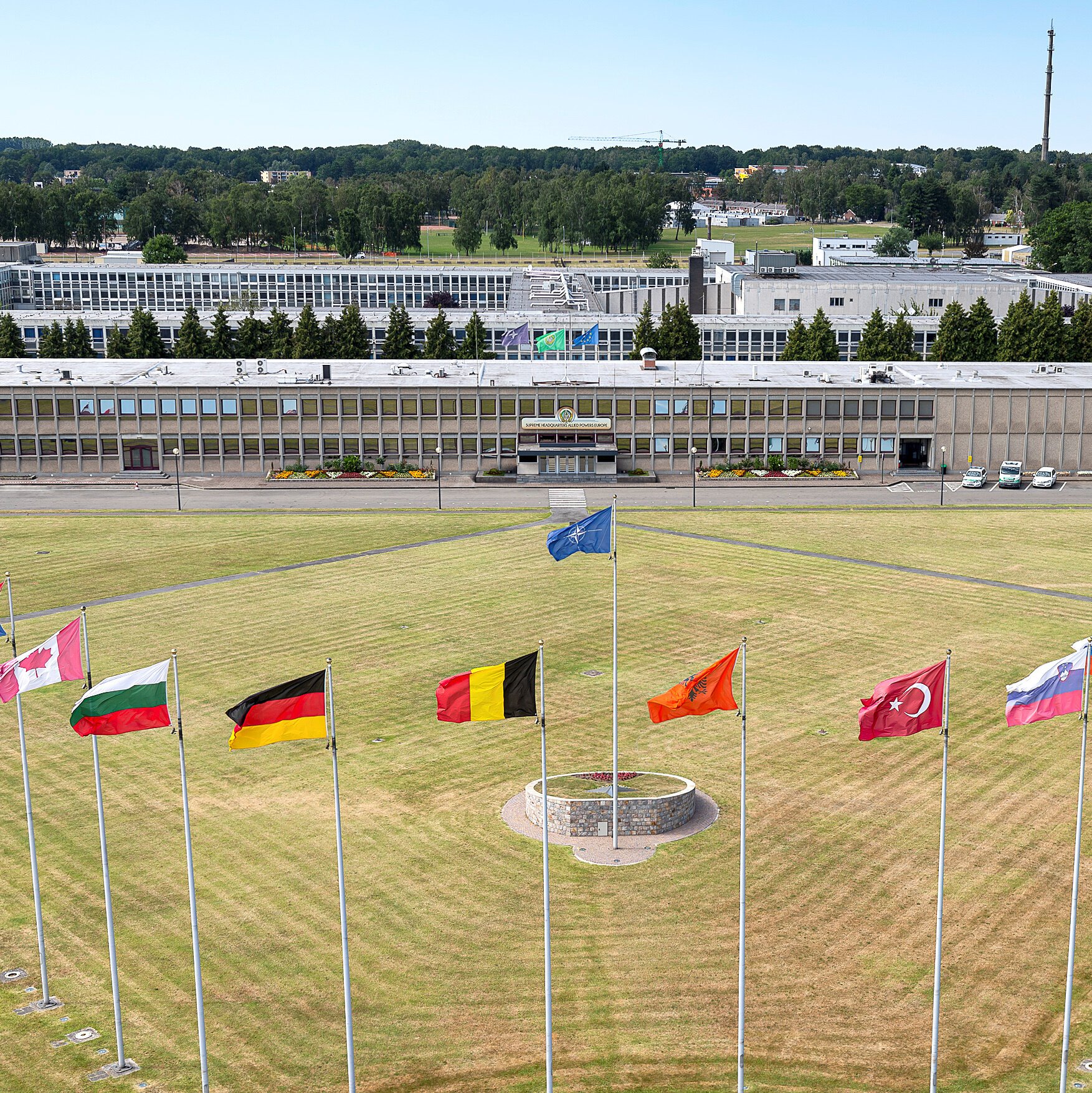
Boris Pistorius, Germany's defence minister, used a 22 June address in Berlin to make a point his hosts across the Channel have spent the year trying not to say out loud: the United Kingdom's abrupt withdrawal from the leadership of European security has left a vacuum Berlin is being asked, again, to fill. He spoke hours before Keir Starmer's resignation landed in Westminster, and within a week the German foreign ministry had begun quietly canvassing allies on what a reconfigured British presence in the European security architecture would mean. The choreography is uncomfortable. A German defence minister is essentially being required to publicly acknowledge that his country's armed forces will now carry a heavier share of the conventional deterrent on the continent.
Starmer's exit is the trigger, not the story. The story is what arrives after: a London still working out which instincts survive without him at the dispatch box, a Berlin policy elite recalculating on the hoof, and a wider European conversation about who actually pays for, and is willing to die for, the security order that has been treated for decades as ambient. The Westminster version of this drama is a Westminster story. The version playing out in the German chancellery, in EU foreign ministers' WhatsApp groups, and in the Polish Sejm is the one with consequences.
The Anglo-German question everyone is politely not asking
Berlin's posture toward London has run on a single, unspoken assumption since the Brexit referendum: that whatever the politics in Westminster, the United Kingdom remained a serious security partner, a nuclear power, and the indispensable operational spine of whatever coalition-of-the-willing assembled on the eastern flank. Starmer's arrival in Downing Street briefly seemed to confirm that assumption. His government re-engaged with EU defence structures earlier than the more maximalist reading of Labour's manifesto suggested, and the optics around Ukraine were correct: continued weapons, continued intelligence sharing, continued rhetorical clarity about Russian state responsibility. Berlin read the signals and adjusted its own expectations of British leadership upward.
The intervening year, however, produced a sequence of moments that, taken together, have read very differently in the German foreign ministry than they read in Whitehall. A more transactional posture toward Washington. A dilution of language on European collective defence that, by mid-2026, had produced relief in Moscow and discomfort in Warsaw. A welfare-budget crisis that, however uncomfortable for the Treasury, has been interpreted in Berlin less as a domestic problem than as a signal of long-run British priorities. By the time Starmer resigned on 22 June, the German assessment had hardened into something like: this is a partner whose capability is real but whose political willingness to lead is now intermittent, and we had better price that in.
The German defence ministry's response, in the days that followed, has been telling and notably undramatic. Pistorius made the case for heavier German conventional commitments in terms that, in any other administration, would have been coded Euro-Atlantic boilerplate, but that read in June 2026 as a barely veiled message to a retreating Britain: we will hold the line, but we will hold it our way. Berlin is not euphoric about this. A Europe in which Berlin carries more of the conventional burden is a Europe in which the German political class has to argue, publicly, with the German public, about taxes, conscription and the kind of forward deployment the Bundeswehr has spent thirty years avoiding. The mood inside the SPD is less triumphal than determined.
What the Eastern flank reads
In Warsaw, Kyiv and the Baltic chancelleries, the British resignation is being processed through a different lens. There the question is not whether London remains a partner; it is whether the next occupant of Number 10 will keep the two operational commitments that actually matter in real time: the intelligence footprint in the Baltic, and the maritime contribution to the Black Sea surveillance architecture. Neither requires a foreign-policy doctrine. Both depend on political will sustained across a parliamentary cycle. Both are exactly the kind of commitments that erode quietly when the political weather turns, and the political weather in Britain has, by mid-2026, turned.
Berlin's canvassing of allies, including that quiet call to Warsaw, is in part an attempt to manage this asymmetry: to reassure the eastern members that the withdrawal of British leadership is being offset by a German-led consolidation, rather than simply absorbed. Whether that is achievable depends on the next occupant of Downing Street, and on whether the German public will accept a sustained conventional commitment on the European mainland that, for most of the post-Cold-War period, it has been promised would remain unnecessary. The honest answer in Berlin, as one official told reporters ahead of Pistorius's speech, is that nobody yet knows.
What the German political class is actually arguing about
Beneath the public language, the German debate is sharpening on three points. First, whether the Bundeswehr's current order of battle can absorb an extended forward presence in the Baltic and the Black Sea without the kind of capability gaps that require either new procurement or new taxes. Second, whether a more autonomous European defence posture is compatible with NATO's Article 5 commitments, or whether the two have to be deliberately decoupled for the first time since the alliance's founding. Third, and most uncomfortably, whether Germany's postwar political culture can sustain a discussion about conscription, military presence abroad, and the domestic trade-offs of being a security provider, rather than a security consumer.
None of these debates is new. All of them have been deferred, year on year, by the working assumption that Washington, or London, or both, would continue to carry the load. That assumption is now visibly fraying, and the German political class is confronting the question it had been hoping to avoid: not whether Germany should do more, but how a country that spent the post-1945 era constructing an identity around the rejection of militarisation is supposed to do more without breaking something domestically important.
The file to watch in the next month
The next foreign ministers' meeting in Brussels is pencilled in for late July, and the British seat will be occupied, in the most literal sense, by a caretaker or interim minister for the first time in a generation. Berlin has made clear it will not postpone its own consultations pending the outcome of a Conservative leadership contest that, depending on the back-room negotiations, could produce anything from a centrist continuity figure to a more sceptical reading of British commitments. The working assumption in the German foreign ministry is that they cannot wait to find out. The signal being sent, by Pistorius's speech and by the quiet canvassing that followed, is that Germany intends to underwrite the European security arrangement on a more durable political basis than any single British administration, including the one that just resigned. London remains welcome back at the table. It is no longer assumed to be at it.