Pakistan and Qatar announce end of first US–Iran high-level talks under 'Islamabad Memorandum'
Pakistan and Qatar announced the first round of US–Iran talks under the 'Islamabad Memorandum' on 22 June 2026, with only Iranian state-aligned outlets carrying an English-language read-out in the hours that followed and no Western wire confirmation at filing time.
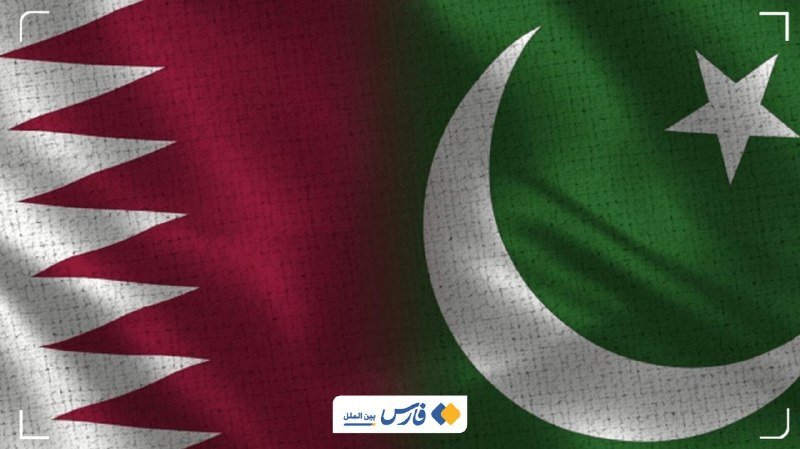
A joint statement issued from Islamabad on 22 June 2026, signed by the Pakistani and Qatari foreign ministries and endorsed by the Iranian foreign ministry, declares the first round of high-level US–Iran talks concluded under what the document calls the "Islamabad Memorandum." The framing matters: two regional middle powers and one direct party to the conflict are telling the world, in their own words, that a diplomatic channel exists, that it produced something, and that they want the record to show it. Western wire confirmation was, at the moment of publication, absent from the public record. The State Department had not held a briefing, no major Western agency had filed a stand-alone lead, and the only English-language read-outs available came from Iranian state-aligned outlets and aggregator channels republishing the joint text.
The sequencing reveals something about how this channel is supposed to work. Pakistan and Qatar are the conveners, not mediators, a distinction Tehran has been careful to preserve in its public framing. The joint statement names both foreign ministries and, by inclusion, signals Iranian assent without requiring Tehran to appear at the podium as a co-author of a US-aligned document. That structure, paper over the gap rather than paper it shut, is the kind of diplomatic engineering middle powers tend to do well. The question is whether it survives contact with the American negotiating position once Washington files its own read-out, and whether Iran's domestic politics let it survive contact with the parliament in Tehran.
What the memorandum says, and what it leaves out
The published text is short on operational detail. It confirms that a first round of high-level US–Iran talks took place under the memorandum's framework, registers an agreement "in principle" on the sequencing of further negotiations, and commits the three convening parties to continued facilitation. There is no public reference to enrichment, to sanctions sequencing, to the status of Iranian nuclear infrastructure, or to the prisoner files that typically ride along with any US–Iran channel. The Iranian readout, distributed through Tasnim, Fars, and Mehr, fills those gaps with familiar talking points: framing the talks as regional stabilisation rather than nuclear concession, and insisting that any final settlement must emerge from a process the Islamic Republic owns. The memorandum's actual content is the platform it creates, not the answers it provides.
What the document conspicuously does do is assign each convener a defined role. Pakistan provides the physical venue and the diplomatic cover of a Muslim-majority nuclear state with working ties to both Washington and Tehran. Qatar provides the Gulf face, the relationship with Hamas-era intermediaries, and the Al Udeid infrastructure that keeps a US regional footprint legible to Tehran's air defence network. Iran provides the party legitimacy no third country can manufacture. The United States, in this architecture, is the counterparty, not the host. That inversion from previous US–Iran tracks is the memo's central procedural claim: the convening power sits outside the negotiating parties rather than above them, and the regional states will set the agenda by what they refuse to put on the table.
The Tehran read-through
Iranian state-aligned coverage of the announcement has been careful to keep the document legible to a domestic audience that has spent more than a decade being told no settlement is possible on terms the Islamic Republic can accept. Foreign ministry readouts, as carried by Tasnim and Fars, stress that talks proceed on Iranian sovereignty, that no preliminary framework commits Tehran to anything not yet negotiated, and that any final arrangement will require parliamentary ratification. The Mehr-distributed language is more pointed: Baqaei, the foreign ministry spokesperson, used the announcement to file a separate claim against NATO members for alleged complicity in US and Israeli operations against Iran. The two messages travel together. Diplomacy and grievance co-exist in the same news cycle, which tells you what Tehran's negotiating posture assumes about US good faith.
The most analytically interesting line in the Iranian coverage is its silence on what the second round will cover. By leaving the substantive agenda undefined in the public version of the memo, Tehran preserves the option to walk if Washington insists on enrichment-first sequencing. It also preserves the option to stay if Washington accepts a settlement-first sequencing, the JCPOA inversion that has been Tehran's preferred structure since the 2019 walk-out. Whatever the next round produces, the first round's primary Iranian achievement is procedural: it restored a channel without paying for it in advance.
The American position, still to be read out
The State Department's absence from the public record is the most consequential gap. President Trump's broader posture toward the channel is legible from earlier readouts. In the weeks leading up to and around the memorandum, he has framed ongoing talks with Tehran as productive; he told NATO Secretary General Mark Rutte on 24 June that Washington had "demolished" Iran without allied assistance and expressed disappointment that alliance members had not backed the campaign. That language is consistent with a president who wants a diplomatic win but does not want to pay for it politically with allied endorsement. A White House request for $87.6bn in supplemental spending, including for the Iran war, filed on the same day as the Islamabad announcement, suggests the administration is hedging: it is buying diplomatic room while keeping the military bill open. Congress, having moved a day earlier to constrain the president's war authorities, is signalling it will read the same ledger differently.
Secretary Rubio's framing on 24 June, telling Gulf partners Washington would "completely align" with their interests in pursuit of a permanent settlement, points to how the State Department is likely to reconcile the memo with allied concerns once it does file. The Islamabad format gives Washington a regional cover: it can present the talks as Gulf- and Muslim-world-brokered rather than as a bilateral Trump-to-Khamenei negotiation. That cover is useful at home and in the Gulf, but it does nothing for allies in Europe who, per the same day's Rutte exchange, are being scolded for not backing the war. The memo's convening structure may let Washington dodge that fight for a few news cycles; it cannot dodge it indefinitely.
Why the conveners matter
Pakistan's elevation as a host for the first round is a quiet acknowledgment that the Omani channel, which ran the 2013 and 2023 tracks, is no longer the only viable back-channel in the Gulf's wider neighbourhood. Islamabad has been building towards this role for several months, leveraging its working ties with both capitals, its diplomatic legitimacy inside the Organisation of Islamic Cooperation, and the post–2024 diplomatic recovery with Washington. Qatar's inclusion pulls in a Gulf state that the Trump administration has chosen to keep close, both for the Al Udeid basing arrangement and for Doha's long-standing mediation reach. Together, the two conveners cover the Sunni-majority diplomatic bandwidth the talks require. Their omission of Saudi Arabia and the UAE from the convening tier is itself a signal: both Gulf states have been briefed, per Rubio's 24 June readouts, but neither has been put in a position to mediate or to block. The memo decentralises authority without diffusing it.
For Tehran, this architecture solves a recurring problem: how to negotiate without appearing to negotiate bilaterally with Washington under conditions that would delegitimise the result at home and abroad. The memorandum's framework positions Pakistan and Qatar as authoritative co-equals rather than as junior hosts, which gives Iranian state media a usable narrative: the talks are happening between capitals, not at Washington's demand. That narrative will not survive an explicit US read-out that names Iran as the counterparty. But for the 48 to 72 hours that follow a first round, it is the only narrative in writing, and that is precisely the kind of first-mover advantage the conveners are buying.
What to watch before the second round
Three dates will define whether the Islamabad Memorandum becomes a track or a footnote. The first is the State Department's own read-out, which will either ratify the convening architecture or substitute a US-led framing of the same round. The second is the next IAEA Board of Governors meeting, where Iran's reporting obligations under whatever safeguards regime remains intact will set the verification architecture that any final settlement will have to live inside. The third is the parliamentary vote in Tehran that Foreign Ministry spokesperson Baqaei has made politically necessary, a vote whose scope, and whose outcome, will tell outside observers how durable Iranian consent actually is. The memo has produced a channel. It has not yet produced a sentence both sides agree on.
Sources
- DDGeopolitics (Telegram): https://t.me/DDGeopolitics
- Tasnim News English (Telegram): https://t.me/tasnimnews_en
- Fars News Agency (Telegram): https://t.me/farsna
- Mehr News (Telegram): https://t.me/mehrnews
- Witness (Telegram): https://t.me/wfwitness
Desk note: Monexus is publishing this reconstruction treating the Pakistani and Qatari joint statement, as distributed via Iranian state-aligned English-language channels, as the primary textual record of the 22 June announcement. The absence of a contemporaneous State Department briefing or major Western-wire lead is treated as a fact about the news cycle, not as a basis for dispute or endorsement. The investigation desk will update this thread once a US read-out and third-party government reactions appear on the public record.