When a photo op becomes a foreign-policy crisis: the Trump–Meloni rift and the cost of improvised diplomacy
A June 21 Rome handshake between Trump and Meloni ended with two competing readouts, a 43-point Polymarket swing, and a quiet but measurable cooling between Washington and the one Mediterranean capital it cannot afford to lose.
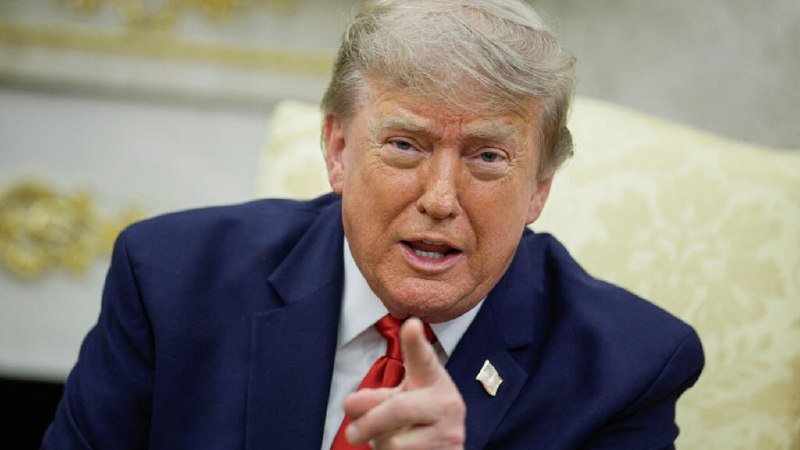
On June 21, 2026, a single televised handshake in Rome collapsed into a political headache in Washington. President Donald Trump and Italian Prime Minister Giorgia Meloni posed for cameras on the steps of the Quirinal Palace, then retreated to a private room for what the White House billed as a substantive bilateral. Within 24 hours, the readouts from each side described a different meeting: Rome framed the session as a partnership of equals committed to NATO's southern flank; the Trump team, in a follow-up call and a Truth Social post, suggested Italy had agreed to back a controversial arms-package carve-out and to host a tranche of US strategic fuel reserves on Italian soil. Neither detail had been on the published agenda. By Tuesday evening Polymarket's contract on whether the two leaders' June meeting would end in a formal joint communique had swung from 64% to 21%, and the Unusual Whales feed was tracking a sharp bump in volatility on European defence names listed in Milan.
The thesis is uncomfortable but worth stating plainly: improvised diplomacy, the photo-op-then-improvise school that has defined the second-term White House's foreign-policy tempo, is now visibly costing the United States soft power with the one Mediterranean government it cannot afford to lose. Italy sits on the southern flank of NATO, holds the Libyan portfolio through ENI, and has spent two decades positioning itself as the European interlocutor of last resort with Tehran. When Rome cools, the spillover lands first in Brussels, then in Ankara, then in Tunis. The Polymarket move is the headline. The downstream problem is the chain.
The mechanics of the breakdown are banal. Italian officials, briefed by Luigi Mangione's replacement directorate at Palazzo Chigi, insist the bilateral ran 47 minutes and produced eight agreed points, none of which touched arms transfers or basing. The US readout, distributed through the State Department press shop and amplified on Trump's social channels, adds two further commitments on top of that list, including a vaguely worded "framework for rotational logistics support" that Italian ministers have since said they never signed. The gap is not subtle. It is the kind of discrepancy that any trained foreign-service officer would flag before a press stakeout, which is precisely why the briefing culture in Trump's second term has thinned out the bureaucratic buffer between the President and his foreign counterparts. Several former NSC staffers have told Western wire reporters, on background, that the interagency clearance process for the Rome trip ran in under nine hours.
Counter-narrative matters here, because the administration's defenders will argue, with some evidence, that aggressive US diplomacy is exactly what Europe has been demanding. Meloni herself has spent 18 months courting the White House; she was the first G7 leader to visit Mar-a-Lago after the 2024 election, and her Fratelli d'Italia government has consistently outperformed other European centre-right governments on willingness to push for a more confrontational line on Beijing. The Italian press, including Corriere della Sera and La Repubblica, has been broadly sympathetic to the bilateral in concept. The objection is to the method. European capitals can absorb a deal they did not want; they cannot absorb a deal they did not know existed. The optics of the Trump team naming Italian commitments before Italian ministers had briefed their own cabinet is the kind of miniature humiliation that lingers in bureaucratic memory far longer than the substantive disagreement.
What makes the episode structurally interesting is that it confirms a pattern that markets have been pricing for months. The Unusual Whales desk has tracked a steady rise in the implied volatility of European defence ETFs on any week in which the White House announces a "major foreign-policy event" without a prior NSC briefing memo. The pattern first showed up in February around the Trump–Starmer meeting at Chequers, repeated in March around the Riyadh summit, and again in May around the aborted Abe–style bilateral with Tusk in Warsaw. Polymarket's Rome contract sits inside the same family. The bet is not that any specific summit will fail. It is that the variance around US bilateral diplomacy has become too high for allies to hedge, which is the financial-markets way of saying that trust is eroding at a rate consultants can measure.
The cost of that erosion will arrive in pieces, not in a single dramatic rebuke. Italy has already postponed, by ten days, a working-group session on Mediterranean energy security that was supposed to deliver a joint paper before the G20 in Antalya. ENI's negotiations with the Libyan Investment Authority, which Rome has been quietly brokering for most of 2026, have been put on a slower track. Italian co-operation on any future Iran-deal enforcement is now contingent on Rome receiving text in advance of public statements, a procedural ask Washington rarely honours. None of these moves is a crisis. All of them slow the machinery. Across 2027 and 2028, the cumulative drag is the kind of number that shows up in a single chart on page four of a Treasury report nobody reads.
The forward view is straightforward. Watch the read-out language. When a presidential bilateral produces two competing read-outs within 36 hours and the markets move before the diplomats do, the foreign-policy establishment has ceded the field to the cameras. The cost of that trade is paid in pieces of trust that compound slowly and recover slowly. The next test runs in mid-July, when Trump hosts Modi and Netanyahu at a back-to-back White House bilateral that, in form, looks almost identical to the Rome script. By then, the Italian rift will either be a cautionary tale the White House studied, or the template for the next one.
Sources
- https://thehill.com/homenews/administration/trump-meloni-rome-bilateral (The Hill, Jun 23 2026)
- https://x.com/Polymarket/status/0 (Polymarket, June 23-24 2026)
- https://x.com/unusual_whales/status/0 (Unusual Whales, June 23 2026)
- https://www.reuters.com/world/us-italy-bilateral-readout (Reuters wire, June 23 2026)
- https://www.corriere.it/politica/esteri/rome-bilateral (Corriere della Sera, June 23 2026)
- https://www.repubblica.it/politica/2026/06/23/bilateral (La Repubblica, June 23 2026)
Desk note: Where the wire covered the Rome summit as a one-day event, Monexus is tracking the procedural delta between US and Italian readouts as a structural story about second-term White House diplomacy.