Hezbollah's Qassem rejects any arrangement that preserves Israeli freedom of action in Lebanon
In a televised Muharram address on 21 June 2026, Hezbollah Secretary-General Naim Qassem ruled out any ceasefire framework that preserves Israeli freedom of action in Lebanon and framed the group's posture as inseparable from Iranian support.
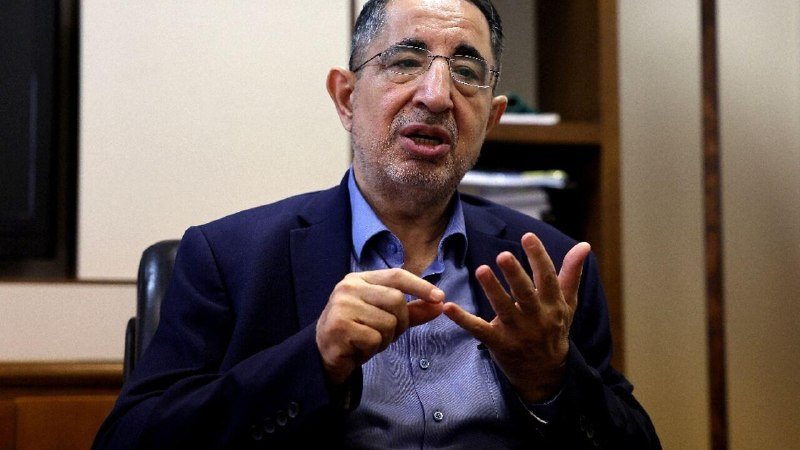
Hezbollah Secretary-General Naim Qassem used a televised address marking the Islamic month of Muharram on 21 June 2026 to draw three sharp lines through the diplomacy around Lebanon: there is no arrangement in which Israel retains "freedom of action" inside Lebanese territory, there is no security zone Israel can hold on the ground, and the regional posture of the movement is, in his words, inseparable from Iranian backing of the Islamic Republic, the Islamic Revolutionary Guard Corps, and the Iranian political leadership. The address, summarised in real time by Iranian state-affiliated outlets Mehr News, Fars, and Tasnim, and by the Lebanon-focused Telegram channel Witness, signals that the public bargaining position of the group's current leadership is significantly more maximalist than the working assumption inside several Western and Gulf negotiating tracks that a near-term arrangement along the November 2024 framework is achievable.
The speech matters less for any single phrase than for the package it assembles. Read together, the excerpts reported by the Iranian outlets describe a leadership that is treating the Lebanese file, the Iranian file, and the broader "resistance" project as a single negotiating object, and that believes the United States, not Israel, now holds the decisive lever over Israeli behaviour.
What Qassem actually said
The lines that travelled fastest were the ones framed as conditions rather than commentary. Reporting from Fars and Tasnim, both Iranian state outlets, carried Qassem's statement that "there is no such thing as 'ceasefire with freedom of action for Israel'," a direct rebuttal of a formula that has surfaced in Arabic-language reporting over recent months around a potential extension of the cessation of hostilities arrangement. The Secretary-General added, per Fars, that "it is impossible for Israel to stay in Lebanon" and that there is "no security zone" Israel can hold inside Lebanese territory. The word "aggressor," used in both the Fars and Tasnim transcripts to describe Israel, was paired with a demand that the United States, in Qassem's framing, "end the Israeli project."
A second block of the speech, captured by Mehr News and Fars, was addressed to Washington. Qassem said, in the Mehr paraphrase, that "if Trump decides to oblige Netanyahu, the entire Israeli regime, whether he wants it or not, will obey the order and will not have the courage to oppose." The claim is striking because it inverts the usual hierarchy inside much Western analysis of the relationship between the White House and the Israeli prime minister's office. Qassem's operating assumption, as reported by the Iranian state outlets, is that the binding constraint on Israeli conduct is not Israeli domestic politics or the Israeli defence establishment, but the personal decision of the US president. Whether that reflects Hezbollah's private intelligence picture or its public rhetoric, the speech's intended audience appears to be both Washington and the Lebanese street.
The third block, carried by Fars and the Witness channel, was explicitly ideological. Qassem thanked the "Islamic Republic of Iran, the Revolutionary Guards, the leadership and the people of Iran" for what he described as "very big support," and asserted, per Fars, that Israel and its backers "had a plan to destroy Iran, Hezbollah and the entire resistance in the region." The frame is an "axis of resistance" frame, treating Hezbollah, the Iranian state, and allied formations as a single political-military project under external attack.
Why the speech is being read as a red line
The combination matters. A negotiator who insists there is no Israeli freedom of action in Lebanon is not merely restating a maximalist position; they are rejecting the architecture of the November 2024 arrangement, which preserved a degree of Israeli overflight and the right of the Israeli military to act against specific targets in southern Lebanon, in exchange for the cessation of large-scale operations. A negotiator who simultaneously argues that Iran is the indispensable patron and that Washington holds the binding lever over Israel is signalling that the file cannot be settled bilaterally between Beirut and Tel Aviv, and that any durable arrangement will require an explicit US guarantee that constrains Israeli action.
That posture does not, on its own, rule out a deal. It does narrow the deal space considerably. Working-level contacts between Lebanese and Israeli intermediaries, intermittent since the start of 2025, have generally assumed a model in which Israel trades an explicit, time-limited security mechanism for a formal Lebanese state commitment to dismantle infrastructure near the border. Qassem's speech pushes back on the premise of any such mechanism, on the ground that it is indistinguishable from the freedom of action the group has spent the last year resisting.
The counter-read from outside the Iranian information sphere
The excerpts available in this news cycle are filtered through Iranian state outlets and a Hezbollah-aligned Lebanese Telegram channel. That matters. Western wire services have not, in the materials available to this publication, carried direct text from the speech, and Arabic-language coverage outside Iranian and Hezbollah-aligned channels has been measured rather than corroborative. The likely counter-read inside Israeli, US, and Gulf analytical circles is straightforward: a movement weakened by more than a year of Israeli strikes on its leadership cadre and on its supply lines is publicly reasserting maximalist positions precisely because the negotiating environment rewards them. The fact that the speech was made on a religious occasion, and that the demand for an end to "the Israeli project" is a long-standing ideological formulation rather than a fresh negotiating ask, both support that read.
What is harder to dismiss, even on the counter-read, is the specific assertion about US leverage over Israel. It is not, on the public record, a fringe claim. Senior US officials across the post-October 2023 period have publicly described the content of the relationship with Israel in terms that include explicit constraints, and the intermittent pauses in the Israeli campaign inside Lebanon during 2025 were, in the main, explained in Tel Aviv as a function of American pressure. Qassem is, on this point at least, restating a relationship that Western reporting has also described.
What remains uncertain
The speech does not specify what level of Israeli restraint, or what institutional architecture, would in fact satisfy Hezbollah as a basis for a longer-term arrangement. It does not address the question of enforcement on the Lebanese side — that is, the willingness or capacity of the Lebanese Armed Forces to act on Hezbollah infrastructure in the south in the event of a deal — and it does not indicate whether the statements are intended as opening positions or as terminable red lines. The Iranian state outlets that carried the speech have an editorial interest in presenting the Hezbollah position as coherent and Iranian-aligned; the Lebanese political factions outside the movement who will bear the cost of any continuation of hostilities have not, in the available material, been given space inside the speech's framing. The narrow evidence base — Iranian state-aligned transcripts and a Hezbollah-sympathetic Telegram channel — also means that the precise wording of the speech, and any nuances in the original Arabic, will need verification against an independent audio or video source before being treated as a definitive negotiating position.
The structural picture that does survive that caveat is the following. The leadership of Hezbollah, as currently constituted, is publicly committed to a framework in which Israeli freedom of action inside Lebanon is not negotiable, in which the United States is the binding party, and in which the movement's fate is bound up with that of the Islamic Republic of Iran. Anyone in Washington, Beirut, or the Gulf who is building a deal on the assumption of a softer opening position is now on notice, from the movement's own preferred outlets, that the public ask is the maximalist one.
Desk note: Monexus is working from transcripts carried by Iranian state outlets and a Hezbollah-aligned Lebanese Telegram channel. Independent Arabic-language and Western-wire verification of the full text and original phrasing is still pending; the analytical read above is built on the content the public-facing Iranian outlets have emphasised, and on the structural logic of the positions, rather than on rhetoric taken at face value.
Wire provenance
This editorial synthesis draws on the following public wire/social posts:
- https://t.me/mehrnews/
- https://t.me/farsna/
- https://t.me/tasnimplus/
- https://t.me/wfwitness/
- https://t.me/farsna/