Switzerland plays host as US-Iran talks resume at Bürgenstock, with $1.44bn of Iranian oil clearing the market
A second day of US-Iran talks opened at Bürgenstock on 20 June 2026, while Tehran moved roughly $1.44bn of crude in five days and Pakistan confirmed it would participate in Sunday's track.
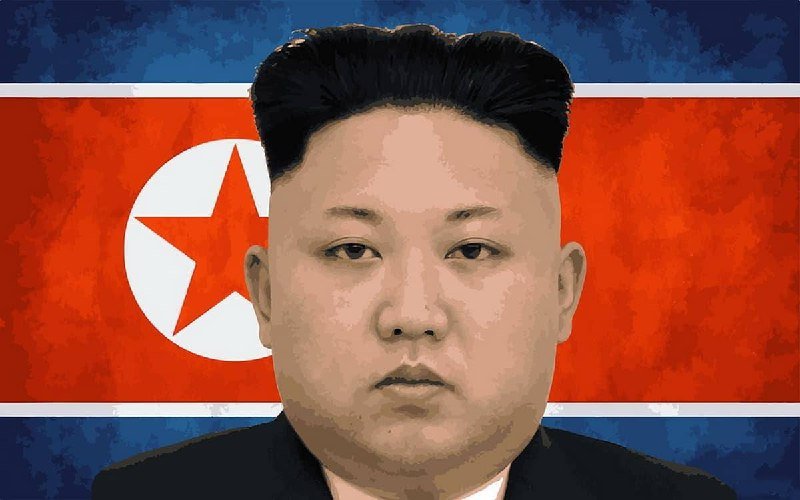
Switzerland confirmed on 20 June 2026 that a new round of US-Iran diplomacy is underway at the Bürgenstock resort, declining to identify the participants but acknowledging that the talks are continuing into a second day. The Swiss foreign ministry statement, carried by wire services at 16:15 UTC, follows an earlier announcement from Pakistan's foreign ministry that US-Iran talks would take place in Switzerland on Sunday.
What is being negotiated, by whom, and against what backdrop is the central question. Switzerland's careful neutrality — host venue rather than mediator — keeps the political weight where Tehran and Washington want it: between the principals, off-camera, with deniability built in. The timing, however, is harder to hide. Iran exported roughly $1.44 billion of oil over the five days preceding the meeting, according to shipping telemetry circulated on 20 June 2026, a flow rate that suggests sanctions enforcement is being tolerated, if not actively accommodated, while the talks proceed.
The venue and the choreography
Bürgenstock, the cliffside resort above Lake Lucerne that hosted the 2024 Ukraine peace summit, has become Switzerland's preferred stage for indirect contact between governments that cannot meet openly. Swiss authorities characterise their role as "good offices" — logistical facilitation, no agenda-setting, no public read-out. The 20 June 2026 statement was deliberately spare: talks are continuing, participants are not being named, the venue is not being confirmed. That reticence is itself the message. Neither the US State Department nor the Iranian foreign ministry has issued a parallel confirmation in the available reporting, which suggests the parties prefer the Swiss conduit precisely because it does not require either capital to put its name on the meeting.
Pakistan's confirmation that the talks will take place "on Sunday" — issued earlier in the day and relayed by regional outlets — adds a regional anchor. Islamabad has carried messages between Tehran and Washington in previous episodes and has a standing interest in a stable western neighbour. The Pakistani read-out, that this is a US-Iran channel with a Sunday start, lines up with the Swiss statement that the meeting is already into a second day. The two accounts are consistent.
The oil number and what it implies
The $1.44 billion figure, circulated on 20 June 2026 by a shipping-data account tracking Iranian crude flows, is the kind of number that diplomats on both sides will notice even if neither cites it publicly. Iranian export volumes have been one of the principal pressure points in the sanctions architecture: when crude flows contract, Tehran's negotiating position weakens; when flows expand, Tehran has both revenue and the implicit signal that enforcement is permissive.
A five-day run at that scale implies buyers are willing to take cargoes, insurers are willing to cover them, and tankers are willing to move them. None of that is possible without at least acquiescence from the governments that would normally interdict such flows. The number is therefore not just a market data point. It is a read on how much enforcement appetite exists in Washington, in the Gulf, and in East Asian import terminals at the moment the diplomats are sitting down.
The counter-read: oil flows as leverage, not as concession
The alternative reading is that the oil is the leverage, not a tell. Tehran's negotiating strategy in past rounds has been to demonstrate that its export base is intact regardless of sanctions, making any future relief a confirmation of reality rather than a concession. Under that frame, the $1.44 billion figure is a signal aimed at the Iranian domestic audience as much as at Washington: the country's export machine is functioning, the sanctions regime is porous, and the regime does not need a deal to keep the lights on.
The two readings are not mutually exclusive. Tehran can want a deal, want to look like it doesn't need one, and want to use the visible flow of crude as insurance against an outcome that delivers less than maximum sanctions relief. The structural problem for any agreement is that the gap between the Iranian offer — limits on enrichment, monitoring access, phased sanctions relief — and the US ask — full dismantlement of advanced enrichment capability, restrictions on missile development — remains wide. The presence of oil revenue in the background compresses that gap from the Iranian side and holds it open from the American side.
What remains unclear
The sources do not specify the agenda, the participants, the duration, or the expected deliverable. Switzerland has not named the delegations; the US and Iranian foreign ministries have not, in the available reporting, confirmed the meeting at all; Pakistan's read-out identifies the parties and the day but not the venue. The oil-flow figure is sourced to a single shipping-data account and has not been independently corroborated in the available reporting. Until at least one government issues a substantive read-out, this remains a meeting whose existence is acknowledged and whose contents are not.
What can be said is that the meeting is happening, that it has regional backing, that it coincides with a measurable expansion of Iranian crude exports, and that the diplomatic format — Swiss-hosted, undisclosed participants, no media presence — is the format both sides have used before when they want to talk without being seen to be talking. The next test is whether any side chooses to confirm it on the record.
Desk note: this article treats the Bürgenstock meeting and the $1.44 billion oil figure as two separate data points that happen to fall on the same day. Monexus does not assert a causal link between the talks and the export flow; we note the coincidence and the two plausible readings.
Wire provenance
This editorial synthesis draws on the following public wire/social posts:
- http://reut.rs/3QbfFzS