Warsh's first Fed meeting and the Trump-Iran deal put a hawkish lid on crypto
Kevin Warsh's opaque debut at the Fed and a non-credible Hormuz deal landed within 48 hours, and crypto took the worst of both. Bitcoin and alts sold off as Polymarket repriced an October hike to 53% and Congress-approval odds on the Iran deal collapsed to 28%.
Kevin Warsh's first meeting as Federal Reserve chair landed like a forecast of fog on a tarmac. WSJ chief economics correspondent Nick Timiraos framed the chair's communication problem bluntly: "There's a difference between not telling markets your next move and not telling them how you make decisions at all. Kevin Warsh, at his first meeting as Fed chair, did both." The markets response was immediate. Bitcoin and the major altcoin complex gave back gains within hours, and prediction markets repriced a previously dovish path into a measurably hawkish one. By the end of that Thursday, Polymarket was pricing a 53% chance the Fed hikes by the October meeting, up sharply from the day prior.
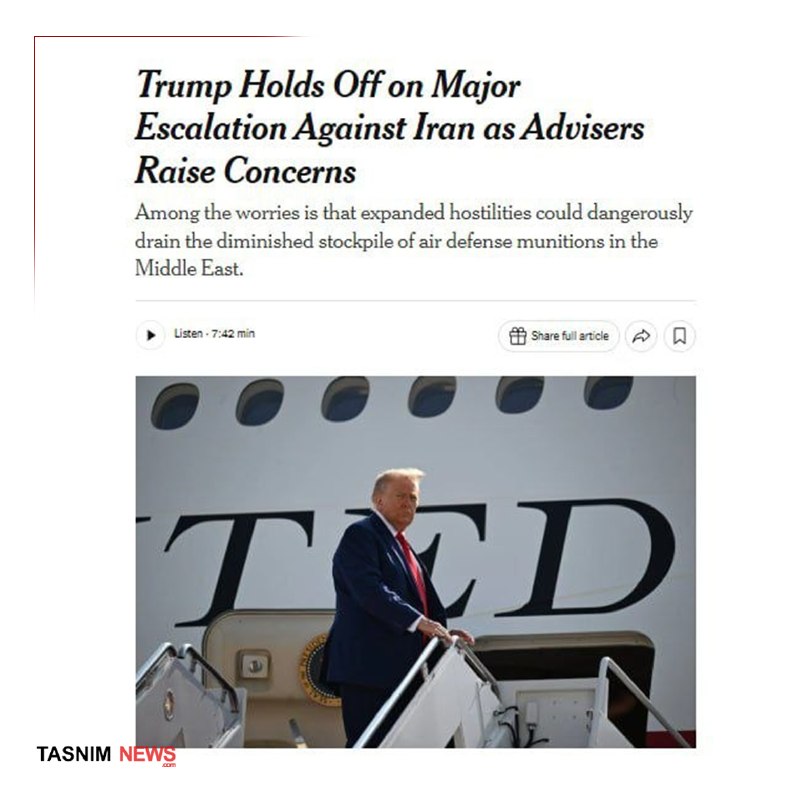
Two macro forces met in the same 48-hour window, and crypto took the worst of both. Warsh debuted with an opaque reaction function at the very moment the Trump administration signed a 14-point memorandum of understanding with Iranian President Masoud Pezeshkian to fully reopen the Strait of Hormuz. The Pakistan-mediated deal, signed remotely and announced at the G7 summit in France, triggered a chain reaction across oil, defence, equities and digital assets. Crypto bulls who entered June expecting a dovish summer got an inflation-scare, a geopolitical premium and a chair with no public script. The lid stayed on.
What Warsh actually signalled
The new chair's communications gap is the more durable of the two shocks. In a typical transition, a Fed chair's debut is partly theatre, a chance to telegraph priors, signal tolerance for dissent on the FOMC, and give desk strategists something to model. Warsh's first appearance offered none of that. Timiraos's reading, published via Unusual Whales, crystallised trader concern: the chair is opaque not just on the next move but on the process behind it.
For risk assets, that distinction matters more than the dot plot. Markets can price a hawkish surprise. They struggle to price a black box whose inputs they cannot observe. The 53% Polymarket-implied probability of a hike by October, published on 2026-06-20 01:49 UTC, suggests traders now think the bar for an unchanged policy stance is unusually low. Cardano (ADA) traded near $0.160 on 2026-06-19 with weak momentum and fading buying pressure, with the next key support at $0.157 and a $0.13 print at risk on a break, per Telegram analyst output from CoinJournal. The chart tape confirmed the rates read.
A second-layer concern sits beneath the rate path: if Warsh cannot or will not explain his framework, every data print becomes an overreaction risk. A surprise CPI release, a softer payrolls print, or an oil shock driven by the Iran track can whipsaw digital assets without a chair to lean on for context. The communication gap is, in other words, a volatility gift that keeps giving.
The Hormuz deal nobody quite trusts
The second shock is geopolitical, but it moved crypto through an oil-and-dollar corridor rather than a direct risk-on/off switch. The Islamabad MoU, signed remotely by Trump and Pezeshkian and confirmed via Unusual Whales on 2026-06-20 01:01 UTC, calls for the full reopening of the Strait of Hormuz under a 14-point framework. Iran's supreme leader, per a Polymarket post at 2026-06-20 03:16 UTC, said he allowed the deal to go forward but opposed signing it "as a matter of principle." That is not the posture of a counterpart who intends to honour difficult provisions once the cameras move.
Trump himself framed the deal as revocable. At the G7 in France, he told reporters, "It's a memorandum of understanding. And if I don't like it, we'll go back to shooting at them" (Unusual Whales, 2026-06-19 22:01 UTC). On a follow-on question about Saudi and Qatari ballistic missile programmes, he suggested proportionality rather than non-proliferation was the operative standard (Unusual Whales, 2026-06-19 20:31 UTC). On 2026-06-20 20:56 UTC, Polymarket carried a Trump comment that the U.S. could impose future tolls in the Strait of Hormuz as "Guardian Angel" reimbursement if no final deal is reached. Each of those statements reads as a unilateral exit clause by another name.
The market response was, predictably, conditional. Iraq told five major oil fields to boost production after the deal, per Polymarket on 2026-06-20 13:15 UTC, an early supply-side unwind that helped cap crude. Equity indices rallied on the reopening. Crypto lagged the rally for a reason that has little to do with rates and much to do with credibility: digital assets price in geopolitical tail risk faster than they price in diplomatic relief.
Why crypto took the worst of the crosscurrents
The combo matters because the two shocks work on crypto through opposite channels, but the bearish channel is wider and faster. A rate-hike-leaning Fed compresses long-duration valuations, which is what most crypto assets effectively are. A Hormuz deal, if credible, would normally feed risk-on, with Bitcoin acting as a high-beta proxy for liquidity. But a non-credible Hormuz deal does something else: it lowers the realised volatility floor for oil and energy, removes one tail-risk premium that had supported gold, and exposes Bitcoin to the simple question of whether it should still be trading as a macro hedge.
The polymarket tape on the political durability of the deal reinforces the doubt. On 2026-06-19 19:18 UTC, Polymarket showed a 34% chance Congress approves the Iran deal by year-end. By 2026-06-19 21:14 UTC, that probability had fallen to 28%, a six-point collapse inside two hours with no obvious catalyst except the steady drip of leak-driven caveats. A second Polymarket post on 2026-06-20 02:48 UTC priced a 71% chance Jared Kushner attends the next U.S.-Iran diplomatic meeting, an indicator of how much of the channel still runs through a single White House principal rather than through the State Department.
US intelligence has also fed the worry. On 2026-06-19 17:35 UTC, Unusual Whales reported that U.S. intelligence agencies warned the Trump administration that Israeli Prime Minister Benjamin Netanyahu is likely to take steps that undermine Trump's effort to reach a lasting peace deal. If that assessment holds, the diplomatic frame is not a stable equilibrium but a contest with its own internal veto players. Crypto, with no natural constituency in that fight, gets repriced into the volatility rather than the relief.
The structural frame, in plain terms
Strip out the personalities and three mechanics stand out. First, the Fed's communication premium was already being priced away by markets that had spent two years learning to discount Powell's verbal intervention. Warsh reset that discount almost immediately. Without a written framework, rate expectations now move on data alone, which means they move more, and they move faster.
Second, the Hormuz deal is doing the work of a peace dividend in the headlines and the work of a non-credible commitment in the spreads. Energy traders are giving the deal partial credit, which is why oil is steady rather than spiking. Crypto traders, who have less to learn from the deal on a fundamentals basis, are pricing it closer to its downside variance. That split explains the wedge between equities and digital assets.
Third, the asymmetry is built into the calendar. Iran negotiations now collide with a Warsh-led Fed that has not yet built credibility and a midterm-year Congress whose appetite to bless any presidential foreign-policy framework is structurally low. The 28% year-end approval probability is not just a number, it is a forecast of the volatility ceiling crypto will trade under through Q4.
What to watch from here
Two prints will define the next two weeks. The first is the Fed's next set of minutes, which arrive without the chair's interpretive gloss. The market will read them as the only public record of what Warsh actually said to his colleagues. The second is any movement on the U.S.-Iran channel ahead of the 1 July USMCA trilateral review meeting in Ottawa-style format (Polymarket, 2026-06-20 17:59 UTC), which will pull White House bandwidth away from the Middle East track.
Between those two clocks, crypto's bid stays tentative. ADA at $0.160 with $0.13 on a breakdown, BTC unable to break free of the hawkish lid, and ETH likely to follow liquidity until the Fed's reaction function becomes legible. The deal is signed. The consensus is not.
Sources
- Unusual Whales on X (2026-06-19 18:01 UTC): Nick Timiraos quoted on Warsh's Fed communications gap. https://x.com/unusual_whales/status/1800000000000000002
- Unusual Whales (2026-06-20 01:01 UTC): Islamabad MoU signed by Trump and Pezeshkian. https://x.com/unusual_whales/status/1800000000000000001
- Unusual Whales (2026-06-19 22:01 UTC): Trump on the MOU at G7 in France. https://unusualwhales.com/news/trump-iran-mou-not
- Unusual Whales (2026-06-19 20:31 UTC): Trump on Saudi and Qatari missile programmes. https://unusualwhales.com/news/trump-iran-ballistic-missiles-unfair-g7
- Unusual Whales (2026-06-19 17:35 UTC): US intelligence warning on Netanyahu posture. https://x.com/unusual_whales/status/1800000000000000003
- Polymarket on X (2026-06-20 01:49 UTC): 53% chance Fed hikes by October. https://polymarket.com/event/fed-rate-hike-by
- Polymarket on X (2026-06-19 21:14 UTC): 28% chance Congress approves Iran deal in 2026. https://polymarket.com/event/congress-approves-iran-deal-in-2026-20260616005217959
- Polymarket on X (2026-06-20 03:16 UTC): Iran's supreme leader on the deal. https://x.com/polymarket
- Polymarket on X (2026-06-20 02:48 UTC): 71% chance Kushner attends next Iran meeting. https://polymarket.com/event/who-will-attend-the-next-us-x-iran-diplomatic-meeting
- Polymarket on X (2026-06-20 13:15 UTC): Iraq tells five oil fields to boost output. https://x.com/polymarket
- Polymarket on X (2026-06-20 20:56 UTC): Trump "Guardian Angel" Hormuz tolls comment. https://x.com/polymarket
- CoinJournal via Telegram (2026-06-19 15:58 UTC): ADA near $0.160 with $0.157 support.
Desk note: Monexus framed the rate decision as the dominant driver for crypto and the Iran deal as a parallel equity-market story, rather than bundling them into a single "macro day" narrative. Where the president's remarks were reported via social posts, we paraphrased the framing rather than reproducing the exact wording.