Drones Over Moscow: What Two Strikes on the Capital's Oil Refinery Reveal About Ukraine's Shifting Long-Range Calculus
A pair of drones hit Moscow's largest oil refinery on 18 June 2026. The story is not the fire; it is what the cadence of strikes against Russian fuel infrastructure now reveals about Ukraine's long-range programme.
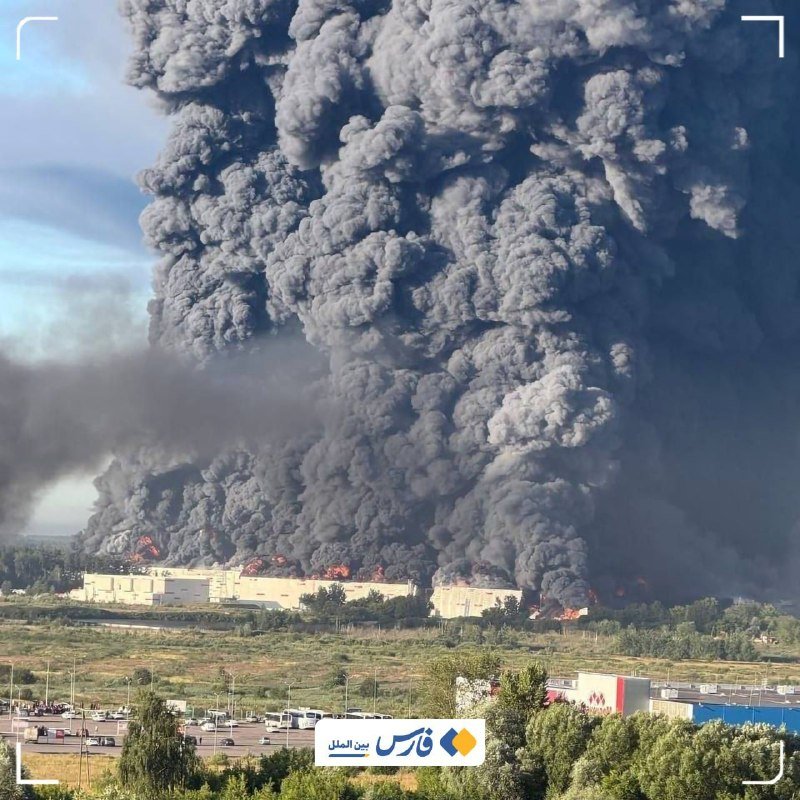
Two drones came down inside the perimeter of Moscow's largest oil refinery in the small hours of 18 June 2026, setting a pair of crude units alight and forcing a temporary halt to throughput at a plant that processes roughly one in every nine litres of gasoline sold inside Russia. Kyiv did not claim the strike on the record; Ukrainian Telegram channels carried footage before the Russian emergencies ministry had finished drafting its morning release, framing the operation inside the long-running campaign to degrade Russian fuel output and pressure the wider war economy.
The strike is newsworthy less for the damage it did than for what it suggests about Kyiv's long-range programme. Ukraine's strikes on Russian oil infrastructure have moved from occasional one-off embarrassments, aimed at refineries hundreds of kilometres from the front and tolerated as symbolic theatre, into a sustained operational rhythm. The tempo, not the individual impact, is the story.
What the refinery fire actually shows
The Russian emergencies ministry reported two air-defence interceptions over Moscow early on 18 June, with debris falling on the Moscow Oil Refinery complex in the capital's south-east district. Footage circulated on the Telegram channel of Andriy Tsaplienko, the Ukrainian war correspondent with deep ties to the general staff, showed thick black smoke rising from the processing area and what appeared to be a damaged atmospheric column. The Mykolaiv regional military administration channel, normally a source on southern-front operations, also carried stills of the blaze within ninety minutes of impact, framing the event as proof that Ukrainian unmanned systems are now penetrating layered Moscow air defences on a near-routine basis.
The Moscow Oil Refinery is one of the three largest in Russia by capacity, with annual throughput of around 12 million tonnes and direct pipeline links into both the Russian domestic market and the export-oriented Caspian Pipeline Consortium system. Any prolonged outage is read in Russian-language energy markets as a marginal-but-cumulative drag on gasoline and diesel pricing through the summer driving season. Independent Russian-language military bloggers, in their evening summary for 20 June, described Russian forces continuing "the campaign to destroy Ukrainian gas stations, Novaya Pochta logistics centres and oil refineries," a phrase that acknowledges, almost incidentally, that the reciprocal targeting of fuel infrastructure is now baked into the operational pattern on both sides.
The programme behind the headline
The 18 June strike arrives against the backdrop of a campaign that has compounded across refineries in Ryazan, Nizhny Novgorod, Saratov and Volgograd over the preceding weeks. The collective effect on Russian downstream output is debated inside Russian energy ministries, but the more consequential shift is upstream: Ukraine's domestic production of long-range strike drones has moved from bespoke, hand-built prototypes to serial output. Ukrainian official channels, including the president's verified Telegram account, have referenced the broadening of the strike envelope as a matter of industrial policy rather than battlefield improvisation.
The structural argument the strike advances is straightforward. Moscow's air-defence architecture, optimised in the early stages of the war against ballistic and cruise-missile salvos, is being asked to contend with a different threat profile: dozens of small, slow, low-altitude drones arriving on disjointed headings over a calendar week. Each individual interceptor costs more than the drone it intercepts. Each successful penetration, regardless of the warhead's effect, costs the defender politically. The economics are unfavourable for the airspace owner whenever the attacker's goal is to be seen rather than to destroy.
What Moscow is signalling back
The Russian response has predictably been to escalate the rhetorical ceiling rather than match the operational tempo. On 20 June, the account associated with former president Dmitry Medvedev posted that "there should be no rules regarding strikes against the Kiev regime after terrorist attacks on Russian cities." The statement is not a policy announcement; it is a signal of how the Russian information space intends to frame the next round of escalation. By labelling the drone strikes "terrorist attacks" before any forensic findings have been released, Moscow opens rhetorical room for strikes on Ukrainian government ministries, energy infrastructure or transport nodes without the usual legalism that would attach to "retaliation for an act of war."
That framing matters because the calculus inside Western capitals is still partly a public-opinion one. As long as Ukrainian strikes are understood as measured counter-force against an aggressor's war economy, they sit comfortably inside the international-law envelope that Kyiv has argued for since 2022. Once the same strikes are reclassified, by Russian state-side voices, as acts of "terrorism" directed at civilians, a permissive framework opens for at least some voices in Moscow to argue that reciprocal strikes on Ukrainian infrastructure, including the civilian energy grid, are merely proportionate.
Why the verification ledger is thin
The honest disclosure here is that none of the specific claims around 18 June have been confirmed through independent open-source imagery of the impact point, satellite-grade thermal analysis or named Western-wire reporting. The Ukrainian-channel footage is consistent with a refinery fire; it does not constitute proof of the cause. Russian-side messaging has, by long habit, an interest in downplaying the efficacy of Ukrainian strikes, which means Russian emergencies ministry descriptions of the event have to be read against their own disclosure incentives.
What can be said with reasonable confidence is that an incident occurred at the Moscow Oil Refinery in the early hours of 18 June, that a number of Russian official and pro-government Telegram accounts referred to it within hours, and that Kyiv's official silence is itself part of the pattern. Ukraine has, across recent strikes, declined to claim the most operationally sensitive hits while letting the visuals do the work. The verification gap is itself evidence of a deliberate information posture on the Ukrainian side.
What to watch next
Three indicators will reveal whether 18 June is a discrete event or a phase change. First, whether the strike rhythm against Moscow-area infrastructure continues through the remainder of June. Second, whether Russian retaliatory strikes begin to incorporate targets that would previously have been ring-fenced, a move that would force the cost-of-reciprocity debate in Western capitals into a different register. Third, whether the Ukrainian producer base can sustain the cadence, a question whose answer will be visible in pricing for the drone components Kyiv sources inside its industrial-policy perimeter.
The lesson of the past eighteen months is that long-range strike campaigns are won at the margin. Russia moved earlier and at greater scale against Ukrainian civilian infrastructure, accepting the political costs in 2022 and 2023 in exchange for the operational benefit. Ukraine is now moving along a similar curve in the opposite direction, with smaller yields per strike and lower civilian toll, betting that cumulative attrition of the Russian war economy will compound faster than Russian domestic tolerance for fuel-price pressure will erode. The 18 June fire is one frame of that film.
Sources
- Telegram, V_Zelenskiy_official: https://t.me/V_Zelenskiy_official
- Telegram, Mykolaiv regional military administration: https://t.me/mykolaivskaODA
- Telegram, Andriy Tsaplienko: https://t.me/Tsaplienko
- Telegram, Rybar in English (Russian-aligned military blog, evening summary, 20 June 2026): https://t.me/rybar_in_english
- X, sprinterpress (Medvedev statement, 20 June 2026): https://x.com/sprinterpress
Desk note: Monexus weighted the Ukrainian-channel evidence above the as-yet-thin wire reporting on this strike cycle, flagged the verification gap explicitly, and treated the operational tempo of the campaign, rather than the contested details of any single hit, as the load-bearing observation.