Ukraine says Russia returned 522 bodies in one of the largest wartime exchanges of remains
Ukraine's Coordination Headquarters returned 522 bodies in a single handover on 18 June 2026. The figure is best read as a snapshot of an institution working close to capacity, not as a one-off event in a war whose administrative footprint has outgrown anything Kyiv has had to maintain before.
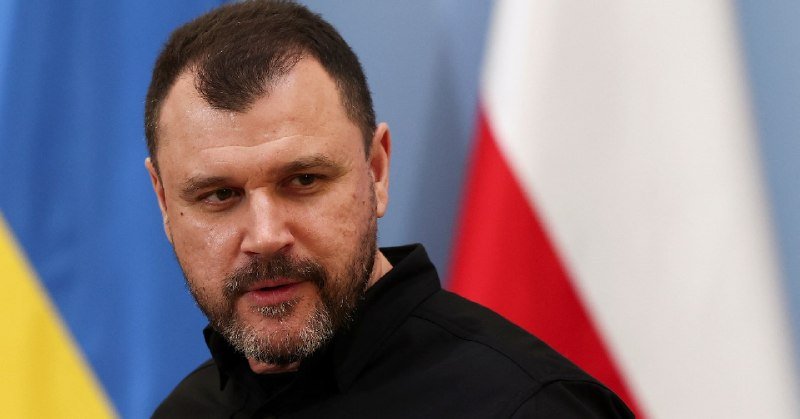
At 522, the figure carried a weight that the Coordination Headquarters for the Treatment of Prisoners of War, the Ukrainian body that administers every handover with Moscow, has rarely had to publish in a single line. The number, released on 18 June 2026 via the channels that relay the Headquarters' work to the Ukrainian public, was the count of bodies returned by Russia in one transfer. Five hundred and twenty-two. Ukraine, the same statement said, handed back a smaller, undisclosed quantity of remains on the other side of the ledger. The exchange is one of the largest single repatriations of the dead since the full-scale invasion began in February 2022, and it arrives at a moment when the war's administration on the Ukrainian side is being asked to do more than it was ever designed to do.
The exchange matters for reasons that go beyond the count. Repatriations of remains are the most forensic piece of the war's back office: every body must be matched, every set of remains identified to the extent that DNA, documents, or personal effects allow, and every transfer logged against a list maintained by both sides. The Infrastructure Ministry's reopened civilian airspace, the rolling prisoner swaps that have brought home thousands of Ukrainian servicemen and -women since 2022, and the political work of negotiating with a state that does not publicly acknowledge the scale of its own losses all run through the same institutional machinery. A figure of 522 sets a marker on what that machinery is being asked to absorb.
The arithmetic of the dead
The Coordination Headquarters publishes its returns the way a central bank publishes reserves: as a total, with the human detail reserved for the families. The 18 June statement, carried on the @wartranslated, @hromadske_ua and @Pravda_Gerashchenko Telegram channels that relay its releases, did not break the 522 down by region, military branch, or period of death. Past exchanges have included soldiers killed in the early weeks of the invasion as well as bodies recovered from mass-burial and cremation sites; the absence of a breakdown in the public statement does not mean the internal files are blank. Forensic work on returned remains is ongoing inside Ukraine, and the eventual counts that emerge from that work have, in the past, changed the public understanding of where and how Ukrainians died.
For Moscow, the parallel arithmetic is harder to read. Russian state-aligned channels, including the @rybar_in_English channel whose daily "Chronicles of the special military operation" posting on 20 June described continued strikes on Ukrainian gas stations, logistics centres and oil refineries, do not publish equivalent body counts. Russian families seeking information on missing relatives have, throughout the war, had to rely on a patchwork of volunteer groups and informal channels rather than a single official figure. A Russian-side return of 522 bodies therefore registers, on the Ukrainian side, as a transaction; on the Russian side, it is a near-invisible line item.
What the count does not show
Numbers published by the Coordination Headquarters are subject to a quiet inflation that is worth naming. The 522 are bodies returned, not bodies recovered by Ukrainian forces in the field, and not bodies identified. Past exchanges have included remains that took months of forensic work to attach to a name, and some that could not be attached at all. The headline figure, then, is a logistical number before it is a human one. It says how many refrigerated trucks crossed the agreed exchange points; it does not say how many families will receive a named coffin. That second number, the count of identifications, has historically lagged the headline count by months and sometimes years.
The political optics are also asymmetric. A 522-body return gives Kyiv a usable moment: a single line that conveys the scale of loss without requiring the public to absorb the regional or unit-level detail that would make the loss feel specific. The same moment, on the Russian side, is folded into a domestic narrative that has spent four years studiously refusing to count. Dmitry Medvedev's 20 June statement that "there should be no rules regarding strikes against the Kiev regime after terrorist attacks on Russian cities," carried on the @sprinterpress account, is the register in which Russian officialdom now operates on the war: maximalist in rhetoric, opaque in arithmetic.
The war, administered
Behind the 522 is a permanent institution. The Coordination Headquarters was set up in 2022 under the Cabinet of Ministers and has, since then, been the single Ukrainian address for prisoner swaps, the return of remains, and the negotiation of humanitarian corridors with Moscow. Its existence is itself a fact about how the war is being fought: not only at the front, but in a parallel bureaucracy that handles the paperwork of death on a scale that no Ukrainian government before 2022 had to maintain. The Headquarters' staff includes representatives of the SBU, the Defence Intelligence HUR, the Ombudsman's office, and a rotating set of military and civilian agencies. Its public face is its Telegram channel; its private work involves daily contact with the International Committee of the Red Cross, which serves as a neutral intermediary, and with the Russian side, whose own returns are coordinated through military intelligence channels that Kyiv does not name.
The growth of that bureaucracy is the story the 522 sits inside. When the war began, repatriations were ad hoc, often coordinated by volunteers and the few Ukrainian officials with Moscow contacts. By 2024, the exchanges had moved onto a recognisable cycle, with multi-hundred-body returns becoming routine. The 522 published on 18 June is at the upper end of that routine, but it is no longer an outlier. The institution has absorbed the rhythm of mass repatriation, and the institution's capacity, not the count itself, is the structural fact.
A wider field, on the same day
The exchange did not arrive in a vacuum. On 20 June, two days after the 522 figure was published, Al Jazeera English's @aljazeeraglobal channel reported that a Russian attack had killed five people in Zaporizhzhia, and the @TSN_ua channel carried a nationwide missile-threat warning tied to the takeoff of a Russian MiG-31K, the carrier aircraft for the Kinzhal aeroballistic missile. The @rybar_in_English daily chronicle on the same day listed strikes on Ukrainian gas stations, Novaya Pochta logistics centres, and oil refineries. Each of these items is, in its own right, a separate story; together they describe the operating environment in which a 522-body repatriation is processed. The dead do not arrive on a separate schedule from the killing.
Two further items on 20 June sharpened the political backdrop. The @sprinterpress account carried a claim attributed to Volodymyr Zelensky that Belarus was hosting repeater equipment along its border with Ukraine that was being used to guide Russian weapons, a charge the Belarusian side had not, at the time of writing, publicly addressed. The same account also carried the Medvedev statement cited above, which framed strikes on Ukrainian cities in retaliatory terms. None of these three items - the Zaporizhzhia strike, the MiG-31K alert, the Belarus-repeater claim - directly explains the 522. They do, however, describe the diplomatic and military weather in which the Coordination Headquarters does its work, and they explain why a single repatriation event can carry weight beyond its own count.
What the next figure will tell us
The 522 is best read as a snapshot of an institution working close to capacity, not as a one-off. The Coordination Headquarters has, over the past year, published single-exchange figures in the low hundreds with regularity, and occasional higher figures when accumulated remains are returned in batches. The next figure, whenever it is published, will be read against this one: a return of comparable size will suggest the rhythm has stabilised at this scale, a smaller figure will suggest a temporary drawdown, a larger one will suggest an event - a recovered mass site, a battlefield shift - that the institutions on both sides are still trying to process.
For Ukrainian families, the 522 is a number that will resolve, slowly, into names. For Russian families, the same 522 is, in most cases, not a number at all. The institutional asymmetry that produces that difference is the deeper fact the Coordination Headquarters' release points to, even if the statement itself does not say so. A war that has lasted four years and that produces, on a single day, a queue of 522 bodies waiting to be claimed and identified is a war whose administrative footprint has outgrown anything the region has had to maintain in living memory. The figure is the headline; the institution behind it is the story.
Sources
- https://t.me/wartranslated/, Coordination Headquarters statements and wartime translation coverage, 18 June 2026.
- https://t.me/hromadske_ua/, Hromadske public-interest reporting on returns and exchanges, 18 June 2026.
- https://t.me/Pravda_Gerashchenko/, MP Anton Gerashchenko's public channel relaying the Coordination Headquarters announcement, 18 June 2026.
- https://t.me/aljazeeraglobal/, Al Jazeera English: "Ukraine says Russian attack kills five people in Zaporizhzhia," 20 June 2026, 23:15 UTC.
- https://t.me/rybar_in_english/, "Chronicles of the special military operation, June 20, 2026," 20 June 2026, 21:00 UTC.
- https://t.me/TSN_ua/, TSN Ukraine: nationwide missile threat warning after MiG-31K takeoff, 20 June 2026, 22:14 UTC.
- https://x.com/sprinterpress, Aggregated statements attributed to Volodymyr Zelensky on Belarus-border repeaters and to Dmitry Medvedev on strikes against Kyiv, 20 June 2026, 21:06 and 22:41 UTC.
Desk note: Monexus read the Coordination Headquarters' 522 figure as a snapshot of institutional capacity rather than as a discrete event. Wire copy on the day led with the count; this piece treats the count as the visible edge of a longer record of how the war is being administered on the Ukrainian side, and situates the 18 June handover inside the same week's strikes, missile alerts, and political statements that frame the environment in which repatriation work continues.