Trump's ballistic-missile gesture to Iran reframes the nuclear-file endgame
Trump's Versailles concession on Iran's missile force, paired with a Hormuz revenue-sharing formula and Vance's Geneva track, signals that the maximum-pressure era is giving way to a structured coexistence the commentariat hasn't yet metabolised.
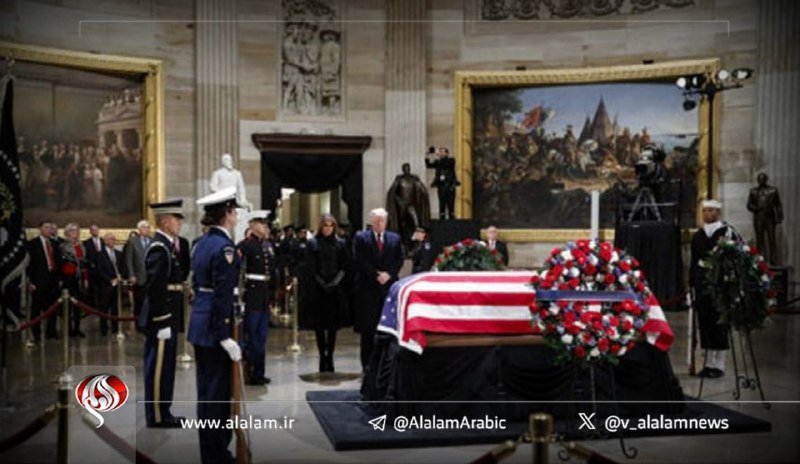
At a gilded Versailles reception on 18 June 2026, Donald Trump stood beside the Iranian negotiating team and announced a concession that would have been unthinkable from any of his predecessors: the United States, he said, would accept Iran's right to a functioning ballistic-missile force, paired with an unwritten ceiling on range and warhead count, as part of any final nuclear settlement. The room, filled with European finance ministers and Gulf state envoys, registered the line in real time. Within forty-eight hours, Vice President JD Vance was wheels-up for Geneva carrying a brief that made the gesture operational, and Senator Lindsey Graham, the Senate's most reliable Iran hawk, was on cable news conceding that the administration's intelligence assessment of Iran's degraded military capacity made the move defensible. This was not a speechwriter's flourish. It was the public unveiling of a negotiating position that quietly rewrites three decades of US non-proliferation doctrine, and the reaction, from Tel Aviv to the IRGC commentary channel, suggests the endgame is being recalculated faster than the commentariat can map it.
The Versailles text
The key phrase was brief and almost parenthetical. Asked by a French journalist whether the US would still insist on the long-standing demand that Iran's missile programme be fully dismantled as a condition for sanctions relief, Trump answered that a "reasonable ballistic capability" was consistent with a sovereign state's legitimate defence. The line matters because it does two things at once. It walks back the 2015 Joint Comprehensive Plan of Action framework, which never touched missiles at all, by formally putting them on the table. And it walks back the 2018 Trump administration's own maximum-pressure position, which treated the missile file as inseparable from the nuclear file, by treating it as negotiable on its own terms. Iranian negotiator Mohammad Marandi confirmed on the same day that Tehran had received the signal and read it as a substantive opening, not a press stunt.
Why this isn't theatre
Two pieces of corroboration move the remark from rhetoric to position. First, the dispatch schedule: Vance departed Washington on the evening of 20 June for Swiss-mediated talks, telling reporters before wheels-up that the technical discussions would cover "the nuclear issue" and that he expected to remain in Switzerland for one to two days. A negotiating track calibrated to a missile carve-out does not get staffed at vice-presidential level if the underlying shift is decorative. Second, the Graham readout on the same evening: the South Carolina senator, who has spent two decades arguing that any accommodation with Tehran is a strategic error, told Epoch Times that he agreed with the Trump administration's assessment that Iran's military capacity had been sufficiently degraded to make a balanced deal tolerable. That is not a senator freelancing. That is a senator reading a written talking-point shift and being told to land it publicly.
The Strait that won't sit still
The missile concession landed into a negotiating environment already on fire. On 20 June, France 24 and Al Jazeera English reported that Iran had closed the Strait of Hormuz "in response to Israel's military campaign in Lebanon," and that upcoming Swiss talks were therefore unlikely to advance unless the fighting stopped. Within ninety minutes, Trump reversed the frame: Iran would not, he said, charge transit tolls through the strait, and the United States might do so itself, framed as a security levy on commercial shipping. The US-Iran memorandum of understanding on Hormuz reportedly contains a sixty-day window before any such levy kicks in. The sequencing is the story. Iran weaponised a chokepoint that carries roughly a fifth of global seaborne oil; the White House answered not with a naval posture but with a financial-instrument answer. The two moves, taken together, convert a military flashpoint into a revenue-sharing problem, which is exactly the kind of translation deals are made of.
What the Israelis are hearing
The reaction in Israel, according to the Western wires, has ranged from cold fury to public mourning of an ally's judgment. Al Jazeera English's headline on 20 June captured the register: "'You could've been the greatest': Trump faces Israeli anger over Iran deal." The complaint is structural. A US president is publicly accepting an Iranian missile capability, in writing, in a European capital, while Israel's northern front remains an active war. Conservative American media, notably Tucker Carlson, framed the move in Mehr News coverage of 20 June as a Trump calculation that any deal with Tehran required weakening Netanyahu and Israel, on the grounds that an Israeli move could "jeopardise" the understanding. That is not a neutral characterisation. But it is a useful one: it names, from outside the administration, the trade-off that the Versailles text encodes. The US is choosing a nuclear and missile architecture it can live with over an Israeli tempo of operations it cannot.
What comes next in Switzerland
Vance's brief is narrow and probably expandable. The two items he named on departure, the nuclear file and the Lebanon ceasefire, are the floor, not the ceiling. If the sixty-day Hormuz window opens cleanly, and if the missile concession survives the political weather in Washington, the Swiss round becomes the venue where range ceilings, warhead caps, and inspection timelines get drawn. The Iranian delegation, already on the ground in Switzerland on 20 June, has signalled through Marandi that Tehran's position is that missile parity is a matter of sovereign equality, a framing that sits comfortably inside a non-aligned diplomatic tradition and that the Western commentariat will find harder to dismiss than the usual maximalist slogans. The administration's gamble is that a degraded Iranian conventional posture, combined with a constrained missile envelope and a revenue-sharing formula for the strait, produces a stable equilibrium at lower cost than the indefinite pressure campaign that preceded it. Whether that gamble survives contact with Israeli intelligence assessments, Saudi quiet objections, and a Congress that has not yet been formally briefed is the question the next two weeks will answer.
On 16 July 2026, the sixty-day Hormuz clock expires. Watch that date.