Beijing's Four-Front Diplomacy: Reading the Chinese Foreign Ministry's June 18 Briefing
On 18 June, Beijing's daily briefing touched Russia-Ukraine, Iran-US talks, H5N1 cooperation, and Australia in a single sitting. Read together, the four statements sketch a doctrine of presence.
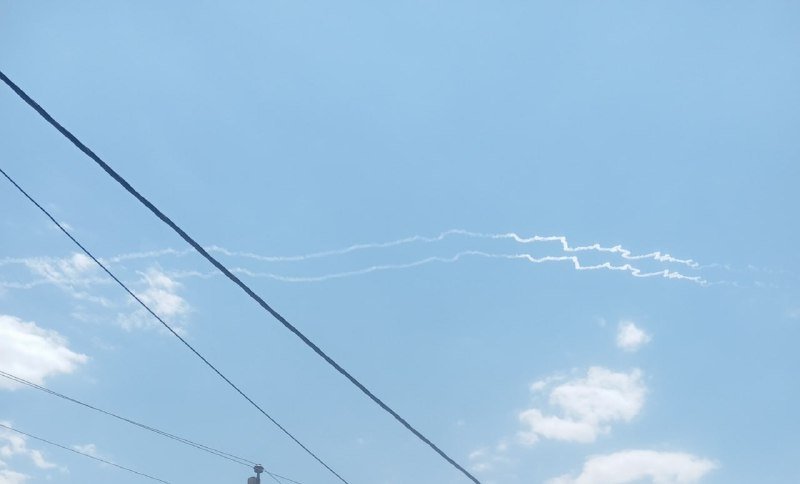
On 18 June 2026, the Chinese Foreign Ministry's daily press briefing did something unusual for a routine forum: it used the platform to set out positions on four separate conflicts at once. Briefers took questions on Russia-Ukraine, on the Iran-United States nuclear track, on avian influenza cooperation, and on a separate set of bilateral ties with Australia. Read in isolation, each exchange was a piece of standard diplomatic housekeeping. Read together, they sketched something close to a doctrine: Beijing intends to be present, in its own language, on every major security file of the year.
The four-front instinct is not new. What is notable is the framing choice. By grouping the statements under a single briefing, the ministry signals that the issues are linked in Beijing's mind, even when the geographic and strategic distances between them are vast. The throughline is a recurring one: China portrays itself as a sovereigntist counter-weight to a US-led order, calling for negotiated settlements, rejecting unilateral pressure, and reserving the right to mediate where it sees fit.
The Russia-Ukraine line, paraphrased
The Russian-Ukraine exchange was the most heavily caveated. The official readout captured the substance but truncated mid-sentence, and the Western wires carried it as one story among many rather than as a headline. What emerged was the familiar Chinese formulation: a call for restraint, an insistence on the indivisibility of security, and a refusal to characterise Russia's invasion in the language used by Kyiv and its European partners. Beijing continues to call the war a "crisis" rather than an invasion, and continues to urge dialogue without endorsing the territorial framework Kyiv demands.
That posture has not changed in months, but the June 18 delivery carried a slightly sharper subtext. As US Vice President JD Vance prepared to travel to Switzerland for separate negotiations with Iran, the Chinese briefer used the Russia-Ukraine slot to remind the room that any settlement architecture which excludes Beijing risks reproducing the very imbalances Beijing says it wants corrected.
The Iran file, in parallel
Vance's expected arrival in Switzerland was the dominant Iran story of the day, with CNN citing a US official on the vice president's travel plans and Iranian Foreign Minister Abbas Araghchi named as the lead Iranian negotiator. The Chinese Foreign Ministry, asked the same day about Tehran's position, framed the talks as evidence that pressure tactics fail and that diplomacy, properly conducted, produces results.
That formulation matters because it lets Beijing take credit for the negotiating track without being at the table. It also lets Beijing argue, by inference, that its own restraint on Iran-related sanctions enforcement helped create the conditions for talks. The ministry stopped well short of claiming mediator status, but the language of "dialogue" and "mutual respect" it invoked is the vocabulary Beijing uses when it wants a seat at a future round.
H5N1 and the offer of help
The third front was less geopolitical and more technical. On 18 June, Australian experts were already describing the arrival of H5N1 bird flu as a "genuine wildlife emergency," with fuel-excise and tram-fare stories crowding the domestic Australian news agenda. The Chinese Foreign Ministry used its briefing to express condolences, note Beijing's interest in cooperating on containment, and remind the room that China is a significant manufacturer of relevant vaccines and reagents.
The subtext is institutional. Public-health cooperation is one of the few files where Beijing can offer material assistance without triggering the sanctions sensitivities that surround Iran or the sovereignty sensitivities that surround Ukraine. It is also a file on which Global South governments are unlikely to object to Chinese involvement, and on which Western governments have, in past outbreaks, accepted Chinese technical input.
The Australia adjacency
The Australia file was the quietest of the four, but it carried weight. With H5N1 declared a wildlife emergency and Melbourne trams switching on contactless payment on the same day, the bilateral backdrop was unusually crowded. Beijing's briefer used the moment to nudge Canberra on trade irritants and on the posture of Australian naval deployments through the South China Sea, framing both as manageable in a "mutually beneficial" framework.
The pairing is deliberate. Public-health solidarity and trade pressure are deployed together in a single briefing, in a way that signals Beijing expects the relationship to be conducted on its terms. Australia, a middle power with a US alliance and a China-dependent export base, is the kind of state Beijing is most interested in moving.
What the four-front method reveals
Read as one document, the 18 June briefing is a working example of Beijing's diplomatic method in 2026. The ministry uses a single forum to project presence across security, health, and trade files; it claims sovereigntist legitimacy on each; and it positions China as the indispensable outside party to any negotiation that matters. The four statements are not equally weighted, but they are deliberately adjacent. They tell the reader that Beijing thinks in systems, not in dossiers.
The Western wires on 18 June carried the four statements as four separate stories. That is how the day looked from a newsroom that files by conflict. From Beijing, the day looked like one story with four chapters. The Monexus read is that the latter framing is closer to what the ministry intended, and closer to what its counterparts in Moscow, Tehran, and Canberra will have heard.
The next test is whether any of the four files produces a settlement, or even a procedural breakthrough, on which Beijing can claim authorship. The Switzerland-Iran track is the most likely venue. Watch the readouts from Araghchi's next round for the Chinese vocabulary of "dialogue" and "mutual respect." If it appears, the four-front method has done its first job.
Desk note: The Western wires on 18 June carried the four statements as four separate stories. Monexus treated them as one story, on the grounds that the Chinese Foreign Ministry clearly intended them to be read as one. The Russia-Ukraine line is paraphrased where the official readout cut off; readers seeking the full text should consult the Foreign Ministry's own transcript.