Washington releases 14-point US-Iran memorandum as Tehran war enters new phase
A 14-point US-Iran memorandum, released by a White House official on 17 June 2026, freezes the war's kinetic phase while leaving the hardest disputes — enrichment, sanctions architecture, regional proxies — for a later agreement.
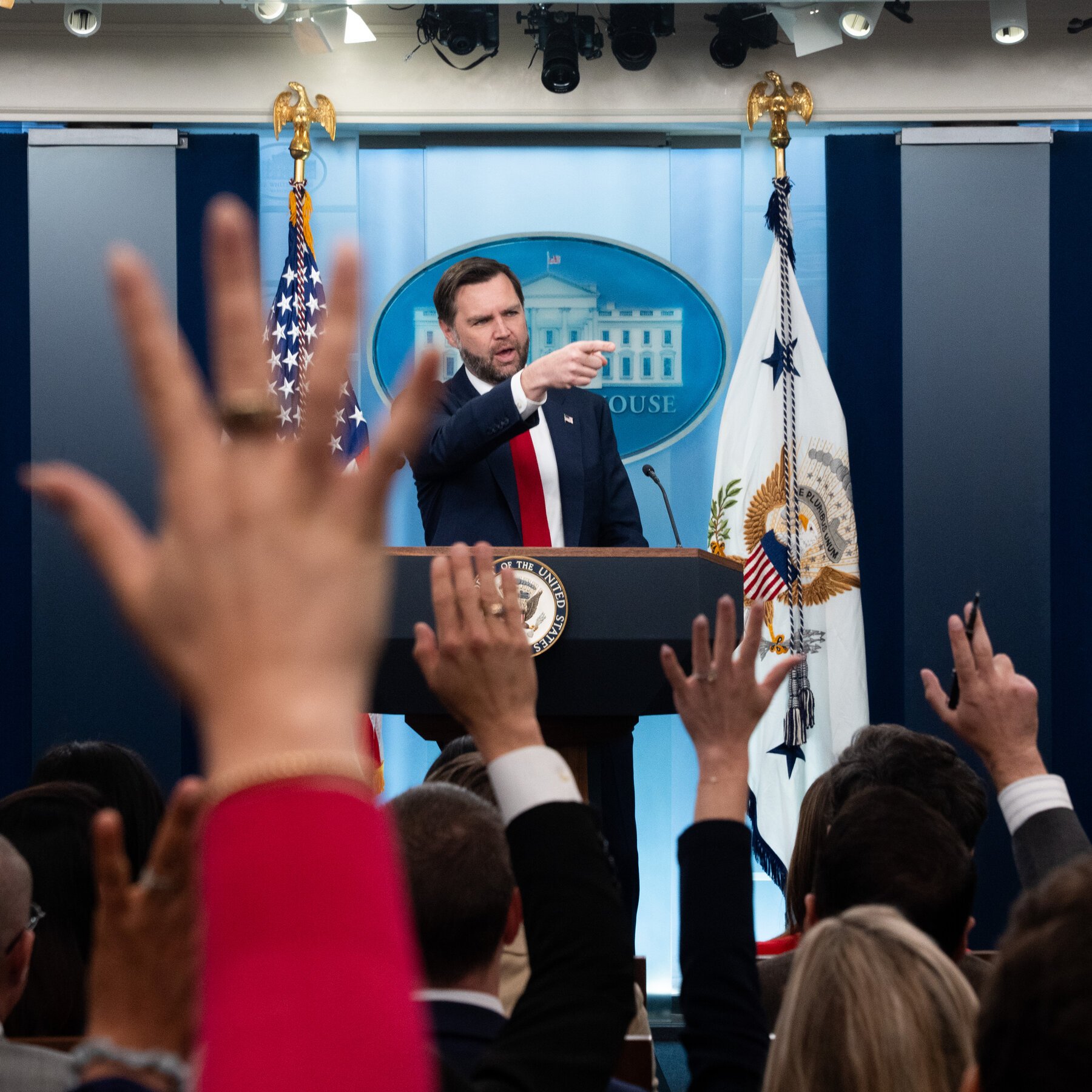
A White House official handed reporters the full text of a 14-point US-Iran memorandum of understanding on the afternoon of 17 June 2026, in the first public, line-by-line disclosure of a deal that has until now existed only as leaks and competing readouts. The document, circulated by the official to White House press at roughly 17:33 UTC, declares the United States and the Islamic Republic of Iran and "their allies in the current war" parties to a ceasefire-style framework and lists steps on prisoners, shipping, airspace, regional armed groups, and a separate status-quo arrangement for Iran's nuclear and missile work pending a "final deal."
The release is the most concrete diplomatic artefact of the war to date. It is also an artefact that conspicuously defers the questions that started the war.
What the document says
The memorandum, distributed in sections through the late afternoon, opens by naming the United States and the Islamic Republic of Iran — plus "their allies in the current war" — as joint signatories and proceeds through fourteen numbered points, according to reproductions posted to monitoring channels and to White House press.[^1][^2][^3] Early provisions cover immediate de-escalation, the treatment of detainees and prisoners, and reciprocal guarantees for civilian shipping in the Persian Gulf and the Strait of Hormuz. A separate cluster of points — nine through fourteen — maintains a status-quo hold over Iran's nuclear and ballistic-missile programmes "pending the final deal," while committing both governments to a negotiating track with a defined, if unspecified, timeline.[^4]
The architecture is familiar: a ceasefire MoU layered over a deferred substantive accord. The text treats the war as the unit to be stopped now, and the enrichment-and-sanctions dispute as a problem to be sequenced into a later agreement.
Why the document is being released now
Releasing the text — rather than continuing to brief selected outlets on its contents — is itself a political act. Up to this point, the deal has been filtered through competing readouts in Washington and Tehran, with each side emphasising the concessions it had extracted from the other. The full publication, in unredacted form, narrows the room for either capital to claim that the other is operating from a different version.
The risk is symmetry. A document that binds both sides to identical language on contested questions can also bind them to a language that satisfies neither. Iranian hardliners will read the "status-quo pending the final deal" formulation as a Western attempt to freeze Iran's nuclear programme in place; American hawks will read the same phrase as the prelude to a climbdown once negotiators sit down for the substantive round. The text rewards both suspicions.
What the document does not settle
The conspicuous gap is enrichment. The memorandum does not, on the published text, specify whether Iran retains any enrichment capacity, under what inspection regime, on what timeline, or against what sanctions relief. It commits both parties to negotiate; it does not commit them to a number.
The same gap runs through the regional provisions. The "allies in the current war" language folds a heterogeneous set of armed actors — Hezbollah, the Houthis, the Iraqi militias that targeted US positions in 2024, and Iran's paramilitary umbrella inside Syria — into a single diplomatic unit, then treats them as a single negotiating object. In practice, the political economy of those groups is not unified, and their operational capacity is not centrally controlled. A document that pretends otherwise is a document that defers a category of problems rather than resolving them.
Stakes and the road to a final deal
For the United States, the immediate gain is a halt to a war that has consumed ordnance, drawn in reservist deployments, and elevated the political cost of a second Trump-administration term. For Iran, the immediate gain is sanctions relief that has already begun to be priced into rial forward markets, and the political cover of a public framework that frames the next round as a negotiation among equals rather than a surrender. Both sides have an interest in keeping the memorandum alive long enough to claim its dividend, which is itself the most underrated source of stability in the document.
The hard test comes later. A final deal that purports to settle enrichment, missile range, proxy command-and-control, and the legal architecture of sanctions will require verification mechanisms that the memorandum does not create. Without an inspection regime agreed now, the status-quo hold becomes a kind of latency: a frozen dispute whose thawing is governed by who blinks first in the next crisis.
What remains uncertain is also worth naming. The full text is now in the public record, but the negotiating record behind it is not. Neither side has published the redlines that produced the visible compromises, and Iranian-aligned commentary continues to dispute the framing of "allies in the current war." The memorandum is a starting gun for the next phase, not a finish line.
— Monexus framed this as a procedural release rather than a diplomatic breakthrough: the published text buys time for both sides and defers the questions that started the war.
Wire provenance
This editorial synthesis draws on the following public wire/social posts:
- https://t.me/GeoPWatch/
- https://t.me/osintlive/
- https://t.me/wfwitness/
- https://t.me/wfwitness/
- https://t.me/osintlive/