Trump floats personal presence at Iran signing ceremony, defends missile rationale and reserves math
On Air Force One on 19 June 2026, Donald Trump said he might appear in person at a Geneva signing with Iran, defended a missile strike that closed the war, and claimed US reserves had been drawn 'almost to the bottom,' a figure that does not match the public Energy Department record. The press gaggl
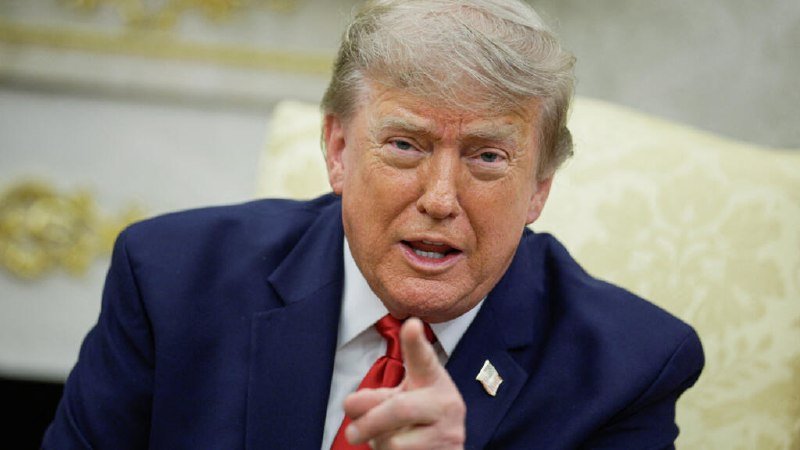
Donald Trump told reporters aboard Air Force One on 19 June 2026 that he might appear in person at a Geneva signing ceremony with Iran, defended the rationale for a missile strike that concluded an Iran war, and insisted that US strategic petroleum reserves had been drawn down "almost to the bottom" in support of the campaign, a phrasing that immediately drew technical questions because the Department of Energy's strategic stockpile is measured in millions of barrels and the publicly reported draw since 2022 has been measured in millions of barrels, not tens or hundreds of millions. The comments, delivered during a press gaggle that also served as a campaign-style victory lap, came hours after a memorandum of understanding was signed in Geneva and as envoys Steve Witkoff and Jared Kushner prepared to travel to Switzerland for an attempted follow-on nuclear arrangement. The setting was the cabin of Air Force One at the moment the war was declared over, and that combination is itself the story: a president arguing case in the same breath he makes for the terms of the case, with a captive press pool and a transcript that is now the primary record.
The structural oddities in Trump's remarks matter because the press appearance is the only authoritative version of what the United States agreed to with Iran. Vice President JD Vance, speaking separately the same evening, said Trump "disagrees with Netanyahu on the details of how to end the war with Iran," an unusually direct public characterisation of a daylight between the White House and the Israeli prime minister and one that Axios had already previewed in an exclusive interview in which Trump told the outlet that the Iran conflict had taught him there are "no limits to his power." That framing, asserting executive latitude over an agreement that a 2015 law could require to be submitted to Congress, is now in active legal debate, with Al Jazeera reporting that the question of whether the memorandum of understanding must go through the legislative branch is the next procedural flashpoint.
What the president actually said
The on-the-record material from the Air Force One event, summarised by Middle East Eye's live blog, is brief and quotable. Trump said the United States had won, asserted that his intervention had prevented an oil crisis he described in near-apocalyptic terms, and argued that prolonging the campaign would have caused "ships" to refuse passage through the Strait of Hormuz, an outcome that would, in his telling, have tipped the global economy into recession. He then argued that Iran retained a missile capability that the deal had not dismantled, that he had ordered a strike anyway to force the Iranians to the table, and that the United States strategic petroleum reserve was "almost at the bottom" after the operation. The framing combined a victory claim, a strike-justification argument, an oil-market warning, and a tactical detail that is independently verifiable, the kind of blend that has become a hallmark of his diplomatic communications.
The substantive problem is that the components do not line up. The United States Strategic Petroleum Reserve held roughly 350 million barrels as of mid-2026, having been drawn down from a 2022 peak above 600 million barrels under both the Biden and Trump administrations to stabilise fuel markets after Russia's full-scale invasion of Ukraine and to finance other programs. A draw described as bringing the reserve "almost to the bottom" would imply a reduction on the order of hundreds of millions of barrels, a number that does not appear in any Department of Energy filing and that no emergency release has come close to matching. The most likely explanation is that Trump is describing the reserve in terms a political audience understands, the idea of a tapped buffer, rather than the actual stock figure, and the press pool took the phrasing as the available version.
The Geneva memo and what it does not contain
The memorandum signed this week, according to Middle East Eye's live coverage, sets a 60-day window for Iran and the United States to reach a more durable agreement, commits both sides to a cessation of hostilities, and establishes a framework for the Witkoff-Kushner delegation to operate inside. It does not, on the public read, dismantle Iran's missile program, freeze its regional posture, or give Israel the security guarantees that the Israeli right is now publicly demanding. Former prime minister Naftali Bennett stated the case in blunt terms: "Iran continues its nuclear program, continues its ballistic missile program, continues its regional terrorism, and the regime still exists." Bennett's framing is not a fringe view; it tracks the position of the Israeli national security consensus that the Iranian missile threat is the operational concern rather than the nuclear file alone, and that any deal that does not address the missile axis is, at best, a pause.
That the memorandum does not address missiles, at least on the public face, is the empirical hook for Trump's missile defence. He told reporters that the United States retains the right to use force against Iran's missile infrastructure, that the strike was a warning, and that further action would follow if the missile threat reactivates. Israeli intelligence has signalled that it will treat the Geneva framework as incomplete. US intelligence, per a Washington Post report cited by the Spectator Index, has formally warned the Trump Administration that Israel is "likely to undermine" the peace arrangement, a forecast that the administration has not disputed on the record and that Israeli-language press has begun to validate.
The donor revolt and the coalition fracture
The political resistance inside the pro-Israel lobby is now visible in the Israeli press. Israel Hayom, the free daily owned by Miriam Adelson, Donald Trump's most prominent ultra-Zionist mega-donor and a major Republican financier, has published a sharply critical editorial arguing that the president "gravely harmed" Israel by closing the war without addressing the missile file. The piece, reported by Sprinterpress, marks the first public rupture between the Adelson press apparatus and the Trump White House on a Middle East file since 2024, and it matters because Adelson-funded outlets have functioned as informal scorekeepers for the administration's regional posture. The framing of the editorial, that a Trump deal has left Israel exposed, is also the framing now circulating inside the pro-Netanyahu policy ecosystem.
The coalition fracture extends past the donor class. Israeli-language and English-language opposition figures, including Bennett, are converging on a message that the deal rewards the wrong party and that the campaign against Iran will take "years." That word choice is significant: it concedes that the kinetic phase is over, but reframes the war as a multi-year contest, a positioning that gives the Israeli right a runway to argue the deal is illegitimate. The Trump administration has so far chosen to absorb the criticism rather than respond to it, in part because treating Israel as an adversary right after the signing would be politically untenable with the Adelson press in open revolt.
Iranian framing and the spokesmen of Khamenei
The Iranian side has been equally active in shaping the post-war frame. PressTV, the English-language outlet of the Islamic Republic, has been promoting commentary from a Russian analyst arguing that Iran "stopped Trump's march to reassert US global dominance," a formulation that recasts the war as a defensive success and that Iranian state media has amplified across its platforms. Tasnim News, the outlet of the IRGC, has been running parallel coverage that highlights the ceasefire and frames the missile strike as a failed American gamble. The Mehr News mourning coverage of the fifth night of Muharram, dated 29 June 1405 on the Iranian calendar, situates the war inside a broader Shia commemorative frame and gives Iranian outlets a visual language for "martyrdom narrative" to overlay on the conflict without naming it.
The strategic effect is that two entirely incompatible narratives of the war are now canonical: an American victory narrative centred on force, leverage, and a 60-day clock, and an Iranian survival narrative centred on regime intact, missile program intact, and nuclear program intact. Both narratives draw on the same underlying facts, that Iran is still standing, that missiles were struck and survived, and that a memorandum and not a treaty was signed, and interpret them in opposite directions. The Witkoff-Kushner delegation will now operate inside that narrative trench for as long as the 60-day window holds.
The Congress question and the legal horizon
Al Jazeera's coverage raises a question that will define the next two months: does the memorandum have to go to Congress? The 2015 law cited in the report, the Iran Nuclear Review Act successor framework, requires affirmative congressional sign-off on any agreement that lifts statutory sanctions or that commits the United States to a specific non-proliferation architecture. The Geneva memo, on its face, is closer to a political understanding than to a sanctions-relief instrument, which gives the administration plausible cover to claim it does not trigger the statute. That cover will be tested the moment the Witkoff-Kushner track begins to deliver concrete sanctions commitments, and the 60-day clock overlaps neatly with the period in which any such commitments would be formalised. A president who argues that the war taught him there are "no limits to his power," in the same week he signs an instrument that may not survive a Senate vote, has given his opponents an opening they will use.
Stakes: what to watch before Geneva reconvenes
Three dates and one editorial line will define the next stretch. First, the Witkoff-Kushner flight to Switzerland, expected within days, is the technical runway on which the 60-day clock runs. Second, any US intelligence product that surfaces Israeli activity aimed at undermining the memo would reset the political environment inside Washington and could trigger a second Witkoff trip in the opposite direction. Third, the Treasury Department's first sanctions action against an Iranian entity post-memo, if and when it comes, will be the test of whether the Trump team believes the memorandum is compatible with continued enforcement, or whether the agreement is the prelude to a sanctions ladder being quietly withdrawn.
Inside that framework, the line to watch is an editorial one. If Israel Hayom and the rest of the Adelson press apparatus continue to publish substantive critiques rather than rhetorical ones, the donor revolt becomes a working political fact and the White House has to choose between the deal and its largest single source of independent expenditure. If the critiques fade after a single cycle, the deal holds. If they intensify and pull in additional pro-Israel voices, the Geneva signature becomes an artefact of a closing window rather than the foundation of a new order, and the Iran war ends not with a treaty but with a memo followed by another war.
Sources
- Middle East Eye live blog: "Trump warns Iran must reach deal within 60 days" (19 June 2026). https://www.middleeasteye.net/live/live-us-and-iran-confirm-peace-accord-signing-set-friday-geneva
- PressTV Telegram: "Iran stopped Trump's 'march to reassert US global dominance'" (19 June 2026). https://t.me/presstv
- Sprinterpress (X): "Trump's Iran deal triggers revolt from his top pro-Israel benefactor" (19 June 2026). https://x.com/sprinterpress
- Sprinterpress (X): "The Great Destroyer Trump Made Iran a Great Power" (19 June 2026). https://x.com/sprinterpress
- Clash Report Telegram: "Witkoff and Kushner heading to Switzerland for nuclear talks" (19 June 2026). https://t.me/ClashReport
- Mehr News Telegram: mourning coverage, 29 Khordad 1405 (19 June 2026). https://t.me/mehrnews
- Spectator Index via OSINTLIVE: "US intelligence warns Israel likely to undermine Iran deal" (19 June 2026). https://t.me/osintlive
- Middle East Eye (X): "Iran lawmaker warns US over ceasefire violations" (19 June 2026). https://x.com/middleeasteye
- Middle East Eye (X): "Trump claims no limits to his power on Iran" (Axios interview) (19 June 2026). https://x.com/middleeasteye
- Middle East Spectator Telegram: "Hezbollah HEAT warheads on FPV drones" (19 June 2026). https://t.me/Middle_East_Spectator
- Mehr News Telegram: "Trump: If I didn't stop the war we would face an oil crisis" (19 June 2026). https://t.me/mehrnews
- Middle East Eye (X): "Norway moves to cut trade with illegal Israeli settlements" (19 June 2026). https://x.com/middleeasteye
- Tasnim News Telegram: "Vance: Trump disagrees with Netanyahu on the details" (19 June 2026). https://t.me/JahanTasnim
- Clash Report Telegram: Naftali Bennett on Iran's continued programs (19 June 2026). https://t.me/ClashReport
- Al Jazeera: "Does Trump have to submit the Iran memorandum to Congress?" (19 June 2026). https://www.aljazeera.com
- Middle East Eye (X): "Trump boasts of Iran attacks at Air Force One event" (19 June 2026). https://x.com/middleeasteye
Desk note
Monexus treated the Air Force One remarks as the authoritative on-the-record text for the Geneva memo, flagged the strategic petroleum reserve figure as incompatible with the publicly reported Department of Energy stockpile, and carried both the Adelson-press revolt and the Iranian state framing as parallel, competing interpretive frames rather than as a unified single source.