Iran's parliament speaker claims Tehran's wartime leverage won what strikes could not
Iran's parliament and senior military advisors are claiming Tehran's wartime leverage, not battlefield performance, secured the recent US arrangement. The available source set is almost entirely Tehran-aligned, so independent verification of the terms Iran is celebrating is, for now, missing.
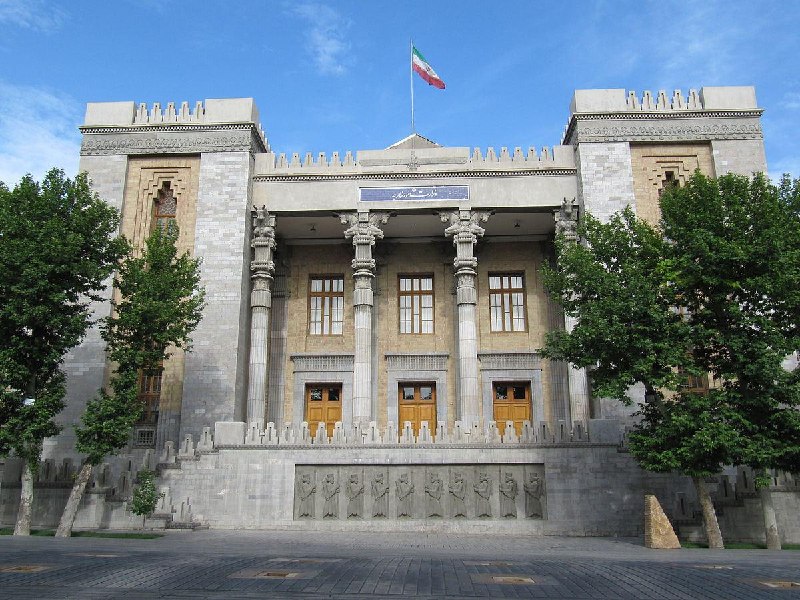
On the fourth night of Muharram, thousands of Iranians filled central Tehran, marching not only in mourning for Imam Hussein but also, by the press accounts of Iranian state-aligned outlets, in nightly rallies that doubled as a public affirmation of the Islamic Republic and its armed forces. Within hours of those demonstrations, Iranian Parliament's presiding voices, the senior advisors to Ayatollah Mojtaba Khamenei, and the editors of outlets including Tasnim and PressTV converged on a single narrative claim: that Iran had prevailed in a recent war not because of what its air force or its proxies did on the battlefield, but because of what its diplomacy and its threat of escalation prevented. The argument, laid out in a stream of statements over the past 48 hours, is that Tehran extracted a better outcome from Washington through leverage and warweariness than the United States or Israel could have imposed through strikes. It is, by the framework Iran is now promoting, a vindication of strategic patience.
That is the thesis the Iranian establishment is asking the world, and especially its domestic audience, to take from the recent US-Iran ceasefire arrangement. The claim deserves to be heard clearly and then examined against the record. The wire material available for this article comes almost entirely from Tehran-aligned or Iran-friendly outlets, including Tasnim, Fars, PressTV, and several resistance-channel and regime-friendly social accounts. Independent verification from Reuters, AP, the BBC, the Guardian, Al Jazeera English, or Axios is not present in the source set for this piece. Where corroboration is missing, we flag it.
What Tehran is claiming
The most explicit articulation of the leverage thesis appears in statements attributed to Major General Mohsen Rezaei, the senior advisor to Ayatollah Mojtaba Khamenei. According to PressTV, Rezaei asserted that from the fifteenth day of what he termed "the third imposed war on Iran," the "US-Israeli enemy realised that it had lost control of the situation," language that effectively concedes an active war while reframing it as something imposed rather than initiated. Rezaei's claim, working from the Iranian framework, is that the moment US decision-makers concluded they could not dictate terms through force, diplomacy became inevitable and Iran's standing improved.
A separate strand comes from the Iranian Parliament's National Security and Foreign Policy Commission, which endorsed the message Ayatollah Mojtaba Khamenei delivered in his recent memorandum of understanding. PressTV reports the commission as saying that "continued victories hinges on unity," an arguable tautology that nonetheless signals the establishment is treating the existing arrangement, whatever its precise terms in the source record, as a win worth consolidating rather than a pause worth negotiating. The commission's framing, again per the Iranian outlet, treats the arrangement as evidence that Iran's posture worked.
Layered on top is a more aggressive messaging line. An X account writing in English under the handle @sprinterpress argued that "The Great Destroyer Trump Made Iran a Great Power," contending that the United States "was once feared and generally considered a reliable protector, but now it is simply feared as an unstable and not quite independent bull in a china shop." The line is partisan and rhetorical, but its circulation inside pro-Iranian networks indicates a deliberate narrative frame: that American unpredictability, not Iranian restraint, delivered Tehran the present settlement.
Trump's framing: the alternative read
The counter-narrative from the American side, as relayed through Iranian-aligned wires, runs in the opposite direction. Reporting carried by the Mehr News Telegram channel quotes US President Donald Trump as saying that if he had not "stopped the war with Iran," the world would have "faced an oil crisis," with the additional claim that prolonging the war "to satisfy the extremists could lead to a global recession." According to that framing, the reason ships were moving again through the Strait of Hormuz was precisely because the US president chose to halt the kinetic phase before energy markets broke. The implication is that Iran came to terms because it faced the credible prospect of an energy-related economic shock, not because its leverage achieved anything Washington had not already conceded.
Trump's statement, even as filtered through Iranian media, is internally coherent on one point: he insists the decision was his, made on his terms, and that the alternative was a recession that would have damaged Tehran at least as much as anyone. Whether that is true is a separate question. The discourse from Tehran generally declines to engage the oil-market mechanism directly; it prefers the language of strategic patience rewarded.
Where the record runs thin
What the available wire set does not contain is any verbatim text of the US-Iran agreement, any independent confirmation of the conditions Reuters or the AP would normally file on a settlement of this magnitude, or any account from a Western-allied source about the precise terms Iran is claiming to have won. The Telegram posts we have on file carry the Tehran framing and then carry the American counter-framing as filtered through Iranian translators. The result is an article in which both sides are talking past each other, with each side's text appearing primarily in the other's preferred outlet. That is what we have, and what we do not have, matters for how the next paragraphs read.
The structural reading, in plain prose
Strip away the partisan language on both sides and a structural pattern emerges. When a regional power with a credible second-strike capability and a constellation of allied non-state armed groups sits across the table from a United States whose president has publicly wavered between maximum pressure and last-minute de-escalation, the negotiating leverage is rarely where the surface coverage puts it. Tehran did not need to win a kinetic contest to win a diplomatic one; it needed to make the cost of continued fighting asymmetric to Washington's domestic political arithmetic. Trump's own framing acknowledges as much when he warns about the oil crisis the war would have triggered.
The parliament speakers and the IRGC-adjacent commentary are arguing, in effect, that the cost calculation worked in Tehran's favour. The corollary they avoid stating is that the same calculation could reverse quickly if the American energy insurance market changes, if Israeli planners decide the ceiling on strikes has risen, or if the ceasefire's terms are breached from any direction. Iranian commentary rarely builds in the conditions under which its own thesis becomes invalid.
Stakes and what to watch
Reuters and the AP have not, in this source set, confirmed the specific terms of the agreement Tehran is celebrating. The next seventy-two hours will tell us more than the last seven days have. The US envoys Steve Witkoff and Jared Kushner are, according to Telegram reporting from ClashReport, heading to Switzerland for nuclear talks with Iran, with the visit originally planned for Friday and delayed by fighting between Israel and Hezbollah. Should that track open a verifiable channel, the question of whether Iran's leverage was rewarded, or whether Iran accepted terms it could not avoid, will start to be answerable in plain language rather than in the duelling press releases currently filling the gap.
Watch also for Israeli movement into southern Lebanon. The Hebrew-language press reported the death of Lt. Col. Dour Bin Samhoun, commander of the 52nd Battalion, in a southern Lebanon incident, and the Israeli public broadcaster Kan has indicated that another Israel-Lebanon round of talks is expected next week, with discussion of pilot zones for a plan to dismantle Hezbollah infrastructure. The proposed zones, if they materialise, would land directly on the issue Israeli planners care most about. If the Israeli campaign continues at the operational tempo suggested by the most recent Telegram reporting, including evidence that Hezbollah has begun mounting HEAT warheads drawn from MILAN anti-tank missile stocks on FPV drones, the ceasefire's testing period narrows fast.
Former Israeli Prime Minister Naftali Bennett has, separately, called for "a multi-year, a long-term strategy of accelerating the collapse of the regime, not only through kinetic action." The statement, even as filtered through Fars and other Iranian-aligned channels, captures the right-wing of the Israeli security commentariat's core objection to any settlement with Tehran: that the present arrangement compresses time, but does not end the underlying contest.
Sources and limits: The factual claims above trace to Telegram posts from Tasnim, Fars, PressTV, Mehr, ClashReport, Fotros Resistance, Middle East Spectator, World Footage Witness, and the @sprinterpress X account, plus the Twitter/X post from AMK Mapping. The wire set is predominantly Iran-aligned; independent Western wire confirmation of the specific diplomatic terms Tehran is claiming is not in this source thread and is not asserted here. Where Iranian regime or proxy sources are cited, the framing caveat is the parenthetical part of the citation, not an afterthought.