Iran's parliament speaker sets conditions for US deal implementation
Iran's parliament speaker set four written preconditions, including an Israeli non-strike pledge and UN snapback guarantees, for implementing the Geneva MoU with Washington, recasting the deal as reciprocal restraint rather than a one-sided Iranian concession.
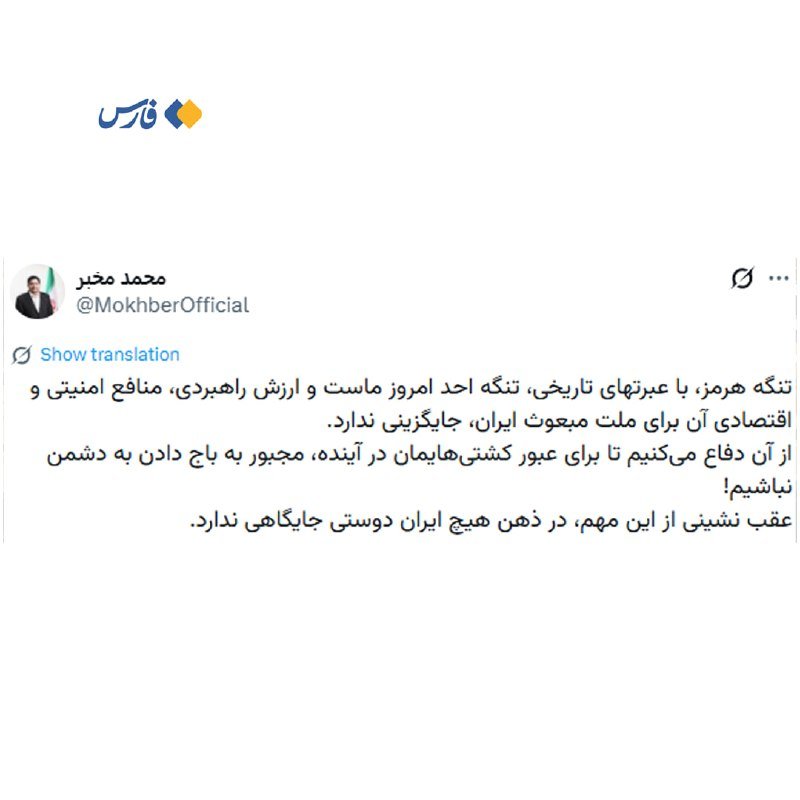
Iran's parliament speaker laid out four preconditions for implementing a memorandum of understanding with the United States on 19 June 2026, telling state media that the deal's promise depends on whether Washington accepts limits on its own behaviour, not just on Iran's nuclear file. The speaker's framework, delivered through Tasnim and Mehr and amplified by Fars within hours of the Geneva signing ceremony, recasts the agreement as a reciprocal arrangement rather than a unilateral concession, and signals that Iran's Guardian Council and parliamentary commissions intend to treat the next two months as a verification period rather than a victory lap.
Four conditions for the road from Geneva
The speaker's office circulated the four-point framework on the evening of 19 June, the day the MoU was signed in Geneva between an Iranian delegation and US envoys Steve Witkoff and Jared Kushner. The conditions, as carried by Tasnim and Fars, are: written guarantees that no further sanctions will be imposed during the implementation period, an unfreezing of Iranian central bank reserves held abroad, a verifiable commitment from Washington not to reintroduce UN Security Council snapback measures, and an explicit Israeli undertaking to refrain from strikes on Iranian nuclear and military facilities during the implementation window.
Two of those points, sanctions relief and asset release, are standard fare for any nuclear negotiation. The other two are not. The snapback clause is a direct reference to the 2015 Joint Comprehensive Plan of Action mechanism under which any prior signatory can restore UN sanctions on Iran; Tehran's parliamentary leadership has long argued that this lever gives the United States an exit ramp from any deal. The Israeli non-strike clause is more pointed still: it binds a third party, formally or informally, to a bilateral accord, and it surfaces directly in the Israeli press the same evening. Israel Hayom, the newspaper owned by Trump mega-donor Miriam Adelson, ran a sharp editorial accusing the president of having gravely harmed Israel's security by signing at all.
Iran's parliament is not waiting on the commentary to see how Washington responds. A senior commission within the Majles said on 19 June, via Press TV, that it has placed Ayatollah Mojtaba Khamenei's message on national unity at the centre of its oversight of the deal, and that continued political victories hinge on that unity holding. In Iranian institutional politics, that phrasing is not casual: it places the Guardian Council, not the Foreign Ministry, as the final arbiter of whether implementation proceeds.
What Tehran is buying with the four points
Read together, the conditions amount to a demand for asymmetry reversal. The standard reading of a nuclear deal, both in Western commentary and in 2015-era reporting, has been that Iran trades restrictions on its nuclear programme for sanctions relief. The speaker's framework insists that the trade also run the other way: the United States trades its snapback option and its tolerance of Israeli action for the right to claim a diplomatic win. It is the kind of framing that costs Tehran nothing in the text but materially constrains Washington's room to manoeuvre after the photo opportunity has faded.
That framing also explains the timeline. The 60-day clock now running is anchored in Trump's public warning, carried by Middle East Eye on 19 June, that Iran must reach a full deal within two months or face renewed pressure. For Iranian legislators, sixty days is a window in which they can extract the four guarantees before the deal hardens into either a working arrangement or a collapsed one. For the United States, the same sixty days is a window in which any of the four conditions not met becomes a justification for walking away. The two readings are not contradictory, but they impose different burdens: on Tehran to deliver compliance, on Washington to deliver restraint.
A separate question is whether the four points will become a parliamentary ratification fight. Al Jazeera's Washington outlet flagged on 19 June that a 2015 law requires congressional sign-off on any Iran nuclear deal, putting the MoU's status in legal limbo even before implementation begins. Iran's parliamentary leadership has either not registered that angle or chosen to treat it as Washington's domestic problem; the speaker's office did not address it in the public framing of the four conditions.
The Israeli variable
The same evening, US intelligence told the Trump administration that Israel is likely to undermine any peace deal with Iran, according to a Washington Post report relayed by The Spectator Index via OSINT channels. That assessment lines up neatly with the speaker's fourth condition. If Israeli action is the most predictable threat to the deal's first sixty days, and Tehran has named that threat publicly in its implementation framework, then the deal survives or fails on a variable no party to the Geneva signing fully controls.
Iran's deputy foreign minister said the same day, in comments carried by Al Jazeera English, that Tehran is ready to move forward. The pairing of that sentence with the parliamentary four-point framework is the tell: Tehran is signalling that movement is conditional, not unconditional. The two messages are not in tension, but they are aimed at different audiences, and the parliament is the audience that actually decides whether the implementation machinery starts turning.
Where this goes next
Three dates now do most of the work. The first is the window opening for the Trump administration to deliver written guarantees on sanctions and snapback, which is functionally a domestic political exercise in Washington, not a negotiation in Geneva. The second is the moment Israeli action either tests or honours the implicit non-strike clause, which is a security decision in Tel Aviv that no American diplomacy has publicly foreclosed. The third is the sixty-day clock itself, after which either side can claim breach without further process.
What the speaker has done, in effect, is publish Iran's negotiating playbook before Tehran sits down to the next round. The conditions do not preclude a deal; they constitute the path the parliament says a deal must follow to acquire domestic legitimacy. Whether Washington treats that framing as a negotiating position or as an ultimatum will determine whether Geneva becomes a starting point or a photo album entry.
Sources
- https://t.me/tasnimnews_en, Tasnim News Agency
- https://t.me/mehrnews, Mehr News Agency
- https://t.me/farsna, Fars News Agency
- https://t.me/presstv, Press TV
- https://t.me/aljazeeraglobal, Al Jazeera English
- https://www.middleeasteye.net/live/live-us-and-iran-confirm-peace-accord-signing-set-friday-geneva, Middle East Eye
- https://t.me/presstv, Press TV
- https://t.me/WarMonitors, War Monitors channel
Desk note: Monexus is working almost entirely from Iranian state and parliamentary outlets for the Iranian framing here, with Western reporting limited to Israel's reaction, US envoy travel, and the congressional review angle. Reuters, AP, and IAEA primary documents on the MoU text had not been published at time of writing, and the speaker's conditions are accordingly paraphrased from the Tasnim and Mehr feeds rather than quoted against a verified English text. The framing will tighten once those wire documents drop.