Huckabee's theology of America is not diplomacy. It is a confession.
A US ambassador told a Christian broadcasting audience that Washington gave Israel its existence. The remarks are not a slip. They are the framework, and they will constrain every negotiation that follows.
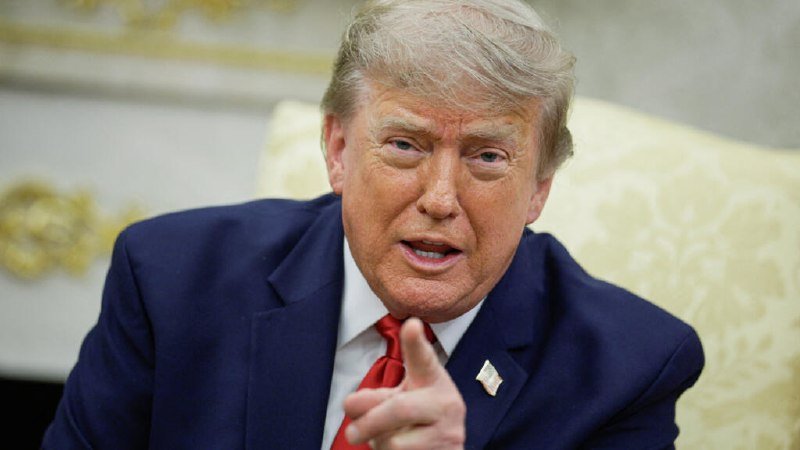
On 17 June 2026, in remarks first carried by Al Alam Arabic's newsroom, US Ambassador to Israel Mike Huckabee told a Christian broadcasting audience that the United States gave Israel its existence, and that scripture frames the relationship as theological rather than strategic. The comments were not a private aside. They came from a sitting ambassador speaking about US policy in his official capacity, and they recast a six-decade alliance in terms no postwar American diplomat has used from a podium.
Huckabee's remarks matter less for what they reveal about him than for what they expose about the framework his administration is operating inside. When a Washington envoy tells a domestic religious audience that the United States "gave" Israel its statehood, the language of statecraft quietly retires. The argument that follows is not whether the ambassador believes what he said. The argument is what kind of foreign policy a confession produces.
From envoy to evangelist
Huckabee is no backbencher. He is a former Arkansas governor, a two-time presidential primary candidate, and one of the most visible Christian Zionist figures in American politics, long before Donald Trump's second term elevated him to the Jerusalem posting. In that role he is now the public face of US-Israel relations for millions of American Christians who already treat support for Israel as a doctrinal obligation. He speaks to a constituency, not a diplomatic corps.
That distinction is the story. For most of the postwar period, US ambassadors to Israel have delivered strategic messaging, calibrated for Israeli and Arab audiences, that anchored the alliance in shared democratic values, regional counterweights, and arms and intelligence cooperation. Huckabee's framing swaps those registers for a creation story. The alliance is no longer explained; it is prophesied.
The confession inside the language
The Al Alam Arabic relay of Huckabee's remarks landed in a region that has spent two decades listening to Washington describe its Middle East policy in the vocabulary of counterproliferation, counter-terrorism, and great-power competition. Iranian state media, picking up the comments hours later, treated them as proof that US engagement in West Asia runs on a domestic religious logic rather than a regional balance-of-power logic. PressTV's coverage on 19 June, citing Major General Mohsen Rezaei, a senior adviser to Iran's supreme leader, framed the remarks as confirmation that Washington had "lost control of the situation" in the region, a line that reads as much as a propaganda poster as a strategic assessment.
Iranian state media is not a neutral interpreter. But the underlying point survives the framing. A theological basis for an alliance does not behave the way a strategic one does. It does not bargain. It does not degrade gracefully when administrations change. It does not survive the discovery that the partner's interests diverge from the patron's, because the patron has already decided the relationship precedes negotiation.
A bull in the china shop
The instability is not theoretical. Writing on 19 June, the Sprinter Press account diagnosed the United States as once "feared and generally considered a reliable protector," now "simply feared as an unstable and not quite independent bull in a china shop." The line is pointed, and it captures a view held in much of the Global South: that Washington's alliance architecture, which the postwar order relied on to underwrite trade routes, currency stability, and arms control, now reads as improvisational rather than anchored.
A theological framework accelerates that drift. Strategic alliances tolerate disagreements because both sides remember the disagreement is bounded by interest. Theological alliances treat disagreement as apostasy. That is the operational risk Huckabee's language introduces. An ambassador who frames the relationship in scripture cannot quietly downgrade arms deliveries, accept a Palestinian track, or push back on settlement expansion without triggering a domestic religious backlash his own statements helped legitimise.
What this costs the rest of the file
The same week, Ukraine announced, via President Volodymyr Zelenskyy, what he described as a "positive shift" from the US side regarding Kyiv's request to produce Patriot PAC-3 air defence systems under licence. The statement, relayed through the OSINTLIVE Telegram channel on 19 June, is a small but specific data point: Washington is simultaneously pursuing a theology-driven Middle East posture and a transactional, arms-industrial Middle East posture, with the PAC-3 licence a marker of the latter approach bleeding into European security.
That is the contradiction sitting inside the file. The administration sells one region as covenant and another as commerce. The diplomats and the contractors cannot both be right about what the United States is. Huckabee's 17 June remarks did not invent this contradiction. They just said the quiet part out loud, from a podium no one can claim was unofficial.
What to watch next
Two tests will tell whether the ambassador's framing was a stunt or a strategic tell. The first is whether the State Department issues any distance from his remarks in the coming days, a clarifying line that would re-paper the relationship back into the strategic register. The second is whether Huckabee returns to a Christian broadcasting outlet and repeats, refines, or escalates the language. The first response tells us the institution is still steering. The second tells us the institution has handed the wheel over.
Sources: Telegram, Al Alam Arabic, 17 June 2026, https://t.me/alalamarabic; Telegram, PressTV, 19 June 2026, https://t.me/presstv; Telegram, OSINTLIVE, 19 June 2026, https://t.me/osintlive; X, Sprinter Press, 19 June 2026, https://x.com/sprinterpress.
Desk note: Monexus treats Huckabee's remarks as the news they are, a sitting ambassador stating, in his official capacity, that the US-Israel relationship is theological rather than strategic, without endorsing either the theological framing or the dismissive counter-read that treats the language as a private quirk.