Tehran on the Pacific: what an Iran–New Zealand friendly in Los Angeles actually shows
Iran's national team played New Zealand in Los Angeles on 18 June 2026, and the two countries' press rooms told two completely different stories about why the match mattered.
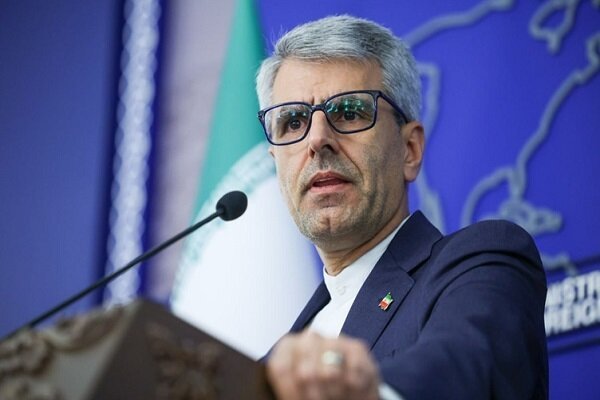
On 18 June 2026, in a stadium on the wrong side of the Pacific for everyone involved, Iran's national football team took the field in Los Angeles against New Zealand. The fixture, a low-stakes friendly played out as the backbeat to a much louder story, was framed by Iranian state media as something closer to a diplomatic overture than a kickabout, and by New Zealand outlets as a routine pre-World Cup run-out. Both framings are accurate, and both are incomplete.
What makes the match worth a paragraph in a geopolitics column is not the scoreline (Iran won, comfortably, in a fixture scheduled before either federation had any idea what June 2026 would look like). It is the choreography of the coverage. Mehr News, the Iranian state-aligned outlet that functions as the regime's English-language megaphone, treated the Los Angeles trip as proof that the Islamic Republic still commands the optics of normalcy in a hostile media environment. New Zealand's coverage, where it existed at all, treated the match as a tune-up before a tournament that suddenly matters more than it did a week ago. The two readings did not so much contradict each other as occupy different planets, and that gap is the story.
The game no one booked a hotel for
Iran's tour of the United States has always been an awkward proposition. Visa logistics, the absence of formal diplomatic relations, and the usual American reluctance to host a team whose flag features a slogan Washington does not endorse have historically made any Iran-US fixture a logistical adventure. This particular friendly was arranged through a third country (Costa Rica hosted the stop before Los Angeles) and slotted into a window that, until ten days ago, looked like dead time on the international calendar.
Then it was not dead time. The memorandum of understanding signed between Washington and Tehran, and the steady drumbeat of confirmation from Iranian state outlets, has turned every Iranian appearance on American or American-adjacent soil into a small political event. Press TV's evening bulletins have leaned on the fixture to argue that the regime is reaping the financial and strategic gains of the agreement. Mehr News has covered the team's movements in Los Angeles with the kind of granularity normally reserved for foreign-ministerial visits. New Zealand's Football Ferns-equivalent coverage, by contrast, has been strictly sporting: minutes for the starters, expected formation, the usual.
Two press boxes, two planets
The asymmetry is the point. Iranian state media does not have the luxury of treating any international fixture as merely a fixture, because the regime's domestic legitimacy is now partly bound up in the optics of the agreement. Supreme Leader Mojtaba Khamenei has used recent statements to publicly authorise the MoU, a move that required visible downstream benefits to justify. A national team walking onto American soil, drawing a crowd, and winning is, in the regime's framing, exactly that kind of benefit: visible, countable, and impossible for domestic critics to wave away.
New Zealand, sitting at the bottom of the world with a population smaller than Tehran's, has no such need to over-read the fixture. For the All Whites, Iran is a useful opponent at a useful moment. The team is preparing for a World Cup whose group stage has just been thrown into sharper relief by a geopolitical story most of the squad will barely register. Manager Darren Bazeley, who has spent more time answering questions about travel logistics than about geopolitics, can be grateful for that.
What the framing actually shows
The coverage gap is the news here. When Iranian state-aligned outlets treat a friendly as a diplomatic triumph and the opponent's federation treats it as a warm-up match, neither side is lying. They are answering different questions. Iranian media is answering, for a domestic audience: did we win from the agreement? The answer, in a stadium in Los Angeles, is delivered as something close to yes.
New Zealand's press is answering: is this team ready for a tournament? The answer, on the same night, is delivered as something close to also yes, but in a different key. Both can be true. The uncomfortable bit is that the two truths are not even addressing each other.
Why a friendly matters now
The MoU that frames everything else in this story is, by all accounts, fragile. JD Vance spent the week defending the deal against domestic critics, telling an Israeli audience that Trump is its only remaining ally in Washington. The New York Times reported that the vice-president's defence rested on claims about leverage and sanctions relief that did not survive basic fact-checking. Pro-war and anti-war voices in Washington have, according to Middle East Eye, converged on a single diagnosis: Iran is winning the strategic exchange. Israeli forces are still advancing in southern Lebanon, in open defiance of the MoU. Iran's parliament speaker has reminded listeners that his finger is on the trigger. Turkey has weighed in to condemn Israeli actions as destabilising. The Trump administration, with congressional elections under six months away, is selling the deal at home as a victory while selling it abroad as a work in progress.
Against that backdrop, a football match in Los Angeles should not matter. The fact that Iranian state media is treating it as evidence of success tells you how thin the other evidence is. The fact that almost nobody in the Western press has noticed tells you how routine Iran coverage has become when it arrives in a sporting wrapper.
Watch the next fixture on this tour. If Iranian outlets keep treating friendlies as foreign-policy wins, the regime needs the wins. If the Western press keeps treating them as friendlies, the diplomatic counter-narrative has already landed.