The flag FIFA won't let Iran fly
On 16 June 2026, Iran's football federation confirmed its players will travel to the US World Cup under a neutral emblem, not the tricolour, after FIFA rejected a relocation request and held the line on branding restrictions.
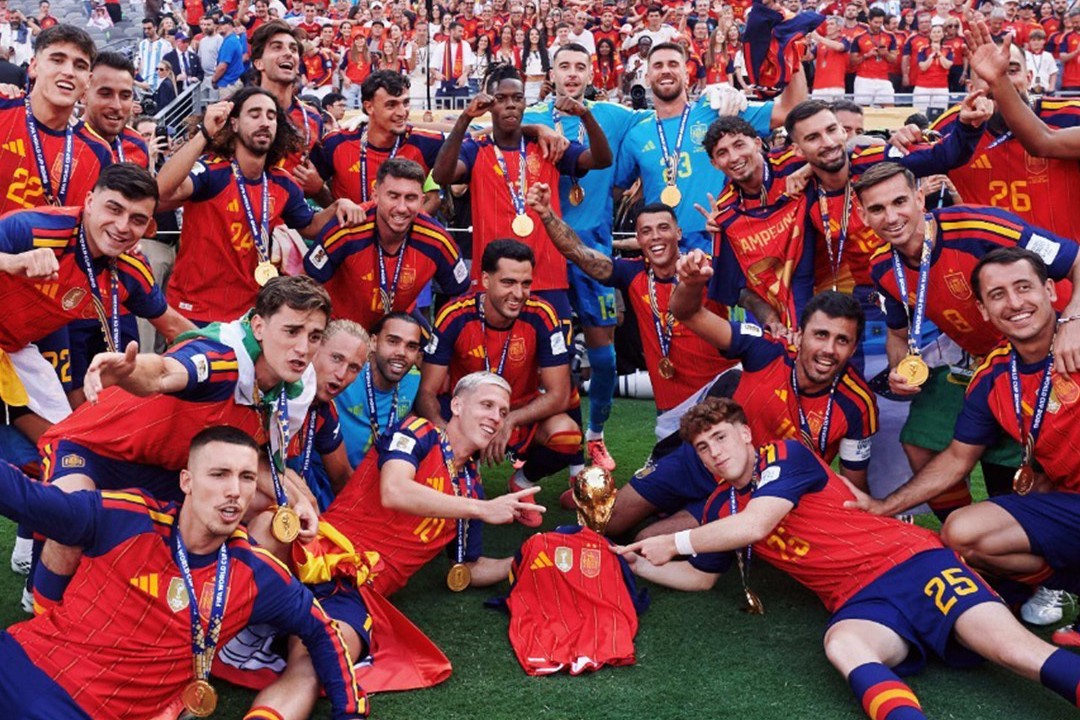
On 16 June 2026, Iran's football federation confirmed that its players would travel to the United States for the upcoming FIFA World Cup without the national flag above their heads. The federation, following guidance from world football's governing body, will instead display a neutral emblem on team kits and in stadium ceremonies, the kind of symbolic downgrade usually reserved for states under sporting sanction or political pressure.
The decision crystallises a longer-running dispute between Tehran, FIFA, and a constellation of exile-aligned groups lobbying to strip the Islamic Republic of its international sporting representation. It also lands in a wider Middle East week that has done little to lower regional temperature: Hezbollah's media wing restated a 60-day ultimatum for Israel to withdraw from Lebanese territory, while Israeli forces continued operations on multiple fronts. The flag question sits inside that pressure cooker.
Why FIFA moved on Tehran's flag
The governing body's caution is rooted in a rule it has applied unevenly across recent tournaments: a national federation under suspension cannot represent itself under its flag, anthem, or crest. Iran remains a FIFA member in good standing, but the federation has been operating under a transfer and political-restrictions regime since 2024, after Swiss authorities opened proceedings related to a Lebanese businessman with ties to the federation's then-president. A clearer political signal arrived earlier in June: FIFA publicly rejected a request by Iran to relocate its World Cup base from the United States to Mexico, citing the integrity of the host-nation agreement.
That rebuff effectively foreclosed the most plausible Iranian counter-move, and the federation pivoted to procedural realism. Players will travel; the flag will not.
Tehran-aligned framing
State-aligned outlets have framed the arrangement as a routine, technical accommodation. The federation has emphasised that the squad will compete, that the World Cup is a stage Iranian players have earned, and that the kit changeover affects branding rather than identity. Tasnim News, in English-language posts carried on its Telegram channel, has replayed that line repeatedly through June: Iranian athletes are present at the tournament, the message reads, even if the tricolour is not.
The framing is operationally accurate. It also papers over the question of who pressed FIFA to draw the line here, and what precisely that line covers. Iranian officials have not publicly confirmed the full menu of restricted symbols; federation statements refer in generic terms to "neutral branding" without publishing the underlying FIFA correspondence.
The exile-side push
From the other side of the argument, the arrangement reads as a partial victory rather than the full exile demand. Opposition groups, including the network aligned with the late Pahlavi-era diaspora, have spent months petitioning FIFA to suspend the Islamic Republic federation outright, on the grounds that the body is not genuinely representative of Iranian footballers or supporters. Their campaign framed the World Cup draw as a deadline.
What emerged on 16 June is the institutional half-measure: the federation retained its place on the World Cup roster, but its sovereign insignia did not. By FIFA's measured standards, that is friction on a federation rather than a verdict on a state. By exile activists' standard, it is a gesture mistaken for a sanction.
What neutral branding does, and does not, change
In practical terms, a neutral emblem in place of a tricolour reshapes the visual field of the tournament: broadcast graphics, coin-toss ceremonies, post-match photographs. It does not, on its own, freeze Iranian players from international travel, withdraw development funding, or block club-side transfers. Those instruments are separate, and FIFA has so far declined to deploy them in Iran's case.
That distinction matters for readers tracking the gap between "Iran under pressure" and "Iran expelled." The federation has been pressed against the glass but not yet pushed through it. A future disciplinary committee referral, a fresh sanctions designation from a host-state authority, or a federation-led withdrawal would each produce a more decisive outcome than kit branding.
The regional backdrop
The flag fight is not the only signal in the room this week. On 18 June, outlets aligned with Hezbollah circulated a renewed statement asserting that Israel is obliged to cease "all hostile actions on land, at sea, and in airspace" within sixty days and fully withdraw from Lebanese territory. Israeli operations in the south continued. None of this is officially on the FIFA agenda, but FIFA's caution with Tehran reads differently against a backdrop where regional de-escalation is, at best, paused.
Sport's governing bodies rarely explain themselves under conditions of immediate political crisis. They explain themselves under legal exposure. The 16 June compromise suggests FIFA's legal exposure map, not its diplomatic one, is the operative document.
What to watch next
Three dates sit ahead of the federation's World Cup campaign. The fixture list will clarify which matches the team plays under neutral branding, and whether Iranian state media chooses to credit FIFA's terminology or contest it live on broadcast. The federation's 2026 congress calendar will reveal whether internal reform demands, dormant since the Swiss proceedings opened, produce new leadership. And the exile network's next public filing with FIFA will tell readers whether the half-measure satisfied or radicalised the campaign.
Sources:
- Tasnim News (English), Telegram channel: https://t.me/tasnimnews_en
- Bellum Acta News, Telegram channel: https://t.me/BellumActaNews
- Sprinter Press on Hezbollah statement: https://x.com/sprinterpress
- TeleSUR English on World Cup VAR review: https://x.com/telesurenglish
- AllAfrica on South Africa vs Czech Republic: https://telegram.me/allafrica
- OSINT Live on Iran blockade quotes: https://t.me/osintlive
Desk note: Where Tehran-aligned and exile-aligned framings of the same event diverge, Monexus publishes both frames in the lead and lets the analysis build from the divergence rather than from the consensus; this piece applies that standing Iran-desk protocol to the 16 June flag compromise.