Netanyahu-Trump meeting bid, open-ended Gaza presence: Israel reorders its security perimeter on three fronts
Israel is fighting on three borders at once, and the room to fight on all of them just narrowed. Katz's open-ended Gaza posture, a reported Netanyahu-Trump meeting, and a US-Iran MOU that puts Washington in the role of restraint are being negotiated on the same sixty-day clock.
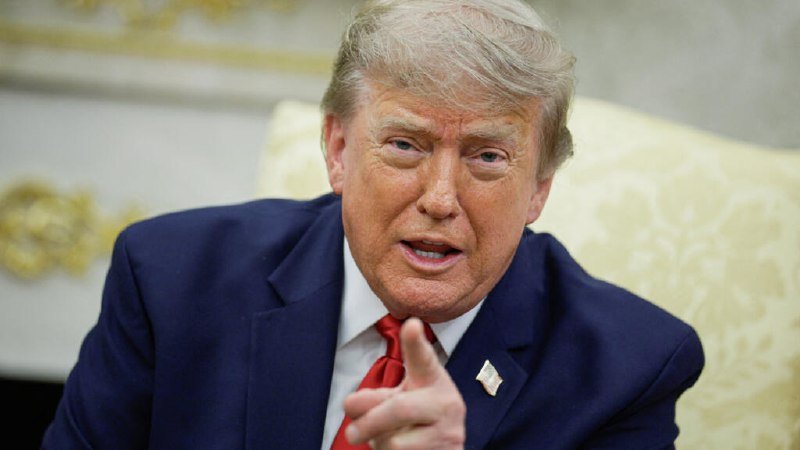
Israel is fighting on three borders at once, and the room to manoeuvre on all of them just narrowed.
On 14 June, Defence Minister Israel Katz publicly set out the terms of an open-ended Israeli presence in Gaza, framing a long military hold on the territory as part of the war effort rather than a transitional arrangement. Days later, US President Donald Trump signed an interim memorandum of understanding with Iran that reopens the Strait of Hormuz, extends a ceasefire for sixty days, and commits Washington to removing obstacles to Iran's access to frozen funds. Pakistan's Prime Minister Shehbaz Sharif announced the same document as the "Islamabad Memorandum of Understanding." Lebanese and Israeli sources describe continuing exchanges of fire in the south, with Israeli outlets reporting two "security incidents" and Hezbollah-aligned outlets describing an Israeli attempt to advance. Al Jazeera reports Trump has urged Netanyahu to use a "softer touch" in Lebanon. Monexus is also tracking, but cannot yet corroborate from Israeli or US official channels, a reported pursuit of a Netanyahu-Trump meeting on the Iran track first surfaced in the regional BRICS News channel.
Read together, the wire points to a single recalibration. The war with Iran that Netanyahu's government waged has ended, at least for now, in a deal that obliges Washington to lean on Israel. The Lebanon and Gaza fronts are being managed, not closed. The strategic question is no longer whether Israel fights, but how a US-brokered ceasefire with the regional heavyweight reshapes the country's room to fight elsewhere.
What Katz actually said
Israel Katz's intervention matters because it publicly converts a wartime posture into something durable. By describing an extended Israeli hold in Gaza as part of an active security effort rather than a stopgap, the defence minister aligned the IDF's presence with a continuing mission, one that can be defended in domestic politics without a terminal date. The framing is not new; what is new is the timing, coming as Trump is signing an interim deal with Iran that explicitly obliges Washington to push back against Israeli operations that destabilise the region. Israeli security sources cited in the Telegram channel Electronic Intifada and Hezbollah-aligned reporting via Tasnim frame the Gaza posture in starker terms; Israeli outlets have yet to publish a single consolidated rebuttal of Katz's critics.
The Lebanon front is moving in parallel. Hezbollah-aligned accounts describe intense clashes after an Israeli attempt to advance in the south, with two Israeli "security incidents" reported in the same hour. An Israeli official quoted in Open Source Intel summarised the operating doctrine bluntly: ignore Iranian threats over Hezbollah, keep striking. Al Jazeera reports the White House is now telling Netanyahu to soften that posture. The contradiction is sharp, and it is being negotiated in public.
The deal that constrains the room
The text Trump signed at the G7 in France, and which Sharif announced from Islamabad, is short on detail and long on mechanism. A sixty-day implementation period began on 17 June, according to Iranian Foreign Ministry spokesman Esmail Baghaei. The Strait of Hormuz will begin to be fully reopened. Frozen Iranian funds are to be made accessible. In exchange, the document commits both sides to a structured de-escalation, including Israeli restraint on Lebanon. Trump, speaking to reporters leaving the Palace of Versailles, acknowledged the urgency: global oil reserves, he said, had roughly four weeks of runway left without the deal. Press TV's write-up captures that admission verbatim.
A US official cited by Axios's Barak Ravid, and relayed through Open Source Intel, confirmed the MOU was signed remotely and is in effect. That detail matters. A remotely signed text, with no ceremony and no host-city readout beyond Trump's Versailles departure, is a deal designed to be implementable rather than celebrated. The text itself, in the judgment of one experienced reader quoted in the same channel, "looks less like a plan and more like a reflex, buy time first, figure out the strategy later." The Strait of Hormuz is the operative pressure point; the rest is sequencing.
The connector to the Netanyahu-Trump track
The reported Netanyahu-Trump sit-down, surfaced through the regional BRICS News channel, would be the political vehicle for aligning Israeli operations with the MOU's constraints. As of this writing, neither the Prime Minister's Office nor the White House has confirmed a meeting; Israeli and US wire reporting has not corroborated the pursuit. Treat it as a reported attempt to coordinate, not a confirmed encounter.
If it occurs, the agenda is largely written. Israel needs reassurance that the MOU's language on Hezbollah does not become a ceiling on operations in the north. The United States needs Israeli conduct in Gaza and Lebanon to stay inside the MOU's frame so the ceasefire holds and Hormuz stays open. Trump's public comment that Iran "have to have some [ballistic missiles], because other people have some" is the most generous reading an Israeli government could ask for; it is not, on its own, a doctrine. A formal meeting would harden the politics of that reading into something more durable. A failure to meet leaves each side improvising under a sixty-day clock.
Pressure at home, pressure abroad
Netanyahu's coalition is now being pulled in three directions at once. The Iran deal commits the United States to removing obstacles to frozen Iranian funds and to restraining Israeli action that violates the MOU's terms. Senator Bill Cassidy called the agreement the "worst foreign policy blunder in decades," with other Republicans publicly dissenting. A 2015 Senate floor speech by Senator Marco Rubio, resurfaced by Open Source Intel, reads as a vindication of sceptics: Iran, he argued then, would use any released funds to pursue the weapons and proxies that the war was meant to contain. Middle East Eye frames the political geometry sharply: Netanyahu is under pressure not only from Tehran but from inside his own coalition.
On the ground, the constraints are more concrete than the rhetoric. Hezbollah continues to fire rockets and drones; Israeli forces continue to push in the south; the MOU's restraint clause sits on top of an active front. Baghaei has warned that any continuation of Israeli attacks on Lebanon constitutes a violation of the other side's obligations under the memorandum. That formulation, Iran speaking as the "other side," reverses the framing of the past months and assigns Tehran the role of monitor. Israel, in turn, retains the doctrine articulated by the unnamed Israeli official: keep striking regardless. The MOU is meant to manage the contradiction, not resolve it.
What the next sixty days decide
Three operational tests will determine whether the MOU holds. First, whether the Strait of Hormuz reopens on the schedule the text implies, and whether Israeli and US naval posture adjusts to that schedule. Second, whether the Lebanese front cools, with both sides trading reduced tempo for political cover, or whether the restraint clause collapses under a single serious incident. Third, whether Netanyahu secures a formal readout from Trump that protects IDF freedom of action in Gaza without triggering an Iranian walkout. Each of these tests has a deadline inside the implementation window. None has a buffer.
For now, Israel is fighting on three borders at once, and the room to fight on all of them just narrowed by the width of a single memorandum. The Katz framing buys the government time on Gaza. The MOU buys Tehran time on its frozen funds and Hormuz. The Netanyahu-Trump track, if it happens, will decide which country's clock runs out first.
Sources
- Al Jazeera English, "Trump to Netanyahu: Use a 'softer' touch on Lebanon", 17 Jun 2026, https://www.aljazeera.com
- Deutsche Welle, "Trump signs interim deal to end Iran war", 17 Jun 2026, https://www.dw.com
- Middle East Eye, Iran-US deal coverage, Netanyahu political pressure, 17 Jun 2026, https://www.middleeasteye.com
- Press TV (Iranian state media, cited as counter-claim material), "Trump admits world had just 'four weeks' of oil left without Iran deal", 17 Jun 2026, https://www.presstv.ir
- Open Source Intel (Telegram aggregator), MOU text, Baghaei briefing, Ravid via OSINTdefender, 17 Jun 2026, https://t.me/osintlive
- Tasnim News (Iranian state media, cited as counter-claim material), Lebanon front reporting, 17 Jun 2026, https://t.me/JahanTasnim
- BRICS News (regional channel, reported pursuit only, unconfirmed), Netanyahu-Trump meeting report, https://t.me/bricsnews
Desk note: The wire treated Katz's Gaza statement as a single-day defence-ministry item. Monexus read it as the connective tissue between a reported Netanyahu-Trump meeting on the Iran deal, an active Lebanon front, and an open-ended Gaza presence, and treated the MOU's restraint clause as the operative constraint on all three.