Netanyahu convenes emergency security meeting as Israeli press sharpens critique of Iran war footing
Netanyahu convened his security cabinet after midnight on 11 June, against a backdrop of an Iranian-backed shoot-down of an Israeli drone, satellite imagery of a damaged US radar in Kuwait, and an unprecedented split between American and Iranian readouts of the same negotiation.
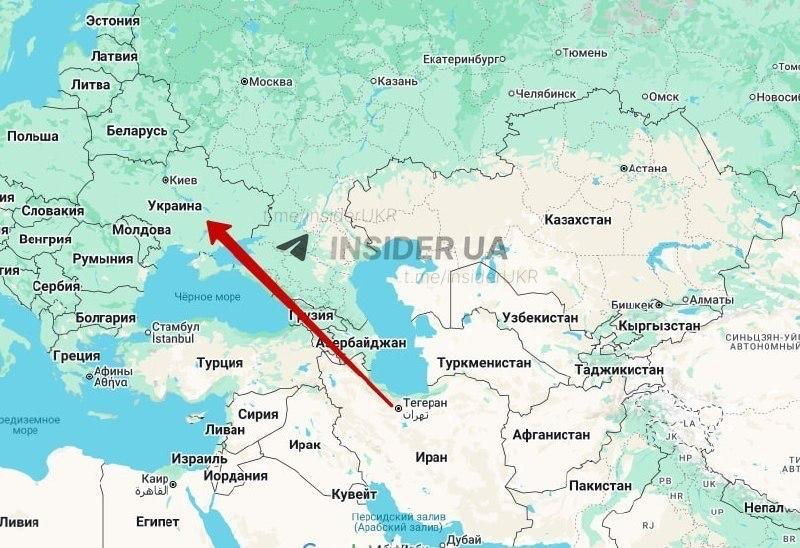
Netanyahu's office confirmed the prime minister had convened his top security cabinet in Tel Aviv shortly before midnight on 11 June, as Hebrew-language editorial pages hardened into open scepticism of the war footing Israel has held for more than three months. The meeting, the second emergency session in four days, came against a backdrop of Iranian-aligned forces publishing footage of fresh strikes on Israeli assets in southern Lebanon and inside US facilities in the Gulf, and of an unusual split between American and Iranian readouts of a weekend negotiation that, on the American side, was being framed as a deal.
The headline question is no longer whether the war continues. It is whether the cabinet that opened it still agrees on the conditions for ending it. That is the fault line the Israeli press has begun to map in real time, and the fault line the prime minister's office is now trying to manage by meeting rather than by speaking.
The room and the readout
Israeli wire reporting carried by Hebrew outlets described a session focused on the southern Lebanon front, where Hezbollah has, over the preceding 48 hours, released video of drone swarms hitting newly established Israeli army positions in the town of Dibl and of an Israeli Heron-1 medium-altitude long-endurance aircraft shot down at 7 kilometres by an Iranian-supplied 358 surface-to-air missile. According to footage circulated by the Middle East Spectator, the downing marks the first confirmed use of the 358 system against an Israeli MALE platform, a technical detail that does not, on its own, change the balance of forces but does change the ceiling above which Israeli intelligence, surveillance and reconnaissance aircraft have been assumed to operate with relative impunity.
A second front commanded the cabinet's attention: the American track. A senior US official told Fox News on 13 June that Washington believed it had reached a "very good and strong" agreement with Iran. Within hours, Iranian state media carried the foreign minister's office flatly denying that any such agreement existed, telling domestic audiences that the memorandum of understanding would not be signed the following day. The denial was followed almost immediately by an impeachment motion against Foreign Minister Abbas Araghchi from ultra-conservative MP Amirhossein Sabeti, who accused the foreign minister of misleading the public about the substance of the nuclear deal. Protests against the speaker of parliament, the foreign minister and President Pezeshkian were reported in multiple Iranian cities on the night of 13 June, framed by participants as a rejection of what one organiser called "the current reformist government leading the country into a dangerous crisis."
Netanyahu's emergency session sat at the seam of those two fronts. It had been preceded by what Fars News International described as Qatari mediation at the start of the war, an offer, reported by the Washington Post, to halt Iranian gas exports in exchange for a halt to the air campaign. That offer, on the record from a Gulf intermediary, is the closest either side has come to a public articulation of what a deal might look like, and its existence has made the absence of a deal harder to justify politically in either capital.
The press corps turns
The shift inside the Israeli editorial page is more pointed than the wire reporting suggests. Haaretz's lead op-ed in the days surrounding the cabinet meeting argued that the war's operational logic, an air campaign launched on 28 February and now in its fourth month, has begun to drift from the political logic that justified it, namely the credible threat of an Iranian nuclear weapon. The paper's editors have not broken with the consensus that an Iranian nuclear capability is unacceptable. They have broken with the assumption that the air campaign, on its current trajectory, can produce that outcome at a cost Israel can absorb. The framing matters. It is not a peace argument. It is a competence argument, and competence arguments are the ones that travel inside a wartime security cabinet.
A second Israeli critique, less prominent but more pointed, has focused on the gap between the American and Israeli definitions of success. Washington's readout of the weekend talks emphasised a memorandum of understanding. Tehran's readout denied one. The cabinet in Tel Aviv, according to officials cited in Hebrew-language press, was being asked to ratify a posture that assumes a deal the Iranian parliament is moving to repudiate. Israeli military planners, the argument runs, are not being consulted on the diplomatic end-state, only on the operational tempo.
The regional ledger
The cabinet's decision has to be read against a regional ledger that is heavier than the wire count suggests. Press TV satellite imagery on 13 June showed the complete destruction of an ASR-1000L tactical air surveillance radar at US Ali Al Salem Airbase in Kuwait, damage attributed to Iranian retaliatory strikes. The strike is small in absolute terms. Its significance is symbolic: a US-operated airbase inside the Gulf, hosting the kind of high-value radar that gives American and Israeli aircraft their picture of Iranian airspace, has been put out of service by a single Iranian retaliatory action. The asymmetry is structural. Israel and the United States can put a thousand radars out of service. Iran has to put out one, and the political effect is the same.
On the Gaza envelope, Middle East Eye reported on 13 June that Israel had pushed the so-called "Yellow Line" deeper into Gaza City, a rights-group observation consistent with a phased expansion of buffer territory rather than a defined border. In Khan Younis, two Palestinians were killed in an Israeli attack the same day. In southern Lebanon, the Israeli military said it would take control of bridges and the area south of the Litani river, a positioning that the wire reporting frames as defensive but that the operational map on the ground, with Hezbollah drone swarms and an Iranian-supplied air defence system now confirmed in action, describes as something closer to a holding operation.
The diplomatic clock
The Qatari offer, the American claim of an agreement, the Iranian denial, and the impeachment motion against the Iranian foreign minister are not four separate stories. They are one story told from four vantage points. A Gulf state offered Iran a way out at the start of the war. Iran did not take it on the terms offered. The United States is now claiming, in public, that a deal is within reach. Iran's elected parliament is being asked to ratify a deal that its most conservative members are already moving to reject. And in Tel Aviv, the cabinet is being asked, in private, to ratify a war that the Israeli press is increasingly asking whether it can still be won on the terms it was started.
The emergency meeting did not produce a public readout of any kind. The Israeli wire carried the convening, the agenda, and the absence of a statement. That silence is the story. Cabinets that are confident do not need to convene at midnight. Cabinets that have decided do not need to convene at all.
What to watch on the wire
The next 72 hours will turn on three files. First, the text of the memorandum of understanding the US is claiming exists. Without a published document, the Iranian denial carries the same weight as the American assertion, and the cabinet in Tel Aviv is being asked to make a strategic decision on the basis of two incompatible claims. Second, the impeachment motion against Foreign Minister Araghchi. A parliamentary vote on a sitting foreign minister, in the middle of a war, is the closest Iran has come to a public rupture between the elected government and the security establishment. The outcome will tell us which side of the Iranian system is driving the negotiation. Third, the next operational release from the southern Lebanon front. Hezbollah's footage of the 358 system engaging a Heron-1 at seven kilometres is, on the available evidence, a single engagement. A second confirmed engagement, against a different platform, would convert an anecdote into a doctrine, and the cabinet in Tel Aviv will have to read that doctrine carefully before its next emergency meeting.
The most honest reading of the file as it stands is that Israel is no longer fighting one war, it is fighting three, on three clocks, against three opponents with three different definitions of what a settlement looks like, and the cabinet convened at midnight because the clocks are no longer synchronised. The next readout, from Tel Aviv, Tehran, or Washington, will tell us which of the three has just been reset.