Israeli air strike hits Nabatieh as southern Lebanon bombardment enters a second week
Israeli forces pushed north of the Litani into Kfar Tebnit and Majdal Zoun on 13 June 2026 while artillery and air raids battered Nabatieh, with Hezbollah releasing coordinated drone and guided-missile footage in response, all on a source feed with no Western-wire confirmation.
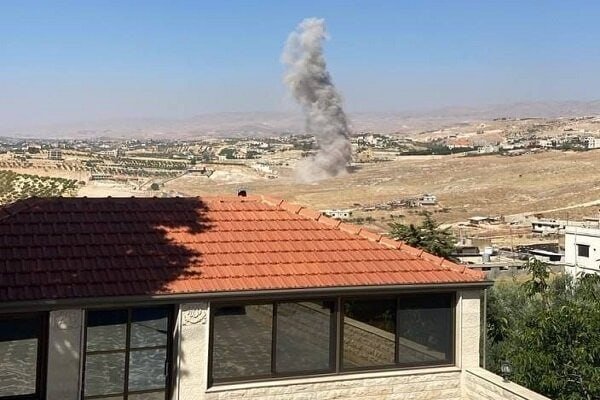
At 21:14 UTC on 13 June 2026, Israeli artillery began pounding the city of Nabatieh in southern Lebanon, according to Lebanese outlets monitored by Al-Alam Arabic. By 22:08 UTC, the IDF had pushed past a second week of sustained bombardment and expanded ground operations north of the Yellow Line, entering the towns of Kfar Tebnit and Majdal Zoun, according to AMK_Mapping, a channel that aggregates IDF-aligned operational updates. Within a span of roughly four hours, the reporting cycle captured air raids on Nabatieh al-Fawqa and Qabrikha, a strike on the Al-Hosh area of the Tire district, four sorties against Kfar Tibnit, two more raids on Nabatieh, and a final air operation against the town of Qalila, while Hezbollah fired rockets and artillery at Israeli positions around Majdal Zoun and released footage of first-person-view drone strikes against IDF vehicles and communications gear.
What is unfolding on the ground is a simultaneous escalation in two directions, with each side broadcasting its own version of events to audiences that largely do not overlap. The volume and pace of the dispatches suggests a campaign that has moved well beyond the tit-for-tat exchanges that characterised earlier rounds of cross-border fire. Israeli forces are operating north of the Litani River, the line Beirut has long insisted must be the limit of any Israeli footprint; Hezbollah is releasing curated footage of guided-missile hits on Merkava tanks and FPV drone strikes on Namer APCs. Both claims are anchored to verifiable video and geolocatable coordinates. Neither has yet been independently corroborated by a Western wire.
The air war over Nabatieh
Lebanese outlets carried the heaviest stream of reporting on Nabatieh, the largest city in the Nabatieh Governorate and a place with deep symbolic weight for Shia Lebanon. Al-Alam Arabic logged artillery shelling at 21:14 UTC, followed by Israeli warplane raids on Nabatieh al-Fawqa (Upper Nabatieh) and Qabrikha at 21:35 UTC, then two further raids on the city at 22:10 UTC. PressTV and Fars News International, both Iranian state-aligned, framed the bombardment as a continuation of what they described as "Zionist madness" in southern Lebanon, citing Lebanese media for the artillery attack on Nabatieh and the coastal city of Sour (Tyre). The Iranian framing is, on its face, advocacy: Tasnim and Fars reach audiences already primed to view Israeli operations in Lebanon as aggression. But the underlying events, multiple Israeli sorties hitting the same city in the span of an hour, are corroborated by Lebanese regional outlets that operate independently of any Iranian editorial line. The pattern is consistent with the kind of preparatory bombardment that precedes or accompanies an Israeli ground push into built-up terrain.
IDF ground manoeuvre north of the Yellow Line
The most consequential geographic claim of the night came from AMK_Mapping at 22:08 UTC: that IDF ground forces had advanced into Kfar Tebnit and Majdal Zoun, both north of what the channel terms the Yellow Line, the operational demarcation tied to the cessation-of-hostilities framework. The same advance was reported independently by Warfront Witness, which added Hezbollah's framing: that Israeli forces had pushed north of the Litani River itself. If accurate, the manoeuvre puts Israeli armour inside a zone that the November 2024 understanding was meant to keep under Lebanese state authority, with only UNIFIL and the Lebanese Armed Forces deployed. The Hezbollah combat footage released the same evening, showing guided-missile and FPV drone strikes on an Israeli Humvee in Khiam, a Namer APC and communications equipment in Yohmor, and a Merkava tank in Majdal Zoun, is best understood not as separate incidents but as Hezbollah's response to the ground push into its own rear areas.
The Hezbollah media operation
Hezbollah's media wing ran a disciplined, almost sequenced operation across the day. The opening salvo, attributed to the Islamic Resistance in Lebanon, was a drone attack on Israeli army positions in the town of Hula, according to Tasnim's summary of the group's first morning statement. By evening, Hezbollah had issued both an opening and closing operational statement, both citing "Israeli ceasefire violations" and invoking "our right to resist the occupation," language that aligns with the group's stated doctrine but also carries an implicit legal claim: that the operations being reported are defensive, conducted under a right that Hezbollah has long asserted under international law. The video releases, a tank strike, an APC strike, a communications-gear strike, a logistics-truck strike, were all released with enough contextual footage to suggest geolocation was possible. Intelslava, an independent OSINT aggregator, added a separate piece of evidence dated 8 June 2026: footage showing strikes on an Ofek command-and-control vehicle on a Merkava 3 chassis and an American-supplied M978A2 HEMTT logistics truck, equipment categories that match the platforms Israeli forces have deployed in southern Lebanon operations.
What the verification gap actually means
At the time of writing, the source feed on Monexus is dominated by two streams that do not normally cross-reference each other: IDF-tracking channels with detailed operational granularity, and Iranian-state and Iran-aligned regional outlets covering the Lebanese side of the same operations. Reuters, AFP, the BBC and the major Western wires have not, on this evidence, published confirmations of the specific strikes logged above. That absence is itself a piece of information. Western-wire confirmation in this kind of active bombardment typically arrives with a lag of several hours, sometimes longer when access is constrained and when both sides are managing information for domestic audiences. The Lebanese Red Cross, UNIFIL, and the Lebanese Armed Forces would be the natural Western-wire interlocutors on civilian and operational facts on the ground. Their statements, when they land, will be the ones that calibrate the rest of the reporting cycle.
The other gap is casualty reporting. No verified toll from the day's operations has surfaced in the source feed. Hezbollah's video releases refer to "likely seriously injuring" an Israeli soldier in the Khiam strike, a careful phrasing that suggests the group is asserting but not overstating. The Lebanese side has not, in the material available, published a consolidated figure from the health ministry or civil defence for the strikes on Nabatieh, Kfar Tibnit, Qabrikha, Al-Hosh or Qalila. That vacuum is typical of the first hours after a bombardment campaign of this intensity; the numbers, when they emerge, will run through local hospitals and emergency services, then through the Lebanese Ministry of Public Health, and only then through wire copy.
The structural frame
A campaign that combines sustained preparatory bombardment, ground manoeuvre north of the Litani, and a Hezbollah media operation explicitly framed as resistance to ceasefire violations is not a border-management exercise. It is, in plain terms, a re-escalation. The November 2024 arrangement was always going to face this kind of pressure: it depended on Israel accepting a buffer it did not control, and on Hezbollah accepting a restraint it had not chosen. Both sides have, in the intervening eighteen months, accumulated reasons to test the limits again. The Israeli political and military logic appears to be the destruction of infrastructure and the denial of north-of-Litani re-infiltration by Hezbollah units. The Hezbollah logic, judging from the choice of targets and the language of the operational statements, appears to be a demonstration that any Israeli ground push will be paid for in equipment and, more importantly for the group's deterrent posture, in video. Neither side is, on this evidence, signalling an off-ramp.
What to watch next
The next twelve to twenty-four hours will tell whether the ground push stabilises around Kfar Tebnit, Majdal Zoun and the surrounding ridgeline, or whether it continues northward toward the Litani crossings. The Hezbollah operational statements have so far stuck to a single-day cadence; a second consecutive day of comparable volume, particularly with anti-tank guided-missile footage of serviceable Israeli armour, would mark a qualitative shift. On the Israeli side, the IDF Spokesperson's evening summary, when it lands, will likely confirm or refine the Yellow Line language and disclose whether engineering and armour assets are being committed at scale. Western-wire reporting on civilian displacement from Nabatieh and the Tyre district will arrive through Lebanese state channels and UNIFIL within a day. Until then, the operational picture is best read as two coordinated escalation tracks moving in parallel, neither side yet willing to call the result a ceasefire collapse.