European ambassadors summoned to Lavrov's ministry as Russia plays diplomatic double-game
Moscow invited Europe's envoys in for a lecture on Ukraine. The European capitals' silence, more than Lavrov's talking points, is the operative fact of the day.
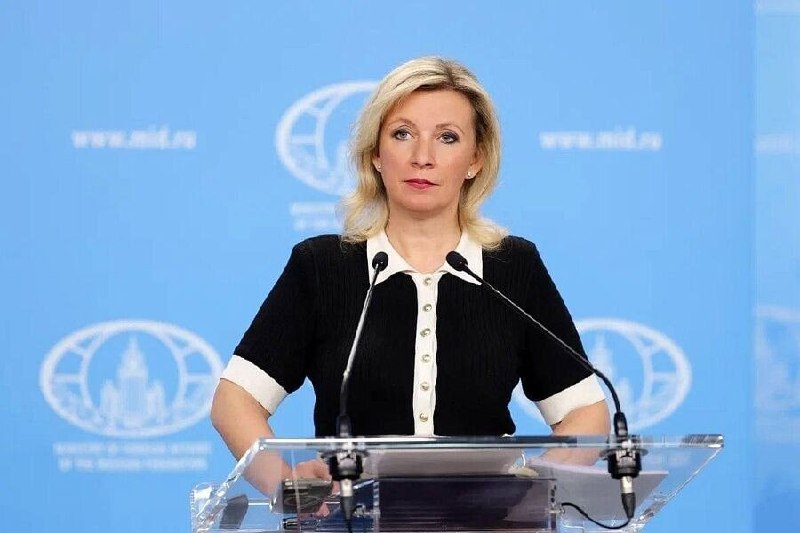
At 11:00 Moscow time on 11 June 2026, the ambassadors of roughly two dozen European states filed into the cavernous marble atrium of the MID, the Russian foreign ministry on Spiridonovka Street, for what Moscow's official channels billed as a serious conversation about the war in Ukraine. By 13:00, Foreign Minister Sergei Lavrov was on a podium telling them that the European Union was a party to the conflict, that Ukraine's government had spurned peace, and that the diplomatic ball was now in the West's court. The European envoys left with the summons, a press release, and, so far as anyone outside the ministry can confirm, nothing else.
The pattern, more than the press conference, is the story. Russia announced the meeting first, in the choreographed way it announces everything that matters to the domestic audience. The European wires picked it up second, largely on Moscow's own terms. The envoys have been told to be there; what they have been told once inside is a different question, and one that the absence of any European readout turns into the operative fact of the day.
The summons itself is a small piece of diplomatic theatre with a long pedigree. Russian ministries have used it for decades: bring the ambassadors in, deliver a complaint, let the cameras catch them crossing the threshold, and the complaint is now on the record in every capital the envoys represent. The choreography is the point. The substance is whatever the host ministry is willing to put on the transcript.
The timing is harder to read. Moscow has spent the spring of 2026 signalling, in its own idiom, that it is open to talking, on the assumption that Donald Trump's return to the White House has shortened the diplomatic weather window. There have been leaks about back-channel contacts. There have been trial balloons from Russian-aligned commentators about ceasefires, about freezes, about the fate of the four Ukrainian regions Moscow claims to have annexed. None of it has produced a meeting that any Ukrainian or European official will describe as substantive. The Lavrov summons fits into that sequence: another gesture at the door, another demand that Europe come inside and negotiate on Russian terms, another press conference that ends without a single European ambassador on the podium confirming what was said behind closed doors.
The read from European capitals
The most telling absence on 11 June was noise. By mid-afternoon in Brussels, Berlin, Paris and Warsaw, the EU's foreign affairs service and the German, French and Italian foreign ministries had not put out a coordinated line. A handful of European newsrooms, running wire pickups from Russian state outlets, carried the Lavrov version of events: that the EU was now a co-belligerent, that Ukraine had walked away from peace, that Moscow's patience was at an end. None of that language appeared in any European government statement.
That asymmetry is the most reliable signal in the file. When a major European foreign-policy development lands in Moscow, Berlin or Kyiv usually puts a press officer on the line within ninety minutes. When the development lands in Moscow and nowhere else, the read is that the meeting's operative content is the part being left out of the press conference. European envoys do not, as a rule, walk out of a Lavrov summons and repeat his talking points verbatim to their home desks. They file a written report, mark the meeting as received, and let their capitals draft the response.
The Kallas picture, which is what most European commentary is actually arguing about this week, sharpens the read. The EU's foreign affairs chief is fighting for her political survival after a French government document allegedly floated stripping her of portfolio. That is a separate story, and one that consumes most of the European airtime. But it sits underneath the Lavrov summons in a useful way: the EU is in the middle of an internal argument about who speaks for it on Russia, and Moscow is choosing this moment to demand that someone come and listen.
The structural frame, in plain language
What the Russian foreign ministry is doing with the summons is not diplomacy in the negotiating sense. It is a stage-managed assertion of grievance, performed for a domestic and global-south audience, and calibrated to put the burden of the next move on Brussels. The gambit works only if the West treats the summons as a genuine opening and feels obliged to respond in kind. The history of these episodes suggests that the more useful response is to mark receipt, decline to amplify, and let the press conference age out.
The pattern has been visible for the better part of a decade. Moscow convenes a meeting, releases a transcript, and waits to see which Western outlets will run the transcript as news. The outlets that do are doing Moscow's framing work for it, and the careful ones know it. The Lavrov summons on 11 June is the same move at a slightly higher volume, with a slightly larger guest list, and with the added complication of a war that has not produced a single agreed negotiating text since early 2022.
There is also a longer game. The Russian state has been trying for the better part of two years to split the European consensus on sanctions, military aid to Kyiv, and the long-term security architecture of the continent. The summons is a small contribution to that effort. The hope in Moscow is that one or two European governments will read the meeting as a gesture worth engaging with, and that the engagement will be visible enough to be cited in next quarter's talking points. Whether that hope is realistic is a different question. The most that can be said from the public record is that the European Council, the EU foreign affairs council, and the German and French foreign ministries have given no public signal that they see the summons as anything other than what it is.
What gets left out of the press conference
There is one piece of the story that the Russian press release will not contain, and that the European wires will not pick up unless it is leaked on purpose: what Lavrov actually said to the ambassadors in the closed session. Russian foreign-ministry readouts are written to a formula. They reproduce the Russian position in full, attribute conciliatory language to the visitors, and omit anything the visitors said in return. The European envoys will be familiar with the script. The question for the rest of us is not what Lavrov said but what he asked for, and whether the ask was serious or performative.
The most likely serious ask is some variation of the message Moscow has been signalling since the autumn: a ceasefire that freezes the front lines, a relief from sanctions conditional on a political framework, and a recognition that the four annexed regions are not on the table. That package has been in circulation in one form or another for months. The most likely performative ask is the same package, delivered with the expectation that it will be refused, so that Moscow can argue in September that the West rejected a reasonable offer.
Either way, the next move is not Moscow's. It is Kyiv's and the European capitals', and the European public record suggests they are not in a mood to give Moscow the headline it wants. The summons is on the calendar. The answer is being drafted in capitals that have learned, the hard way, not to perform their disagreements with Moscow in a Russian press conference.
The stakes for the rest of June
The Lavrov summons is unlikely to be the only piece of diplomatic theatre on offer this month. The Russian state has a calendar of such gestures, and the European summer, with its thin news cycles and its G7-in-the-puglia-italiana hosted this year in Italy on 13 to 15 June, is the natural season for them. The odds are good that the Russian foreign ministry will find another reason to summon the ambassadors, deliver another complaint, and let the cameras do the rest.
What matters more is what does not happen. If the European response to the summons is silence, the read is that the meeting was a piece of theatre and the European capitals have decided not to play along. If the European response is engagement, the read is more troubling, and the next two weeks of European foreign-policy coverage will be calibrated to that read. Watch Berlin on Friday. Watch the EU foreign affairs council in Luxembourg on Monday. Watch Kyiv, which has the most to lose from any quiet back-channel that does not include it, and which has been the most consistent European voice on refusing to perform on a Russian stage.
The Lavrov summons is on the record. The answer is still being written.