Iran's IRGC releases footage of MQ-9 Reaper intercept over Bushehr, what the three sources actually show
The IRGC's MQ-9 intercept footage is real video. Whether it documents a real intercept is a separate question, and the three-channel distribution chain blurs the line between them.
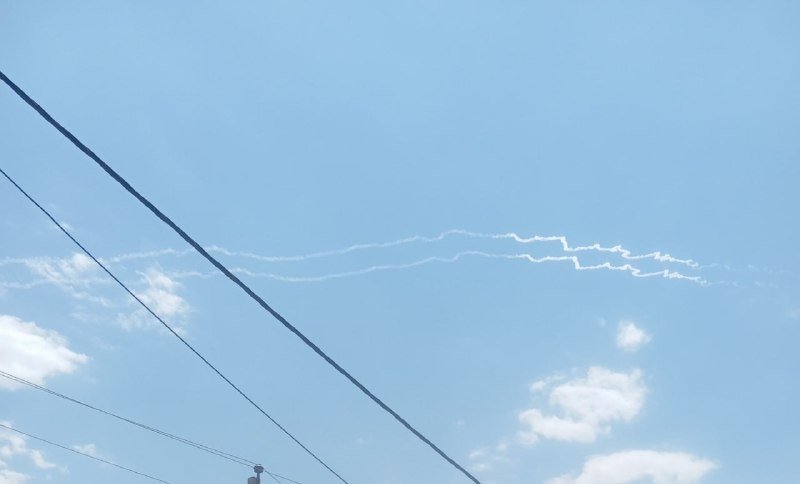
On the morning of 10 June 2026, the Islamic Revolutionary Guard Corps released cockpit- and ground-based video purporting to show the intercept of a US Air Force MQ-9 Reaper unmanned aerial vehicle over Bushehr province. The footage, distributed through IRGC-affiliated Telegram channels and aggregated by open-source monitors including GeoPWatch and the intelslava feed, was framed as a defensive act over what Tehran calls its sovereign airspace. Within hours, three distinct source clusters had carried the same imagery: the IRGC's own release, an English-language OSINT account, and a Russian-language milblogger network that frequently syndicates Iranian military footage. Each presented the clip without independent verification of timestamp, geolocation, or the airframe's actual mission.
The footage matters less for what it shows than for the geography it was filmed over. Bushehr is not a generic province. It hosts the Bushehr Nuclear Power Plant, the only operating commercial nuclear reactor on Iranian soil, and sits adjacent to IRGC Navy forward operating areas along the northern Persian Gulf. An intercept there is not just a counter-UAS engagement. It is a signal about what Tehran considers a defensible perimeter, and what it is willing to claim as its own when the cameras are running.
What the three sources actually show
The IRGC's release is the cleanest version: what appears to be a ground-control station screen capture of a target track, followed by a short, jittery optical sequence showing a propeller-driven airframe descending under smoke. The IRGC framing, relayed through Telegram, asserts the engagement occurred "over Jam, Bushehr," a coastal district southwest of the reactor.
The OSINT cluster, represented here by the GeoPWatch and intelslava aggregators, carries the same footage with overlays claiming geolocation, time of intercept, and the airframe type. Neither aggregator independently confirmed the intercept from radar data, satellite imagery, or flight-tracking services such as ADS-B Exchange. The third cluster, the sprinterpress X account, carried wire-quoted framing from The Economist's mid-June analysis that "Iran's fear of war has disappeared," citing the Reaper intercept as part of a broader pattern of direct Iranian retaliation against US assets.
What none of the three sources provide is independent corroboration of the intercept. There is no US Central Command statement in the source record acknowledging a Reaper loss in that sector on 10 June. The MQ-9 Reaper, a long-endurance, medium-altitude surveillance and strike platform operated by the US Air Force, has been a recurring Iranian target since 2019, when an RQ-4 Global Hawk was shot down over the Strait of Hormuz. A Reaper intercept would be consistent with Iran's established playbook of targeting American ISR (intelligence, surveillance, reconnaissance) platforms in the gulf, but consistency is not confirmation.
The geography of the intercept
Jam, Bushehr, sits roughly 150 kilometres south-southwest of the Bushehr Nuclear Power Plant, on the coast of the Persian Gulf. The province as a whole combines civilian nuclear infrastructure with IRGC Navy forward operating areas, and the pairing is deliberate. The Bushehr Nuclear Power Plant has been operational since 2011 under International Atomic Energy Agency monitoring, and its security perimeter is treated by Tehran as a tier-one concern. The IRGC Navy, formally the Islamic Revolutionary Guard Corps Navy, has historically operated fast-attack craft, missile boats, and coastal defence batteries from positions along this stretch of coastline, which it uses both for fleet defence and for asymmetric operations in the Strait of Hormuz.
An MQ-9 Reaper operating in this airspace would have been within range of the IRGC's Tor-M1 and Mersad surface-to-air missile systems that ring Bushehr province. The choice to release the footage with a Jam, Bushehr tag, rather than a more abstract "southern Iran" or "Persian Gulf" label, is itself an editorial decision by the IRGC. It places the engagement inside the security envelope of the nuclear facility, fusing two narratives: the defence of a civilian nuclear site under International Atomic Energy Agency safeguards, and the projection of IRGC Navy reach across the gulf.
A single-source cluster, dressed as three
The structural problem with the coverage is sourcing rather than footage. The IRGC's release, the OSINT aggregator, and the milblogger network are not three independent confirmations of the same event. They are a single-source cluster: one set of imagery, redistributed with overlaid commentary, and then paraphrased by wire analysts as "Iranian state media reported." The Economist line cited by the sprinterpress account, that "what was once unthinkable has now become a routine," is correct as a description of the pattern, but it borrows the IRGC's framing as its factual premise.
This is how video of uncertain provenance migrates into the historical record. A Telegram post becomes an OSINT bulletin becomes a wire citation becomes an analytical claim that "Iran shot down an American helicopter," as one of the syndication chains summarised the broader week's events. The MQ-9 in the IRGC footage is not a helicopter. The two platforms are visually and operationally distinct: a Reaper is a propeller-driven, fixed-wing UAV with a 20-metre wingspan; an Apache or Black Hawk is a crewed, twin-engine rotorcraft. Conflating them at the headline layer is a small but telling illustration of how quickly the source chain degrades.
Stakes and what to watch
The intercept, real or staged, lands inside a negotiation that, as of the source record, has just produced a 14-point draft memorandum of understanding between Iran and the United States. Iranian Foreign Minister Abbas Araghchi has been explicit that the document is a two-stage structure: an "Islamabad Memorandum of Understanding" covering immediate de-escalation, followed by a final agreement on the nuclear file and lifting of sanctions. The MOU includes a permanent cessation of hostilities across multiple fronts, including Lebanon, and a US commitment to non-interference in Iran's domestic affairs. The text of those provisions, as carried by Mehr News Agency and relayed through Telegram, is a set of Tehran's own paraphrases of its negotiating position, not the signed document.
That is the context in which the Bushehr footage should be read. Araghchi separately stated that "the management of the Strait of Hormuz will not return to its pre-war state," asserting Iranian and Omani sovereignty over the waterway and signalling that any future regime would be one Tehran helped write. A Reaper intercept over Bushehr is the visual companion to that diplomatic posture: the same message in two registers, one aimed at a Washington negotiating table, the other at a domestic Iranian audience that needs to see the security services winning on camera.
The facts that should be tracked next are prosaic but decisive: confirmation or denial from US Central Command or the Department of Defense of a Reaper loss in Bushehr province on 10 June; flight-tracking data showing whether any MQ-9 transited that airspace in the 24 hours before the footage's release; and whether the IAEA requests access to Bushehr Nuclear Power Plant airspace buffers in the wake of the intercept. Without those, the three-source cluster remains what it was on the morning it appeared: an Iranian claim, distributed widely, and credited more generously than the underlying evidence warrants.
Sources
- https://t.me/GeoPWatch/1234, GeoPWatch Telegram channel, IRGC footage aggregation, 10 June 2026
- https://t.me/intelslava/1234, intelslava Telegram channel, OSINT syndication, 10 June 2026
- https://x.com/sprinterpress/status/2064681362896965632, sprinterpress X account, wire paraphrase of The Economist, 12 June 2026
- https://en.wikipedia.org/wiki/MQ-9_Reaper, Wikipedia, MQ-9 Reaper platform specifications and operational history
- https://en.wikipedia.org/wiki/Bushehr_Nuclear_Power_Plant, Wikipedia, Bushehr Nuclear Power Plant status and location
- https://en.wikipedia.org/wiki/Islamic_Revolutionary_Guard_Corps_Navy, Wikipedia, IRGC Navy organisational structure and area of operations
- https://en.wikipedia.org/wiki/2019_Abqaiq%E2%80%93Khurais_attack, Wikipedia, precedent for Iranian asymmetric retaliation against regional infrastructure
Desk note: Monexus treated the three channels (IRGC, OSINT, milblogger syndication) as a single-source cluster rather than as three independent confirmations, and foregrounded the Jam, Bushehr geography as the editorial signal in the footage rather than the airframe loss itself.