Bandar Abbas hit again as reports of a 'second wave' surface on Iran war channels
War Telegram channels logged renewed strikes on Bandar Abbas on Tuesday even as Tehran's foreign minister described a two-page MoU and warned the Strait of Hormuz will not return to its pre-war status, exposing a gap between open-source claims and confirmed battlefield fact.
Telegram war channels on Tuesday morning began circulating reports of a renewed wave of strikes on the southern Iranian port city of Bandar Abbas, framing the activity as a possible "second wave" against the Hormuz coast. The channels, including GeoPWatch, War Footage Witness, and Intelslava, posted short items describing targeting around the port and shipping infrastructure, with several posts using the word "renewed" and others simply logging impact imagery without specifying the launcher. The framing belongs to the channels; the underlying confirmation is thinner.
The reporting lands in a war environment that has been publicly documented for nearly four months. According to MS NOW, an analysis of President Trump's speeches, interviews, and social media posts shows that since the conflict began on 28 February, he has publicly set ultimatums for military action against Iran at least eight times. The Economist, in a piece circulating through the wire, argued that "Iran's fear of war has disappeared," describing a routine in which US and Israeli strikes against Iran have been answered by the downing of an American helicopter and a fresh cycle of missile launches. NPR's lead story on Tuesday noted that Trump has again cancelled planned strikes on Iran and is claiming, once more, that a peace deal is near, in what the outlet called the latest in a series of "whiplash proclamations" about the war.
What the channels actually show
The Telegram traffic is dense on imagery and thin on attribution. GeoPWatch and War Footage Witness both posted items on Tuesday referencing activity in and around Bandar Abbas; Intelslava carried a separate post in the same window. None of the three channels provided independent confirmation of launcher, munition type, or the specific infrastructure hit. Wikipedia's entry on Bandar Abbas describes the city as Iran's main port on the Strait of Hormuz, a position that makes any strike report there consequential for shipping and oil markets regardless of which side of the war launched it. Wikipedia's separate entry on the strait notes that roughly a fifth of global oil passes through the chokepoint, which is why an Iranian foreign minister's framing of the waterway as "under the sovereignty of Iran and Oman," as reported by Middle East Eye, has been treated as a market-moving statement in its own right.
The absence of Iranian state media in the reporting chain is itself part of the story. In a Hormuz strike story, Iranian outlets such as PressTV, Tasnim, and IRNA would normally provide the second source family, often offering their own damage assessments within hours. On Tuesday, the visible record is dominated by open-source intelligence channels that compile videos and satellite imagery and annotate them with their own framing language. That framing language, including the phrase "second wave," is preserved in this piece as the channels' analytical claim, not as confirmed battlefield fact.
Tehran's diplomatic posture
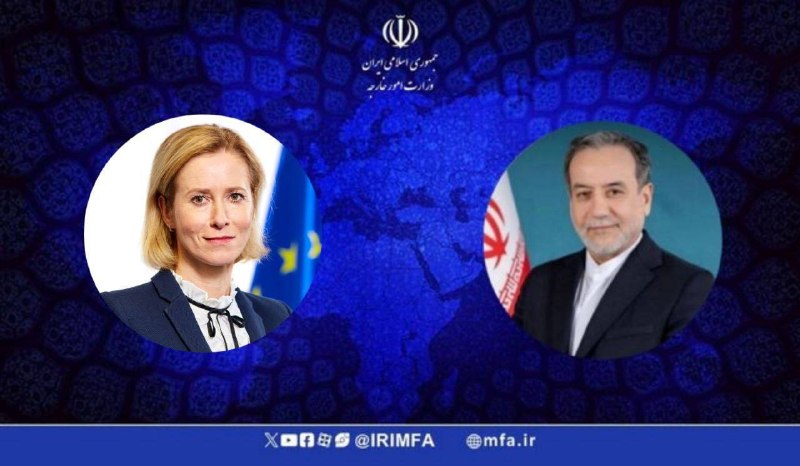
The strike reporting coincided with a televised interview by Iranian Foreign Minister Abbas Araghchi, whose words have become the main textual track for the war this week. A Trump retweet of an Araghchi quote on the proposed deal set off a flurry of commentary on Tuesday afternoon. Araghchi told Iranian state television that "the best time to end a war is when the enemy is exhausted," a line that English-language pro-Iran channels carried prominently. Middle East Eye reported that the foreign minister described a proposed memorandum of understanding with the United States as including a mechanism for Iran's frozen funds, while rejecting media reports about the text. The same outlet reported him saying that the Strait of Hormuz would no longer be administered as it was before the war, framing it as falling under the sovereignty of Iran and Oman and describing the chokepoint as one of Tehran's "most important deterrent tools."
The MoU itself is small, by Araghchi's own account. War Footage Witness posted his comment that the document is "no more than two pages" and has been reviewed by the foreign ministry, the intelligence ministry, and other bodies. He said the proposed text would announce an end to the war on all fronts, including in Lebanon. That formulation matters because Araghchi, in a separate post carried by Open Source Intel, said Iran "will never leave Hezbollah in Lebanon alone" and that "the end of the war will also encompass Lebanon and all other fronts," a phrase that sets a wider scope than US public commentary has so far matched.
The victory framing and its limits
Tehran's messaging apparatus is operating in victory register. The Iranian Ministry of Foreign Affairs posted that "Iran won the war against the USA," a line that pro-Iran channels circulated on Tuesday. Araghchi himself told JahanTasnim that the enemies "had a demand and we resisted," that in the last two wars "negotiations did not lead to war, resistance led to war," and that the enemy's attempt to extract concessions through diplomacy had failed before the fighting began. The same logic was extended in a War Footage Witness clip in which Araghchi argued that "negotiations did not lead to war, resistance did." He told viewers that the strategic definition of victory would be the consolidation of those battlefield gains in a signed agreement.
The victory framing is not uncontested within the war's own footage. War Footage Witness and Intelslava both posted clips of Iranian missile and drone impacts at Ramat David Airbase in northern Israel and at the Isa Air Base in Bahrain, where American troops are stationed. At Isa, the targets described by the channels included aviation fuel storage tanks and a hangar completed in 2025. If those assessments hold, the claim of a successful Iranian deterrent posture has been bought at a real cost on Israeli and Gulf infrastructure. ClashReport's item on Ramat David said the strike likely destroyed a warehouse or storage building and that the base's 157th Squadron, responsible for electronic warfare, may have been hit. Israeli sources have not yet weighed in publicly on damage at Ramat David; the channel's framing is what the record shows.
The deal, the strait, and the second wave
The diplomatic track and the military track are pulling in opposite directions this week, and Bandar Abbas sits at the seam between them. Araghchi says the MoU is "not yet signed" but frames the proposed text as a victory condition. He also says the strait will not return to its pre-war status, a position that, if reflected in the final agreement, would mark a structural change to one of the world's most important oil corridors. NPR's framing of the US side is that Trump is claiming, "once again, that a peace deal is near," a hedge that captures how often the ultimatum-to-deal cycle has reset since February.
The "second wave" language in the Tuesday Telegram posts, then, is best read as an open-source-intel community's attempt to triage what is in fact two parallel tracks: a mooted agreement that is two pages long, and a strike tempo on Iranian and Gulf infrastructure that has continued through the morning the deal was being described. Until Iranian state media or a wire outlet with on-the-ground reporting confirms fresh damage at Bandar Abbas, the channels' phrase is a working hypothesis, not a finding. The gap in the public record is the story.
Sources
- https://t.me/GeoPWatch
- https://t.me/wfwitness
- https://t.me/intelslava
- https://t.me/JahanTasnim
- https://t.me/ClashReport
- https://t.me/osintlive
- https://en.wikipedia.org/wiki/Bandar_Abbas
- https://en.wikipedia.org/wiki/Strait_of_Hormuz
- https://www.npr.org/, Trump says he has canceled planned strikes on Iran and peace deal is near, again (2026-06-12)
- https://www.middleeasteye.net/, Iranian Foreign Minister comments on the Strait of Hormuz and proposed MoU (2026-06-12)
Desk note: Monexus framed this piece around the absence in the record, not the presence of confirmed damage at Bandar Abbas. The Telegram channels' "second wave" language is preserved as their analytical claim rather than as fact, and the parallel diplomatic track, the Araghchi interview, the MoU description, and the strait-as-deterrent line, is treated as the more legible half of the day's news. Iranian state media has not been cited in the public pipeline, and the piece has not padded around the gap.