Israeli Offensive in Lebanon Intensifies as Knesset Advances Dissolution Bill, Three Fronts, One Investigation
Eleven Hezbollah operations, an Israeli raid on Adousiya, and a Knesset dissolution bill moving in parallel: 4 June was a single day in a war with three fronts and a diplomatic track that no regional actor is willing to sign.
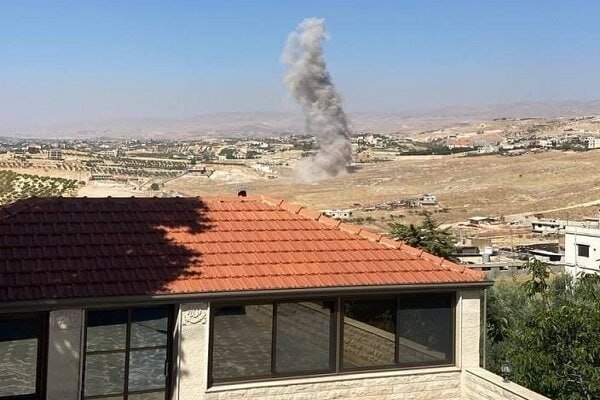
At 02:45 on the morning of 4 June, Hezbollah announced it had fired on a gathering of Israeli soldiers and military vehicles in Qantara, southern Lebanon, part of a salvo of eleven operations the group claimed in a single day. Within hours, an Israeli raid struck the town of Adousiya further south, and Hezbollah released drone footage purporting to show an Israeli Merkava tank hit on 2 June in the outskirts of Zawtar al-Sharqiyah. The exchanges came as the Knesset advanced a bill to dissolve itself, opening a path toward new elections while Israel fights on three declared fronts and a diplomatic track led from Washington attempts, and fails, to hold.
The arithmetic of 4 June tells the immediate story. According to Hezbollah statements published by regional outlets including Tasnim and relayed by war monitors, the group carried out eleven separate operations in twenty-four hours: drone swarms on Israeli vehicle gatherings near Beaufort Castle, rocket rounds on Al-Khayam, and small-arms and anti-armour work across the south. Israeli strikes, in turn, hit Adousiya and other population centres, with Iran's Islamic Revolution Guards Corps demanding an immediate halt and publicly rejecting the Western-backed ceasefire framework (Press TV). On the same day, Al Jazeera English reported from southern Lebanon that Hezbollah had formally rejected the US plan being shopped in the region.
This is what a grinding, multi-front war looks like between formal negotiating rounds.
The battlefield logic
The pattern across 4 June is not a series of isolated incidents but a structured exchange: Hezbollah claims a tempo of ten-plus daily operations, Israeli forces strike back into southern towns, and both sides frame their actions as retaliation. Hezbollah explicitly described its salvo as "in response to Israeli ceasefire violations" (WarMonitors / The Cradle coverage). The use of Ababil drones against a Merkava at close range, documented in the footage Hezbollah released on the evening of 4 June, is a tactical choice consistent with the group's documented preference for low-altitude, loitering munitions against armoured targets in prepared kill zones along the border.
Israeli operations, for their part, have moved beyond the narrow frontier zone. Middle East Eye's live coverage on the same day referenced Israeli signals that the military would maintain control of bridges and an area south of the Litani, the river that has anchored every UN resolution on the conflict since 1978. That formulation, control of crossings and a buffer zone, is the operational signature of an offensive designed not merely to attrit Hezbollah but to reshape the terrain the group uses to stage rockets and drones.
What the wire won't say
Two items in circulation at the time of writing sit outside the Western-wire record and warrant explicit handling. The first is a reported strike on a nursery in southern Lebanon: the footage circulating through WarMonitors and The Cradle channels documented damage and casualties, but no major Western wire had filed a confirmed item on the specific incident by the close of the day's reporting. Monexus flags it here as a live, unverified item pending corroboration, not as an established event. The second is a reported phone call between Donald Trump and Benjamin Netanyahu, claimed in some regional channels, with no named wire confirmation. Until either is independently sourced, both remain open threads.
This matters because the information environment around the war is itself a theatre. Hezbollah's claims are state-aligned media output from a party-state; Israeli casualty figures are filtered through the IDF censor; and regional outlets vary widely in editorial standards. Reading the day requires triangulating all three.
The Knesset variable
Set against the battlefield tempo is a domestic Israeli political manoeuvre: a dissolution bill moving through the Knesset. The Israeli parliamentary calendar, the wartime coalition's fatigue, and the personal political exposure of the prime minister are all factors in a vote that, on the day being filed, was still in motion. A dissolution would push Israel toward new elections while operations continue in Lebanon, Gaza and against Iranian-aligned assets elsewhere.
The timing is not incidental. Israeli wire reporting through the spring had documented coalition strain over the conduct and duration of the war, the hostage file, and the ultra-Orthodox conscription fight. A prime minister managing three fronts while the Knesset considers dissolving itself is governing on a runway that is, by design, narrowing. The signal to Hezbollah and to Washington is the same: no early end, but also no political consensus at home on what the end looks like.
The American overlay
On the same evening, US Congressman Ro Khanna publicly stated that it was Prime Minister Netanyahu himself who urged members of Congress to insert Section 224, the provision merging US and Israeli military structures, into pending legislation. The claim, attributed to Khanna by DD Geopolitics, is politically consequential because it ties an American statutory commitment directly to the operational architecture of the Israeli campaign in Lebanon. If accurate, it widens the legal and logistical envelope in which Israeli strikes can be coordinated with US force posture in the region.
The IRGC's rejection of the Western truce plan on 4 June, framed by Tehran as a sovereign decision rather than a Hezbollah one, signals that the diplomatic file is being held by multiple capitals, each with its own veto. A ceasefire that satisfies Israel, holds the line in Washington, and is acceptable to Tehran and to Hezbollah's political leadership has, on the evidence of 4 June, no obvious landing zone.
What to watch
Three dates will tell. The first is the Knesset's final vote on dissolution, which will fix the domestic electoral clock. The second is the next round of Hezbollah's announced operations and the Israeli response, which will indicate whether the declared tempo of eleven daily strikes is sustained or steps up. The third is any wire confirmation of the two outstanding claims, the nursery strike and the Trump-Netanyahu call, both of which, if verified, would reshape the framing of the day's events in ways the current record cannot support.
Until those threads resolve, the honest read of 4 June is this: a war of attrition at the operational level, a political crisis unfolding inside the Knesset, and a diplomatic track that is being publicly rejected by every regional actor whose cooperation it requires.
Sources
- Hezbollah operations summary, 4 June 2026 (The Cradle, Telegram)
- Hezbollah Merkava strike footage, Zawtar al-Sharqiyah, 2 June 2026 (WarMonitors field witness, Telegram)
- Hezbollah batch statements on Israeli ceasefire violations (WarMonitors, Telegram)
- IRGC demands halt to Israeli attacks on Lebanon (Press TV, Telegram)
- Lebanon latest: Hezbollah rejects US plan as Israel continues attacks (Al Jazeera English, 4 June 2026)
- Iran war live: Israel says it will control bridges and area south of Lebanon's Litani (Middle East Eye, 4 June 2026)
- Hezbollah announces 5 missile and drone operations (Tasnim News, Telegram)
- Ro Khanna on Section 224 (DD Geopolitics, Telegram)
Desk note. Monexus carried the day's military tempo and the Knesset move on Israeli and regional wire sources, flagged the nursery-strike footage as unverified pending Western-wire corroboration, and declined to elevate the Trump-Netanyahu call into the record without named sourcing.