The Ceasefire That Isn't: Dissecting the Lebanon Agreement's Hollow Terms
The Lebanon ceasefire framework, brokered by Washington and rejected on 4 June by both Hezbollah and the IRGC, encodes the right of one party to keep striking while obligating the other to stop. That is not a ceasefire. It is an authorisation.
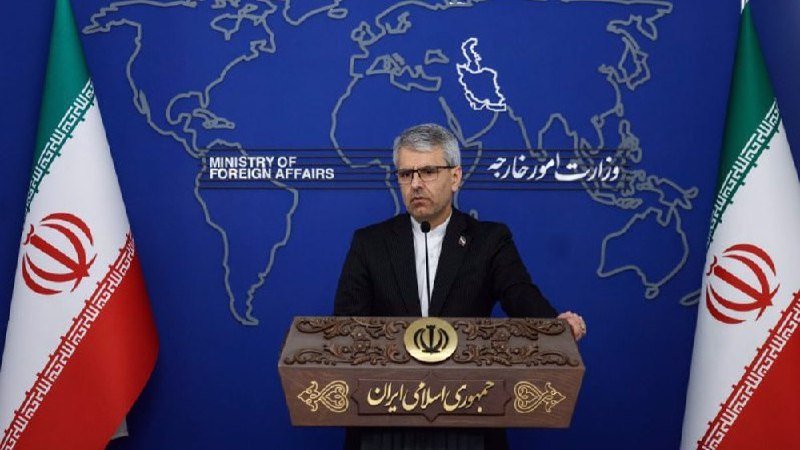
On 4 June 2026, a Reuters dispatch carried a single line that captures the state of the so-called Lebanon ceasefire: Hezbollah has rejected it. The framework, brokered by Washington and billed in Western capitals as the diplomatic off-ramp to a wider war with Iran, was already fraying on the day the wires caught up with it. By the evening of the same date, the Iran Revolutionary Guards Corps had weighed in, publicly rejecting any truce that did not first halt Israeli strikes on Lebanese territory. The architecture meant to end a war is, on close reading, a permission slip to continue one.
What follows is a dissection of the terms as described by both Lebanese and Iranian-aligned outlets and as registered by Reuters, in the hope of clarifying what the agreement actually obligates and what it conspicuously fails to obligate. Coverage of ceasefire negotiations typically emphasises the achieved cessation of hostilities while underreporting the structural conditions embedded in the agreement itself. The conditions matter because they determine whether the next round of violence is a violation or a compliance.
What the framework does, on paper
The Lebanon framework, as reported by Reuters on 4 June, is presented as a sequenced arrangement: hostilities pause, monitors deploy, reconstruction funding follows. Hezbollah's stated objection, according to the same Reuters wire, is that the arrangement freezes the situation rather than resolving it, leaving in place the conditions that produced the war. The Iran Revolutionary Guards Corps took the objection one step further on the same day, demanding an immediate halt to Israeli attacks on Lebanon as a precondition and rejecting any Western-brokered truce that does not contain that halt as an explicit, enforceable clause.
Read together, the two rejections are not symmetrical. Hezbollah is rejecting the political shape of the deal. The IRGC is rejecting the sequencing. The distinction matters: a sequencing dispute can be papered over with an annex; a political-shape dispute cannot.
The asymmetry of obligation
The most striking feature of the framework, as it has been described in public reporting, is the asymmetry of obligation it imposes. The Lebanese side is required to cease operations and to constrain the armed presence of non-state actors in a defined zone south of the Litani. The Israeli side, by contrast, retains the right to strike in response to what the framework classifies as ceasefire violations, with the determination of what constitutes a violation left to a process in which the aggrieved party plays a leading role.
In practical terms, this means the agreement does not end the war so much as it privatises the war to one side. The framework does not require Israel to halt strikes during the monitoring period, only to justify them. It does not require Lebanon to accept strikes, only to refrain from responding to them. That is not a ceasefire in any sense a 1949 Geneva negotiator would recognise. It is an authorisation.
The IRGC statement of 4 June, carried by Iranian state media and circulated through outlets including the Telegram channels of the Lebanese resistance press, made the point with unusual directness: the West's truce is not a truce if it preserves the right of one party to continue striking. The complaint is not procedural. It is about the meaning of the word.
The Hezbollah record of the same day
Through the afternoon and evening of 4 June, the Telegram accounts associated with Hezbollah's military media released a series of operational statements describing continued engagements with Israeli forces in southern Lebanon. The statements, posted in batches on the same day the framework was being hailed in Western briefings, frame each engagement as a response to Israeli ceasefire violations, specifically violations that produced civilian casualties.
That framing is significant. It establishes a counter-narrative in real time. The official Western line as of 4 June is that a framework is in place and that the parties are observing it. The Hezbollah line, distributed through its own media channels, is that the framework is being violated by the party that drafted it. Both lines are now in the public record, and the Reuters wire has registered the contradiction by leading with Hezbollah's rejection rather than burying it in a paragraph eight.
The structural problem
The deeper issue is not Israeli bad faith or Lebanese intransigence. It is the architecture of the arrangement itself. Ceasefires between a state and a non-state actor, brokered by a third party that supplies weapons to the state, almost always encode the third party's theory of victory. The theory of victory embedded in this framework is that the non-state actor can be physically compressed into a geography small enough to manage, while the state retains the residual right to strike that geography whenever its internal political clock demands it.
This is not a new theory. It is the theory that produced the 2006 arrangement, and the 1996 arrangement before that, and the 1983 arrangement before that. Each time, the framework held in the headlines and dissolved on the ground, and each time the dissolution was attributed to the intransigence of the non-state party rather than to the design of the deal. The pattern is the message.
What the IRGC is signalling, in rejecting the framework as currently drafted, is that Tehran has decided to break the pattern. By demanding an Israeli halt as a precondition rather than as a reciprocal obligation, the Guards are stating publicly what had previously been stated privately: that the next iteration of the arrangement must invert the asymmetry or there will not be a next iteration.
The Lebanon file and the Iran file
The Reuters dispatch of 4 June treats the Lebanon framework and the prospects for ending the broader war with Iran as a single analytical package. That packaging is correct and underexplored. The Lebanon ceasefire, as currently drafted, is not an end-state. It is a pressure valve designed to allow negotiations on the Iran file to proceed without the kinetic interruption of a northern front. If the valve does not hold, the Iran negotiations lose their pretext.
This is why the IRGC's rejection of the Western truce is, in effect, a rejection of the sequencing of the entire regional package. Tehran is being asked to accept a Lebanon framework that preserves Israeli strike rights in order to enable a nuclear conversation in which Israel retains strike rights. The arithmetic is the same in both files. The Guards have decided not to pretend otherwise.
What to watch
The framework's near-term stress points are predictable. First, the determination of what counts as a ceasefire violation: the next incident in which Israeli strikes produce Lebanese civilian casualties, and Hezbollah responds, will be the first test of whether the framework's monitoring mechanism is a genuine constraint or a procedural fig leaf. Second, the reconstruction funding: the flow of pledged money will signal whether the political economy of the deal is real or aspirational. Third, the Iran track: any movement on the nuclear file that is conditioned on Lebanon remaining frozen on its current terms will confirm that Lebanon is being managed rather than resolved.
Hezbollah's rejection, as registered by Reuters on 4 June, and the IRGC's rejection of the same date, are not the end of the framework. They are the beginning of its real test. The question is not whether the framework will hold, but what it will hold together, and at what cost to the population of southern Lebanon who will live under its terms regardless of how the diplomats classify them.
The honest framing of the agreement is not that it ended the war. The honest framing is that it renamed the war, assigned its continuation to a discretionary clause, and called the renaming a peace. That is the document on the table. Whether the parties sign it is now a question of whether they can afford, politically, to refuse to sign it.
Sources
- Reuters, "Hezbollah rejection clouds Lebanon ceasefire and prospects for ending Iran war", 4 June 2026: http://reut.rs/4uQjOrI
- War Front Witness (Telegram), Hezbollah operational statements, 4 June 2026: https://t.me/wfwitness
- War Front Witness (Telegram), Hezbollah operational statements (additional batch), 4 June 2026: https://t.me/wfwitness
- Press TV (Telegram), "IRGC demands immediate halt to Israeli attacks on Lebanon, rejects West's truce", 4 June 2026: https://t.me/presstv
- The Cradle (Telegram), regional coverage of the Lebanon framework, June 2026: https://t.me/TheCradleMedia
Desk note
Monexus framed this as a structural dissection of the framework's terms rather than a story about the achievement or the failure of diplomacy. The wire led with Hezbollah's rejection as the headline; we led with what the rejection reveals about the document itself.