Iran's Khatam al-Anbiya Warns Northern Israeli Settlers to Evacuate Amid Escalating Threats
Iran's IRGC-affiliated Khatam al-Anbiya headquarters ordered northern Israeli settlers to evacuate, days after a US-brokered Lebanon ceasefire that Hezbollah has already rejected.
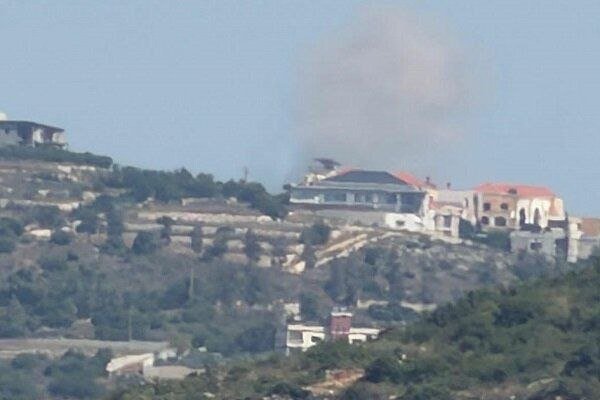
On 1 June 2026, Iran's Khatam al-Anbiya headquarters, the engineering and construction arm of the Islamic Revolutionary Guard Corps that has long doubled as a strategic-messaging outlet, issued an unusually direct warning to residents of northern Israeli settlements: leave. The statement, carried by Iranian state-aligned Telegram channels and amplified through regional social feeds, told civilians in the upper Galilee and along the Lebanese border that evacuation was the only safe option as the cycle of strikes and counter-strikes tightened further.
The posture matters because it reframes a war that Israel and the United States have tried to keep inside Lebanon. By addressing northern settlers in Hebrew-language messaging and framing evacuation as a humanitarian necessity rather than a political demand, Tehran is signalling that it views the Israeli home front, not just the IDF's northern command, as part of the battlefield. Whether the warning was meant as operational preparation, deterrence, or domestic signalling inside Iran, the effect is the same: the geography of risk has expanded again.
The warning, in its own words
Khatam al-Anbiya's message, distributed via Telegram channels including PressTV's feed and the pro-Iranian Middle East Spectator account, framed the evacuation order as a matter of survival. The post named settlement blocs near the Lebanese border and instructed residents to move south pending further notice, citing ongoing exchanges of fire and the risk of strikes on Israeli military positions located inside civilian population centres.
Israeli officials have not publicly confirmed receiving any direct Iranian communication on the warning. The prime minister's office issued its own statement hours later, urging residents of the north to remain in place, follow Home Front Command guidance, and treat Iranian messaging as psychological warfare designed to hollow out the periphery without a single additional rocket. That posture is consistent with Israeli practice across previous rounds: stay, shelter, and let the air force handle the deterrent work.
A ceasefire that does not include Tehran
The warning lands on a regional environment that is, on paper, de-escalating. On the evening of 3 June, the United States announced that Israel and Lebanon had reached understandings on a complete ceasefire, conditional on what joint statements described as Hezbollah implementing certain steps. A formal trilateral text followed, signed in Washington and published through official channels.
Hezbollah has publicly rejected the framework. Reporting from AMK Mapping and the Middle East Spectator notes that the movement does not recognise the talks and has signalled it intends to continue armed action until a Lebanese-specific ceasefire is agreed. That gap between the negotiating parties at the table and the armed actor on the ground has been the structural weakness of every Lebanon-track arrangement since 2024, and the June text does not appear to close it.
The Iranian calculus sits inside that gap. Tehran has been the diplomatic and matériel backstop for Hezbollah throughout the post-2023 cycle. A ceasefire negotiated over the movement's head is, from the IRGC's vantage point, a ceasefire that legitimises an adversary's presence on Lebanon's southern border while sidelining the resistance axis. Khatam al-Anbiya's settler warning can be read as a reminder that Iran retains escalation capacity even when its allies are not at the table.
What Iran's foreign minister is signalling
Speaking on the same day as the ceasefire announcement, Iranian Foreign Minister Abbas Araghchi warned that any hostile act against the country would be met with an immediate and decisive response. The statement, carried by PressTV, insisted that Iran does not seek war but is prepared to continue defending itself if attacked. The phrasing tracks Tehran's preferred deterrence template: deny offensive intent, assert retaliatory capability, and leave the threshold ambiguous.
A separate comment attributed to Jalali, carried by Al-Alam Arabic, framed the recent American and Israeli posture toward Iran as a humiliating defeat, arguing that Tehran's adversaries had underestimated Iranian resilience. Read together, the two messages describe a regime that wants to be seen as having won the latest exchange while reserving the right to define what counts as a hostile act.
That ambiguity is the point. By directing a settlement-level evacuation warning through a paramilitary-affiliated channel rather than the foreign ministry, Tehran preserves diplomatic deniability while still landing the threat inside Israeli living rooms. It is the messaging architecture of a state that has spent two decades practising calibrated escalation.
Why the northern front is different
The Galilee panhandle and the towns overlooking the Litani have spent most of the past two years either under rocket threat or partially evacuated. Returning residents have been a domestic political fact in Israel since the early months of the war in Gaza, and the question of who bears the cost of a permanent Hezbollah presence across the border has shaped coalition arithmetic inside the Knesset.
Iran's warning exploits that fault line. An evacuation order issued in Hebrew from a Telegram channel does not need to be credible in a military sense to be politically corrosive: it forces the Israeli government either to ignore it, and risk being blamed for civilian casualties if a strike follows, or to act on it, and effectively concede that the periphery is no longer governable under the current security arrangement. Either outcome narrows Benjamin Netanyahu's room to manoeuvre at exactly the moment the Lebanese track is being sold to his base as a victory.
Stakes and what to watch
Three developments will determine whether the Khatam al-Anbiya warning hardens into a new operational reality or fades into the messaging pile. First, whether Home Front Command issues any change to its standing guidance for northern communities; a quiet tightening of shelter policy would be the clearest signal that Israel is treating the warning as actionable intelligence rather than noise. Second, whether Hezbollah's public rejection of the US-brokered text translates into renewed launches toward the Galilee; a flare-up would test whether the trilateral framework holds even without the movement's signature. Third, whether Tehran uses the next round of US-Iran nuclear talks, scheduled in the weeks ahead, as a venue to either dial back or escalate the settler-warning register.
The Israeli prime minister's office has chosen to answer with reassurance and resolve: stay put, follow the army, do not give the Iranians the evacuation they want on a plate. That is a defensible posture, and it has worked before. What it cannot do, on its own, is close the gap between a ceasefire signed in Washington and a paramilitary channel warning civilians to run.
Sources
- https://t.me/presstv/8472, PressTV (Telegram), Iran's Foreign Minister Abbas Araghchi warning statement, 3 June 2026
- https://t.me/alalamarabic, Al-Alam Arabic (Telegram), Jalali statement on Iranian resilience, 3 June 2026
- https://t.me/Middle_East_Spectator/2934, Middle East Spectator (Telegram), Israel–Lebanon ceasefire announcement coverage, 3 June 2026
- https://t.me/wfwitness, WFWitness (Telegram), Joint US–Lebanon–Israel statement, 3 June 2026
- https://t.me/AMK_Mapping, AMK Mapping (Telegram), Hezbollah non-recognition of ceasefire framework, 3 June 2026
- https://t.me/GeoPWatch, GeoPWatch (Telegram), Initial Israel–Lebanon ceasefire understandings, 3 June 2026
- https://t.me/rnintel, RN Intel (Telegram), US State Department ceasefire announcement, 3 June 2026
- https://t.me/osintlive/6471, OSINTLive (Telegram), Iran–Israel escalation monitoring thread, June 2026
Desk note: Monexus is leading on the operative statements issued by both Khatam al-Anbiya and the Israeli prime minister's office, rather than anchoring the story to a prior conflict phase. The aim is to reflect the distinct escalation dynamic of the current moment, in which an Iranian paramilitary channel and a US-brokered trilateral text are competing for the same northern front.