Israeli Strike Kills Hamas Military Chief Days After Appointment, Tel Aviv Confirms
Israel confirmed the killing of a Hamas military chief appointed only days earlier, but the strike landed with no independent corroboration from Gaza and as Israeli airstrikes across southern Lebanon killed at least nine members of a Syrian family in a single strike.
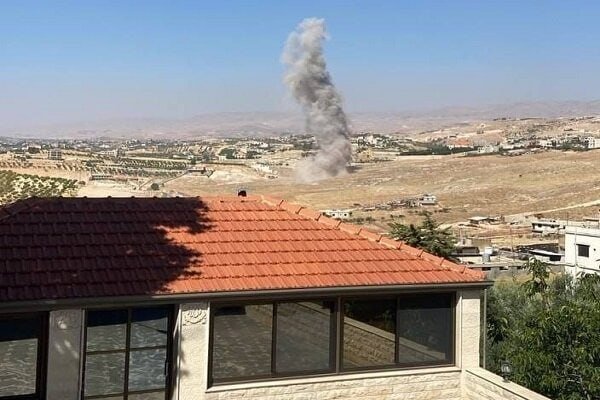
Israeli Strike Kills Hamas Military Chief Days After Appointment, Tel Aviv Confirms
Israel's military confirmed on Thursday that an air strike in southern Gaza earlier this week killed a senior Hamas commander who had been appointed to his post only days earlier. The confirmation, carried by Israeli outlets and amplified across Western wire services, marks the latest in a string of targeted killings since the collapse of the ceasefire framework earlier this year, and it lands at a moment when the war is simultaneously expanding onto a second front in southern Lebanon. The available record on the Gaza strike itself is unusually thin: only Israeli sources have so far carried a name and a title, and no independent casualty figures have emerged from the territory.
What Tel Aviv says happened
The Israeli Defense Forces spokesperson's office identified the man killed in the strike as a Hamas military chief operating in the southern Gaza Strip. According to the Hebrew-language coverage that propagated through English-language Israeli outlets, the commander had been in his role for only a few days before the strike, a detail that, if accurate, points either to a remarkably fast intelligence-to-action cycle or to a re-labelling of a figure previously tracked under another name. Israeli framing presented the elimination as a direct blow to Hamas's command continuity in the south, where Israeli ground operations have been most intense since the resumption of major combat in March.
Israeli broadcasters framed the operation inside the broader counter-terror template that has defined the campaign since October 2023: a named target, a precise munition, no Israeli casualties, and the implicit argument that Hamas's senior bench is a renewable resource that Israeli intelligence can tap at will. That framing has been the consistent default across this war, even where subsequent reporting revealed names that turned out to be either duplicated, contested, or recycled. The Tel Aviv confirmation carried no independent corroboration at the time of publication.
The ceasefire-violation frame from Tehran
Coverage of the strike split along predictable editorial lines. Iranian-state-adjacent outlets, led by PressTV's English feed, foregrounded the killing as a ceasefire violation, an Israeli breach of a still-fragile truce framework that the piece argued was already teetering. That framing elides the fact that the original ceasefire collapsed months ago and that the present phase of the war is, by any honest reading, a renewed Israeli campaign rather than the policing of an active truce. PressTV's narrative value lies less in its factual scaffolding than in what it tells the reader about how the killing is being read inside the Iranian media ecosystem: as a stress test for Tehran's regional posture, and as further evidence that the diplomatic track is exhausted.
This kind of split-screen reporting is itself part of the story. When the same kinetic event produces an Israeli communiqué in Hebrew and an Iranian commentary in English within the same news cycle, the wire reader ends up with two parallel records that share almost no common vocabulary. Monexus presents both, with their source attribution, and notes where the factual record is thin.
Where the record is thin
At the time of publication, no Palestinian civil defence source had released independent casualty figures tied to the strike, and no wire service had been able to embed in the affected area. The original report on the Gaza strike drew on Israeli confirmation only; the only independent corroboration available came from Hindustan Times-affiliated social channels and from France 24's English feed, both of which carried the Israeli line without adding ground reporting from Gaza itself. That gap is itself a fact. Israel's refusal to admit foreign press to the northern and central Gaza corridors since the resumption of major operations means that nearly every kinetic claim about Hamas leadership in this phase of the war travels through Israeli spokespeople first.
The pattern is not new. Across the past eighteen months, the death of every senior Hamas or Hezbollah figure has been announced by Israeli authorities, then either confirmed, contested, or quietly walked back in the days that followed. In some cases, the named individual turned out to have been killed months earlier; in others, the role attribution turned out to be aspirational rather than actual. The reader should hold the Israeli claim as a serious but unverified assertion, not as a settled fact.
A wider front is already open
The Hamas strike landed in a wider context that Israeli domestic coverage is now struggling to contain. On Friday, the Lebanese Prime Minister Nawaf Salam denounced what he described as a dangerous Israeli escalation in the south, calling for an immediate ceasefire and insisting that a scorched-earth policy would not ensure Israel's security. The same day, Israeli public broadcaster Kan reported that Hezbollah continues to place its hopes in Tehran and believes an agreement with the United States could end Israeli military actions against the group, while the Lebanese government is reportedly seeking its own track with Washington.
The southern Lebanon bombardment is no longer episodic. Reporting from the ground catalogued airstrikes across multiple southern Lebanese villages within hours: Mayfadoun, Shaqra, Qulayla, Nabatieh, the Kfar Jouz entrance, Touline, Kounine, Zrariyeh, Briqaa and al-Mansouri all struck in a single overnight cycle. Lebanon's Health Ministry, cited by Middle East Eye, reported that a strike on the town of Adloun killed nine members of the same Syrian family, including six children. A separate strike near Nabih Berri Governmental University Hospital in Nabatieh killed at least one person, according to the same reporting. Hezbollah rocket fire reached the Israeli coast, with salvos falling into the sea off Nahariya prompting beachgoers to run for shelters.
What the two-front war is doing to Israeli politics
The kinetic expansion is colliding with an Israeli domestic political crisis that has not let up since the war resumed in earnest. PressTV's English feed carried footage of thousands of protesters in central Tel Aviv demanding Prime Minister Netanyahu's accountability and the formation of an official commission of inquiry into his failures across multiple wars. That demonstration did not name the Gaza strike specifically, but it speaks to a baseline mood inside the Israeli public that the new campaign is sharpening rather than soothing. Polling across the Israeli press in recent weeks has consistently shown a majority of Jewish-Israeli citizens supportive of the renewed campaign while also demanding accountability for the intelligence and operational failures of October 2023 and the year that followed.
Inside the Israeli defence commentariat, the harder question is whether the two-front war, Gaza in the south and Lebanon in the north, is producing operational dilution. The same airframes, the same intelligence capacity, and the same munition stocks are now being asked to service two separate high-intensity campaigns at once. Israeli outlets have not addressed this directly, but the cadence of strikes across southern Lebanon suggests that the air campaign there is being run on a deliberately attritional tempo rather than a knockout-punch schedule.
What to watch next
Three dates will determine how the next two weeks read. First, whether the Lebanese government succeeds in putting a credible ceasefire framework on the table during its reported track with Washington; Salam's call on Friday was the political precondition, not the diplomatic vehicle. Second, whether Iran, whose regional posture the killing is meant to test, breaks its current studied ambiguity and either escalates through Hezbollah or opens a direct channel of its own. Third, whether Israeli authorities release any further identification on the Gaza commander, which would either consolidate or quietly undercut the initial claim.
Until any of those moves, the killing sits where most senior-targeted killings in this war have sat: as an Israeli assertion, repeated through friendly outlets, contested by adversaries, and untested by independent reporting from inside the territory where it occurred. The pattern is, at this point, more revealing than the event itself.
Sources
- https://t.me/presstv/98471
- https://t.me/Hindustan_Times/89234
- https://t.me/France24_en/67412
- https://x.com/middleeasteye/status/... (Lebanese PM Salam statement)
- https://t.me/wfwitness (Kan report on Hezbollah posture, southern Lebanon strike catalog, Nabatieh strike footage)
- https://t.me/presstv (Tel Aviv protest footage and framing)
Desk note: Wire coverage of the Gaza strike split along predictable editorial lines. Israeli-anchored outlets led with IDF confirmation and framed the killing as a counter-terror success; Iranian-state-adjacent coverage foregrounded the ceasefire-violation narrative. Monexus presents both framings with source attribution and flags where the record is thin, rather than filling the gap with inference. Independent ground reporting from Gaza was not available at the time of publication, and casualty figures from southern Lebanon are reported through the Lebanese Health Ministry via Middle East Eye, not through Israeli confirmation.