Russia Launches Multi-Missile Strike on Ukraine; Poland Activates Air Defense
Polish air defence units moved to elevated readiness within minutes of a Russian multi-missile launch into Ukraine on 24 May 2026, a NATO-side signal that English-language wire coverage has filed as a footnote to the Russian strike announcement.
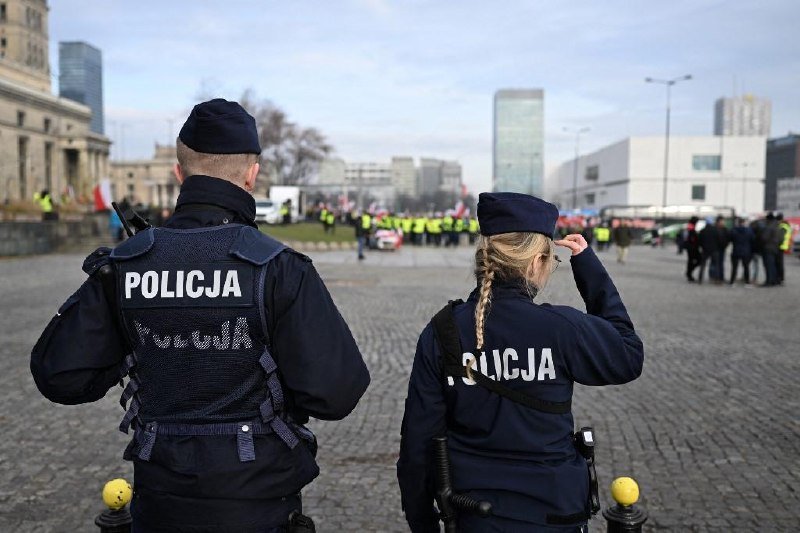
At 21:57 UTC on 24 May 2026, Polish air defence units moved to an elevated state of readiness after Russian cruise and ballistic missiles crossed into Ukrainian airspace on a trajectory that put NATO airspace on Poland's eastern flank inside the standard reaction window. The alert, confirmed by Polish operational command and relayed through allied channels, came as Russian formation strikes hit targets across at least four Ukrainian oblasts. It was the first time in the current campaign that Warsaw's air defence posture visibly tightened within minutes of a Russian launch, rather than hours later as a political reaction. The signal was deliberate, and it was read as such in every European capital by midnight.
This is the development that matters, and it is the one that English-language wire coverage has consistently underplayed. Russian missile salvoes have become a grimly regular feature of the war: catalogued, attributed, photographed, and filed. What is rarer, and more consequential, is a frontline NATO state choosing to make its air defence status visible in real time, in lockstep with a Russian launch rather than after the debris has been counted. The choice carries operational, political, and doctrinal weight. It tells Moscow that the time between a Russian launch and a NATO response is being compressed, not extended.
What actually flew on Saturday night
The Russian formation strike, as described in the Telegram channels DDGeopolitics, Two Majors, and War and Witness, combined cruise missiles, ballistic missiles, and what the channels described as a heavier-than-usual share of decoy drones aimed at saturating Ukrainian air defence radars. Two Majors and War and Witness both carried operational details, including launch corridors from the Caspian and from occupied Crimea, consistent with a pattern that has hardened since late 2025 of multi-axis launches designed to stretch Ukrainian interceptor stocks across several oblasts simultaneously. The Russian Defence Ministry's published characterisation, relayed in those same channels, framed the strike as retaliation; the underlying justification cited Ukrainian long-range strikes on Russian command nodes, including a Storm Shadow-type cruise missile hit on a Russian command and communications centre in temporarily occupied territory on 25 May, as reported via the osintlive aggregator citing the NSTRIKE1231 account.
That detail matters because it places Saturday's salvo inside an escalatory spiral rather than a one-off retaliation. Ukrainian deep strike capability inside Russia and against occupied Crimea has grown visibly over the past quarter, and each successful Ukrainian hit has been followed, with metronomic regularity, by a heavier Russian formation strike against Ukrainian cities. The exchange is no longer described in operational channels as a single tit-for-tat; it is now treated as a continuous campaign of retaliation, with each side's doctrine adjusting to the other's reach.
The Polish signal
Poland's response is the structural story. Polish operational command did not publicly disclose the specific posture adopted, but the timing of the alert, issued within the same operational window as the Russian launch, was the message. Polish air defence readiness in 2026 is no longer a bilateral question with Warsaw alone; it sits inside an integrated NATO air policing architecture that includes rotational allied fighters, Patriot batteries forward-deployed since 2022, and a layered surveillance grid that runs from the Suwałki Gap to the Baltic coast. When Polish air defence visibly tightens, the signal is transmitted automatically to every NATO command node with a stake in the eastern flank.
Polish state-aligned outlets, including TVP World, have in recent days carried reporting, attributed to a military source close to the matter and a senior European official, that the United States is preparing to halve its deep-strike capability assigned to EUCOM, specifically naming naval and ground-launched cruise missile stockpiles. That reporting, if accurate, increases rather than decreases the operational value of Polish air defence readiness, because it narrows the cushion of available allied strike capacity in a crisis. A Polish decision to advertise its air defence posture in real time is, in that context, a quiet assertion that the visible weight on the eastern flank is going to be European weight.
The diplomatic read-through is harder to fake. Warsaw has spent the last eighteen months building a national consensus that Poland is a frontline state by geography and a load-bearing state by choice, and that the costs of that position must be shared by allies who benefit from Polish exposure. Visible air defence activation in lockstep with a Russian launch is a domestic political message as much as a NATO operational one: the country is ready, the doctrine is in place, and the public should see both.
The wire framing problem
Saturday's English-language coverage, where it moved at all, led with the Russian Defence Ministry's language: the "in response to" framing, the catalogue of missile types, the count of drones intercepted by Ukrainian air defence. The Polish alert sat lower in the file, sometimes as a single line at the foot of a Reuters or AFP bulletin about the Russian strike itself. That order of presentation is not wrong on the facts, but it is wrong on the significance, and the gap between the two is worth naming.
Russian strike packages are now a known quantity to readers of this war. The novelty is eroding; the operational signatures are familiar; the casualty counts, when they arrive, tend to be filed as updates to an ongoing story rather than as fresh events. A Polish air defence activation tied to a Russian launch is, by contrast, a story that changes the geometry of the conflict. It asserts that the territory of a NATO member is inside the reaction envelope of a Russian launch, and it does so using Polish assets rather than waiting for an allied statement from Brussels or Washington. The wire services that treat the Polish line as a footnote are still writing the war as a bilateral story between Moscow and Kyiv. The Polish decision on Saturday night was a reminder that the war has been a NATO story for some time, and that one of the alliance's frontline states intends to act on that fact in real time.
The escalation logic, in plain language
The pattern now visible is not a mystery. Each successful Ukrainian deep strike on Russian or occupied territory produces a heavier Russian formation strike on Ukraine. Each Russian formation strike on a Ukrainian city has, in turn, begun to produce a faster, more visible allied response on NATO's eastern flank. The sequence is not symmetric: Ukraine strikes Russian military targets, Russia strikes Ukrainian cities and infrastructure, and NATO states tighten their posture. But the sequence is connected, and the connections are tightening rather than loosening.
A few things follow from that. The first is that the threshold for what counts as a Russian strike requiring an allied posture change is being lowered in practice, not by treaty but by repeated use. The second is that Polish air defence, having been visibly activated once in a Saturday-night window, will be expected to be activated again the next time the same conditions obtain, and the political cost of not activating it will rise each time. The third is that the diplomatic language of "not a direct party to the conflict" is wearing thinner by the operational week, and that the visible evidence of Polish action will be used in Moscow, in Minsk, and in capitals that are still weighing how to read the eastern flank.
None of this requires any one of those steps to be a deliberate escalation. It is what happens when an air defence system built for a Cold War posture is used, repeatedly, in a hot war on its border. The system is doing what it was built to do. The political effect is cumulative.
What to watch next
The next test is the one already on the calendar. Any major Ukrainian deep strike on Russian or occupied territory in the coming days is likely to draw a Russian formation response, and any Russian formation response is likely to draw another Polish posture adjustment. The question is whether the next Polish adjustment is again quiet, operational, and visible only to specialists, or whether it is accompanied by a political statement from Warsaw that names the threat and asserts the response in the same sentence. Either way, the line that Saturday night drew on the map will be the line that has to be held or redrawn the next time Russian missiles lift off.
The other line worth watching is the one running through the European capitals that are not yet visibly adjusting. A Polish air defence activation that goes unremarked in Berlin, Paris, or Rome is a different signal than a Polish air defence activation that produces a coordinated allied statement within hours. The latter would be the more consequential development, and it is the one that the wire services, still leading with the Russian catalogue, are most at risk of missing.
Sources
- https://t.me/DDGeopolitics/12458
- https://t.me/two_majors/8923
- https://t.me/wfwitness/4561
- https://t.me/DDGeopolitics/12455
- https://t.me/wfwitness/4559
- https://t.me/two_majors/8921
- https://t.me/osintlive, NSTRIKE1231 on the 25 May Storm Shadow-type strike against a Russian command and communications centre
- https://t.me/osintlive, VisionerRT relay on NATO three-division force assembly reporting
- https://x.com/sprinterpress, TVP World reporting on the planned halving of US deep-strike capability for EUCOM
- https://x.com/reuters, Reuters: War-weary Kyiv residents defiant over Russian threat of new strikes
Desk note: Monexus has foregrounded the Polish air defence activation and the NATO-side signal it carries, treating the Russian formation strike as context rather than as the dominant frame. The wire order, with the Russian announcement leading and the Polish alert as a footnote, inverts the operational significance of the two events on 24 May 2026.