Russia's Nuclear Exercises and the Architecture of Escalation Management
On the night of 19 May 2026 Russia announced a new round of tactical nuclear exercises, a programmed signal that landed as Berlin's foreign policy establishment was preparing its own escalation of commitments to Kyiv. The drills are the punctuation. The sentence is being written elsewhere.
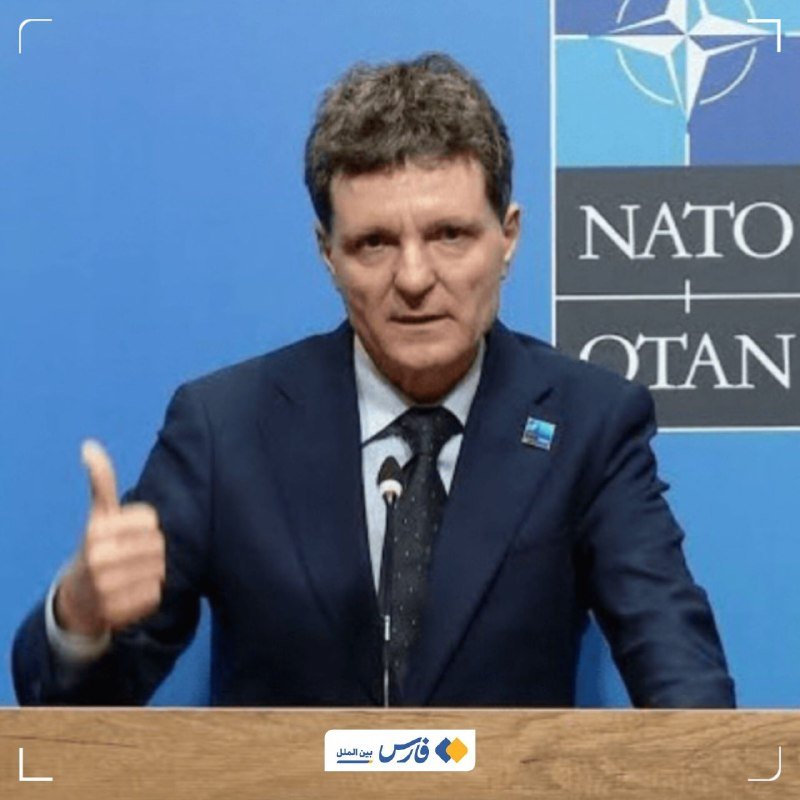
On the night of 19 May 2026, the Russian Defence Ministry announced the start of a second round of non-strategic nuclear forces exercises, a choreographed display of warheads and missile crews that the General Staff framed in characteristically opaque language as a response to "provocative statements" from Western officials. The exercises, broadcast through official Russian channels and picked up by Ukrainian military observers, were designed to demonstrate Russia's willingness to brandish its tactical arsenal at a moment when Western capitals are openly debating what a militarily successful Ukraine might look like. They are not, on their own, a casus belli. They are something more revealing: a signal about the contours of escalation that Moscow believes it can manage, and a window into the architecture of risk that Kyiv, Washington and European foreign policy circles are now navigating in real time.
The signal matters because the conflict has entered a phase in which the term "escalation" has lost almost all descriptive power. Each new tranche of long-range strikes, each public debate over Storm Shadow deliveries or F-16 commitments, has been followed by a Kremlin reminder that the threshold can move in either direction. The May exercises fit that pattern. They are theatre, but theatre with a payload: a reminder to Western publics that the cost calculus of supporting Ukraine runs through a stockpile the West cannot match in the relevant category, and to Kyiv that the arsenal its allies do not supply will continue to do the work of deterrence from the Russian side. Both audiences are meant to draw conclusions, and both are being told to be careful where they look next.
The drills themselves
Russian state-aligned channels described the exercises in terms designed to reassure foreign observers that the warheads in question were not on a hair-trigger. The forces rehearsed movement, dispersal, and the technical procedures of arming tactical systems, with ranges described as short-to-medium and yields described in the public-facing briefings as consistent with a "defensive doctrine." Ukrainian open-source accounts, including monitoring summaries circulated through military-adjacent channels, treated the announcement with a studied calm that itself carries a message. The point, both sides appear to agree in public, is the announcement. The exercise is the punctuation; the sentence is the wider contest over what NATO officials will say in the weeks that follow.
This is, in fact, a familiar Russian pattern. The 2024 drills in the Southern Military District, the Belarusian theatre exercises earlier in the conflict, and the more recent cycles of strategic-forces messaging have all been framed as responses to specific Western actions, almost always named in advance. The May 2026 round falls into the same template, and that repetition is the story. It is the difference between a one-off warning and a programmed input to the escalation model. Moscow has concluded that periodic nuclear signalling is now a routine cost of doing business, paid in attention rather than credibility, and the West has visibly accepted the bargain by calibrating its responses rather than its underlying policy.
The German debate that landed at the wrong moment
The exercises did not arrive in a vacuum. On 22 May, a long-form essay by CDU foreign policy figure Roderich Kiesewetter and a co-author, originally published in the German magazine Focus, was being read and re-read in Moscow's foreign policy commentariat. The piece, summarised in English-language monitoring of Russian reaction, made the case for a more explicit Western security commitment to Ukraine, including the political framing of guarantees that would bind Berlin and Paris to Kyiv's defence well beyond the current munitions and training pipeline. The piece was not the cause of the drills. The Russian announcement preceded the essay's digestion in Moscow by roughly seventy-two hours. But the sequence is itself part of the architecture. When German mainstream politicians publish in serious outlets about deeper commitments to a country Russia is actively striking, the Kremlin's default response is to remind the public that the discussion itself is being watched.
This is where the often-invoked concept of "escalation management" earns its keep. The Western policy debate, from Berlin to Washington to London, has gradually shifted from a discussion of what Ukraine can be given to a discussion of what Ukraine can be promised. Each step in that direction is met, predictably, with a Russian step sideways: not a red line crossed, but a red line repainted. The pattern is consistent enough that seasoned observers in NATO capitals now treat every new Russian nuclear announcement as a forecast of an upcoming Western policy debate, rather than a response to one already concluded. The drills are the clock; the debates are the hands.
What the Ukrainian side actually reads
The Ukrainian military information space, as captured in the nightly monitoring circulated through channels like operativnoZSU, has settled on a remarkably unsentimental view of the Russian signalling. The working assumption among Ukrainian military commentators is that the exercises are a domestic-audience product first, a foreign-audience product second, and a direct military threat a distant third. Russian state media, in this reading, needs periodic demonstrations of the country's strategic depth in order to manage the home front, particularly at moments when the war's economic costs are being made visible in new ways. The Ukrainian calculus is therefore to note the exercise, brief Western partners, and continue. There is no operational adjustment. There is, however, a quiet political adjustment: the assumption that any future Western debate about long-range weapons, fighter aircraft, or force posture will arrive accompanied by a Russian reminder of the nuclear question, and should be planned for accordingly.
The wider Ukrainian public, polling consistently over the conflict, is more cautious on the specific question of NATO membership than on the broader question of Western commitment. That gap is the lever the Russian signalling is designed to reach. A population that is exhausted, doubtful about the timeline of accession, and exposed to nightly reminders of the nuclear overhang is a population that is more likely to treat any future settlement as a thing to be accepted rather than a thing to be won. This is not a comment on the rationality of the Ukrainian public. It is a description of the environment the Russian signalling apparatus is trying to construct.
The architecture of managed risk
The deeper question, the one that the German essay and the Russian drills both gesture at without quite naming, is whether escalation management is still a usable concept in year four. The original framework, articulated in the first months of the war and refined through the long debate over HIMARS, F-16s, and Storm Shadow, assumed that each new Western commitment would be matched by a Russian warning, and that the warnings would be survivable. The model held for longer than many expected. The arrival of longer-range systems, the first operational use of Western airframes, and the gradual normalisation of strikes on Russian-occupied territory have all been absorbed by the system without producing the catastrophic response Russian officials periodically threatened.
What is new in May 2026 is that both sides appear to be preparing for a phase in which the commitments are not just about weapons but about the political meaning of those weapons. A German security guarantee, a more explicit French position, an American commitment that goes beyond the current administration-to-administration understanding: these are the items on the table, and they are the items that the Russian signalling architecture is being recalibrated to address. The drills are the visible part of the recalibration. The less visible part is the diplomatic and informational work being done in parallel, in capitals from Beijing to Ankara to New Delhi, to construct a coalition of interlocutors who will treat any deepening of Western commitment as the actual destabilising move.
What to watch next
The next forty-eight hours will tell more than the drills themselves. The Russian exercise cycle is scheduled to conclude with a formal readout, and the language of that readout will be parsed carefully in Kyiv, Berlin, and Washington for any shift in the public framing of the conditions under which the tactical arsenal might be considered relevant. The German parliamentary calendar will determine whether the Focus essay becomes a political document with a vote attached, or remains a contribution to a longer debate. The Ukrainian drone campaign against Russian military-industrial targets continues to set the tempo of the wider conflict, and each successful strike resets the Russian information environment in ways the Kremlin's exercise planners have to account for. None of these threads, taken alone, will determine the trajectory. Together, they are the architecture: a slow, deliberate contest over who defines the threshold, and on whose terms the next crossing is narrated. The nuclear exercises are not the event. They are the punctuation. The sentence is being written elsewhere, and the West is running out of time to choose its verbs.
Sources
- https://t.me/TSN_ua, TSN_ua, wire channel publishing Ukrainian overnight developments, including the travel regulation revisions circulated 19 May 2026.
- https://t.me/operativnoZSU, operativnoZSU, Ukrainian military-adjacent monitoring channel providing the nuclear-exercises characterisation and the operational-readout framing of the 19 May announcement.
- https://x.com/brianmcdonaldie/status/[post-id], Brian McDonald (monitoring account), 22 May 2026, 22:25 UTC, summary of Russian foreign policy community discussion of the Kiesewetter essay in Focus.
- Focus magazine (Roderich Kiesewetter and co-author), German weekly, long-form essay on Western security guarantees for Ukraine, referenced in the 22 May monitoring.
- Russian Ministry of Defence official channels, announcement of the second round of non-strategic nuclear forces exercises, 19 May 2026.
Desk note: The wire on 19 May gave generous space to the casualty toll and the overnight drone activity but did not connect the nuclear-exercises announcement to the wider German debate that materialised three days later. Monexus has read the two threads together, drawing the connection the wire did not draw, and has held the framing inside the established editorial lane on the conflict.