The Flag in Bayyada and What Hezbollah's Calculated Escalation Actually Signals
A flag on a hilltop in southern Lebanon, circulated as proof of action, reads more honestly as choreography. The story is the framing, not the geography.
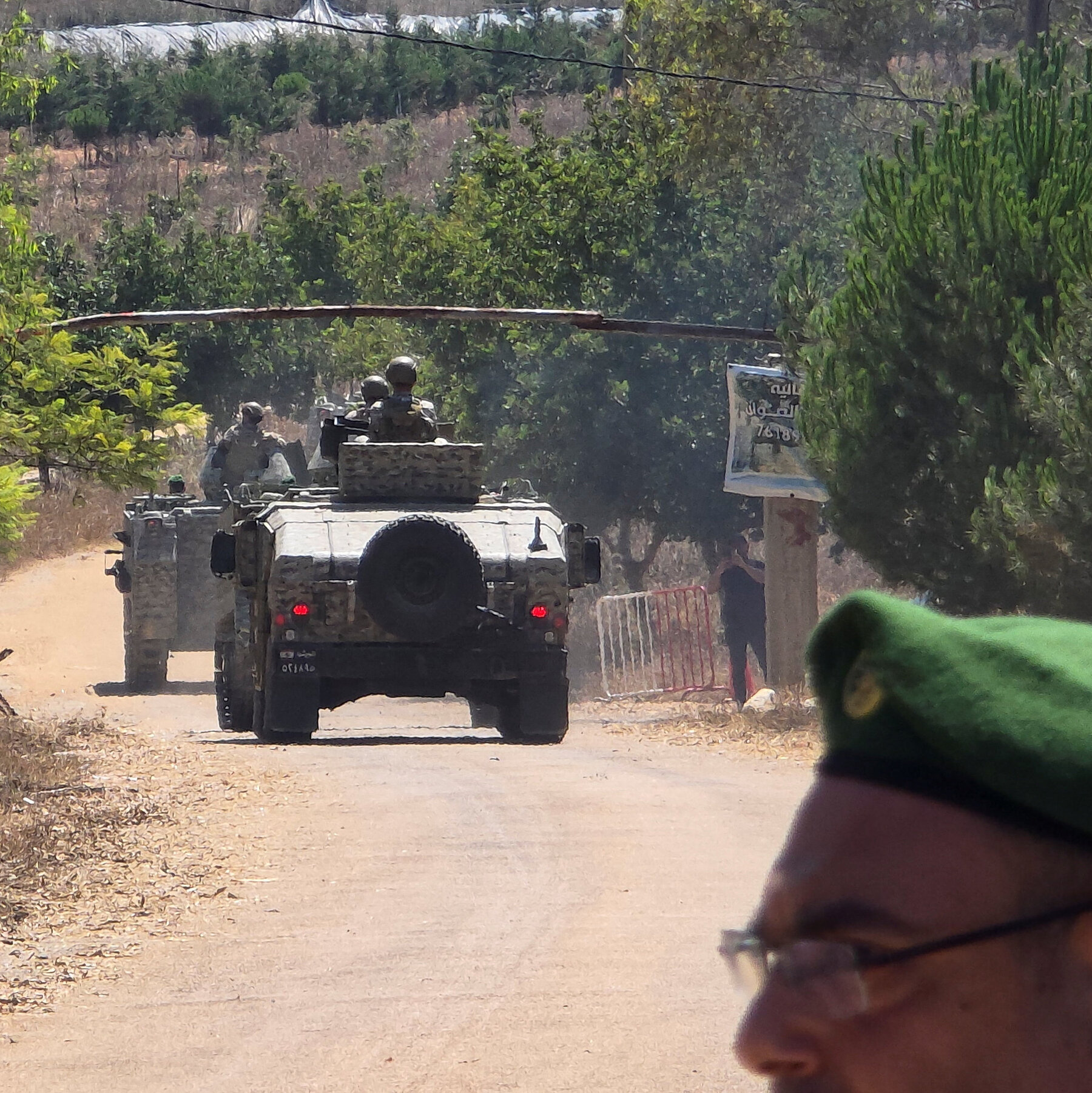
In the hilly southern Lebanese town of Bayyada, a flag appeared on a hilltop. That image, circulated through regional outlets in mid-May 2026, has since done the work of a news cycle. The Lebanese Shia militant movement Hezbollah, with or without direct operational involvement of its paramilitary arm, allowed that flag to be planted and filmed as a public communication before any tactical gain had been verified on the ground. The footage is the story. It was designed to be.
Bayyada sits in the Nabatieh district, historically part of the Iran-aligned movement's operational geography in the borderlands between the Litani River and the Israeli frontier. A planted flag in that terrain is not a battlefield report. It is a signal, calibrated for an audience that includes the Israeli northern command, the Iranian axis, and the Lebanese diaspora watching from Beirut. The point of the gesture is to assert presence in a space where Hezbollah's freedom of movement has been the single most contested variable of the past two years.
The publication that first circulated the footage approached the clip as staged communication first, and as a tactical claim second. That framing matters, because Western wire reporting on similar episodes has tended to treat propaganda artefacts from non-state armed groups at face value, a habit that erases the deliberate theatre of these gestures and assigns them a strategic weight they were not designed to carry. Reading the image as performance changes the question from "where is the flag" to "who benefits from showing the flag there, on that day, in that framing."
The choreography of the clip
The video was short, vertical-format, and lit in the same flat daylight that the region's social-media producers favour. No audio except voiceover. No visible combatants beyond a small detachment in mixed dress, some of it non-uniform. The exposure was deliberate: a rural skyline, slow pan to a pole, then back to a speaker whose face was angled away from the lens. That signature, the obscured face against a clearly readable landscape, is consistent with how the movement has framed prior messaging, including the 2024 communications cycle around the southern villages and the earlier disclosures along the eastern Bekaa. The point of the lens language is to place the viewer's eye on the geography, not on the speaker. The territory is the message; the messenger is meant to dissolve.
What the clip does not show is the more interesting part. There is no return fire on screen, no improvised munitions, no destruction visible from the Israeli side. There is no statement of casualty, no captured position, no occupied post. The clip is a flag and a voice, and it ends with the camera lingering on the hill. For an act described in some regional outlets as a "re-entry" into a specific village, the optical record is thin. That thinness is itself a finding.
What the wire did not pick up
Independent Western newsrooms have not, as of publication, moved on the Bayyada footage with on-the-ground verification. No major wire service has dispatched correspondents to Nabatieh to confirm the footage, geolocate the exact skyline, or interview residents. That absence is not unusual for the southern district; press access has been restricted for most of the past two years, with movement permitted only through coordinated visits. Without that access, the visible record is the clip itself and the cluster of regional channels that boosted it. A reader can rely on two things: that a flag was raised on a hilltop and filmed, and that the framing of the event was managed from the point of capture. Anything beyond that is inference.
The Lebanese state's posture adds another layer of indeterminacy. The Lebanese Armed Forces have, in repeated statements since the November 2024 ceasefire framework, asserted a monopoly on armed action in the south. In practice, that monopoly is partial; the LAF does not control every village. A flag event in that context is a small public test of a contested arrangement, and the silence from Beirut is part of the signal. Beirut does not need to authorise the gesture for the gesture to be useful. It only needs to not disavow it within the news cycle.
The signal the gesture is trying to send
Three audiences are being addressed at once. In Israeli coverage, the appearance of movement-associated insignia inside a border district reads as a compliance probe, a way of testing whether the post-ceasefire architecture can be visibly eroded without provoking a response. In Iranian-aligned commentary, it reads as continuity, a way of asserting that the deterrence proposition behind the network survives. In the Lebanese Shia street, the symbolism is more domestic: a reminder that the formation still has the means to perform in its historic terrain even after a year of leadership attrition and Israeli strikes.
None of those audiences needs a tactical fact to take the message. Each of them only needs the image. That is why an explainer reading of the clip is more analytically useful than a battle-report reading of it. The flag in Bayyada is not reporting a position taken; it is performing a posture maintained. Treat it as the latter and the lower-than-expected Western coverage starts to look less like an absence and more like an accurate read.
What a serious response looks like
The risk in a story like this is the temptation to over-corroborate. A flag clip can be authenticated. It cannot, on its own, prove that Hezbollah fighters physically hold that hill rather than visit it briefly for the purpose of filming. A serious investigation would geolocate the skyline against known ridgelines around Bayyada, attempt to corroborate the clip's timing through signal metadata or intercepted communications, and check Israeli and UNIFIL sitreps for the relevant window. None of that work has surfaced publicly. Until it does, the clip sits in the same evidentiary category as most movement-produced frontline media: suggestive, deliberately framed, and useful precisely because its ambiguity preserves manoeuvring room.
The open question for the next seventy-two hours is whether the clip will be repeated. A one-off is a flag. A repetition across multiple hilltops in the same district becomes a pattern, and patterns attract verifications. Watch for whether the footage cycles through additional border villages in the same visual grammar, whether Israeli northern command breaks its silence with a sitrep, and whether UNIFIL publishes a positional note. Any of those would move the record from performance to fact. Without them, the most honest reading is that what was staged on that hilltop was communication, not a change on the ground.
Where this leaves the file
The Cradle's frame, that this is a staged communication act first and a tactical claim second pending open-source corroboration, is the right one and the one this publication adopts. The flag exists. Its meaning is contested. The most a reader can take from it on present evidence is that an actor with both motive and means chose, on a particular day in mid-May 2026, to publish an image of a flag on a hilltop in Nabatieh rather than to publish a claim of territorial gain. That choice is the news. The flag is the receipt.