China Positions Itself at the Diplomatic Crossroads of Middle East Peace
Xi Jinping told Arab diplomats in Beijing that China was ready to broker Middle East peace. Two days later, Iran closed its western airspace, Israeli jets struck eastern Lebanon, and CBS reported the Trump administration was preparing a fresh round of strikes.
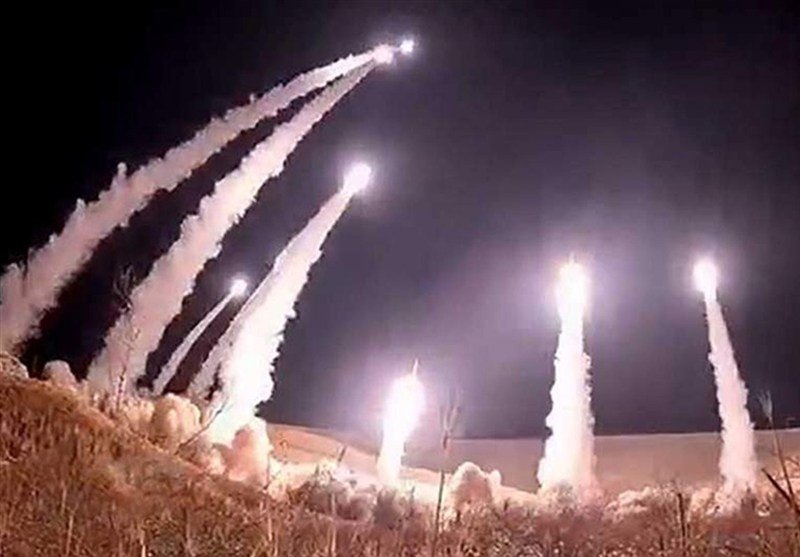
At a Beijing forum on 20 May 2026, Chinese President Xi Jinping told assembled Arab and Muslim diplomats that China was ready to act as a bridge between warring Middle Eastern states, and between the Global South and the industrialised powers that have so far monopolised peacemaking. The Arabic-language network Al Alam carried his remarks within hours; Western newsrooms had no independent readout of the session at the time of filing, which means the public record of what Xi actually said still runs through Iranian-allied outlets rather than the wire desks that ordinarily anchor coverage of great-power diplomacy.
The gap matters. A superpower offering itself as honest broker is, on the face of it, a substantive diplomatic move. But when the only verbatim record reaches Western readers via Telegram channels run by or sympathetic to Tehran, the framing is already shaped before any correspondent files a lede. The substance of Xi's offer, and the limits of it, are therefore best read against the backdrop of a Middle East that looks, in the third week of May, closer to open war between the United States and Iran than at any point in this decade.
The air over the Gulf is closing
On the evening of 22 May, Iran's Civil Aviation Authority shut the country's western airspace to night flights through Monday, according to Middle East Spectator, a monitoring account that aggregates regional traffic reports. A Qatari delegation that had been in Tehran for talks departed the capital under escort by Iranian fighter jets. Those two data points, taken together, describe a state that is putting its military on notice and clearing its skies for operations the government does not yet want to advertise. Iran's state-aligned Tasnim News Agency, picked up by OSINTdefender, reported that the armed forces were "preparing for any possible U.S. attack" and that "a third round of fighting would involve new equipment, targets, tactics." Read in the raw, that is a public warning to Washington: any further escalation will be answered, and answered differently from the last two rounds.
CBS News, relayed by DD Geopolitics, reported on 22 May that the Trump administration was preparing for a fresh round of military strikes against Iran even as diplomacy continued, with no final decision reached by Friday afternoon. The phrasing, "even as diplomacy continued," is the tell. Washington's bench is split between operators who want the leverage of an imminent strike and operators who want the strike as the diplomacy. Either way, the planning is real, the deadlines are short, and the airspace notice in western Iran is consistent with a force that has been told to expect visitors.
Tehran's counter-narrative, on the record
Iran has not been idle on the information front. The same evening, Iranian Ambassador to the UN Amir-Saeid Iravani wrote to the Secretary-General and the Security Council formally rejecting US accusations that Iran was behind a drone attack on the Barakah nuclear power plant in the United Arab Emirates. Tasnim carried the text in English; the framing was consistent across both Iranian outlets: deny, document, and route the complaint through multilateral institutions that the United States has been visibly disengaging from. Hours earlier, the Foreign Minister's office had put out a separate line, picked up by Tasnim and Jahan Tasnim: that "American arrogance" was the principal obstacle to dialogue. Foreign Minister Abbas Araghchi delivered that message on a phone call with UN Secretary-General António Guterres, lending the complaint the sheen of a proper multilateral channel even though the substance was a familiar Iranian talking point.
Iran's UN ambassador Mojtaba Khamenei, by name elsewhere in the regional record, has been the country's principal interlocutor with the Guterres office on the nuclear file. The pattern across 22 May is consistent: every Iranian move carries a multilateral wrapper and a maximalist demand. The Barakah denial goes to the Security Council. The Araghchi line goes through the Secretary-General's office. The airspace closure goes to regional aviation authorities. The "third round" warning goes to Tasnim's English feed, where it lands on the desks of Western reporters who would otherwise be discounting it.
The Israeli file, running in parallel
Israel has not waited for Washington's internal debate to resolve. Lebanon's National News Agency reported, via Middle East Eye, that Israeli warplanes carried out five late-night air strikes on 22 May in eastern Lebanon near the Syrian border; the broader day's tally, including earlier raids, ran to ten killed according to Lebanese and Beirut-government tallies. A separate Middle East Eye dispatch described an activist who said Israeli soldiers bound her hands and feet so tightly during detention that "my hands lost feeling." These are not the actions of a state that believes its principal interlocutor in Washington has open diplomatic bandwidth for anything other than the Iran file, nor are they the actions of a state that expects to be a meaningful voice at the table Xi is offering to set in Beijing.
Meanwhile, in Washington itself, the congressional check on the same Iran posture has quietly loosened. Middle East Eye reported that House Republicans cancelled a war-powers vote that had been on the cusp of reining in the Trump administration's latitude to strike. The headline order of the week is therefore: the airspace over Iran is closing; Israeli jets are operating at tempo over Lebanon; the US strike planning is active; the chamber that might have constrained the president opted not to. Against that backdrop, Xi's offer of mediation does not enter a vacuum. It enters a vacuum that is rapidly being filled with ordnance.
What Beijing is actually buying
There is a reading of the Beijing forum in which Xi is doing what Chinese diplomacy has done for two decades in the Middle East: hosting, communique-ing, and accumulating the symbolic capital of a neutral arbiter without taking on the costs of actual enforcement. The Arab League returned to Beijing in 2024 for a summit that produced little beyond declarations. The Iran–Saudi détente of March 2023 was brokered in the same hall and is now visibly fraying. The Palestinian file, on which China has spoken loudest, has produced no movement in eighteen months. A "bridge" that runs from Beijing to Riyadh to Tehran to Washington in a week when the airspace over the Gulf is closing is, at best, a bridge under construction.
There is a second reading in which Beijing is buying something more concrete: optionality. If Washington's strike planning collapses into another open-ended war, China wants to be the party that kept talking. If Washington's planning collapses into a deal, China wants to be the party that helped shape the deal. Either outcome leaves Beijing's regional position strengthened relative to a United States that has visibly stopped distinguishing between its own wars and other people's. The South China Morning Post's own analytical line on the relationship, published the same evening, framed it as "strategic stalemate" in which coexistence is the best available outcome. That is a strikingly modest benchmark from a paper that is not in the business of modesty, and it suggests Beijing's own house view on what is achievable is sober.
The forum the West did not cover
Western newsrooms had no direct readout of the Beijing forum session as of 20 May. That absence is itself part of the story. China has spent three years building Arabic-language state-media apparatus, both through CGTN Arabic and through partnerships with outlets like Al Alam that carry verbatim text into Gulf living rooms in a way the State Department's Arabic service never quite matched. When Xi speaks in Beijing to an Arab audience, the verbatim travels through channels that are structurally aligned with Tehran. A reader in London who wants to know what the Chinese president told the assembled diplomats on 20 May is, in practice, reading Iranian state media's translation of the Chinese presidency. That is the diplomatic environment in which the United States is currently planning its next strike on the country that hosts the translation desk.
The next data points to watch are not in Beijing. They are whether the western Iranian airspace closure extends past Monday, whether the Qatari delegation's departure under fighter escort produces a joint statement in Doha, and whether the war-powers vote returns to the House floor. Xi's bridge will be measured against the ordnance, not the communique.
Sources
- https://t.me/alalamarabic/78482
- https://t.me/alalamarabic/78480
- https://t.me/alalamarabic/78479
- https://t.me/tasnimnews_en (Iran UN Barakah denial, 22 May 2026)
- https://t.me/JahanTasnim (Araghchi–Guterres readout, 22 May 2026)
- https://t.me/Middle_East_Spectator (Iran airspace closure, Qatari departure, 22 May 2026)
- https://t.me/DDGeopolitics (CBS News strike-planning report, 22 May 2026)
- https://t.me/osintlive (Tasnim "third round" warning, 22 May 2026)
- https://t.me/SCMPNews ("How China and the US can coexist peacefully…", 22 May 2026)
- middleeasteye.net/live/iran-war-live-is (Israeli strikes in eastern Lebanon, 22 May 2026)
- middleeasteye.net/news/cusp-reining-trump-house-republicans-cancel-war-powers-vote (House war-powers vote cancelled, 22 May 2026)
Desk note: Wire coverage of the Beijing forum on 20 May arrived first through Al Alam Arabic and was amplified by Iranian-aligned outlets; Monexus read Xi's offer against the same day's record of US strike planning, Iranian airspace closure, and Israeli operations over Lebanon, rather than against the communique alone.