The Pause and the Play: Reading Trump's Iran Diplomatic Theater
The White House has announced another positive development in Iran talks while simultaneously disclosing a deferred military option. The pattern is becoming readable — and the substance remains elusive.
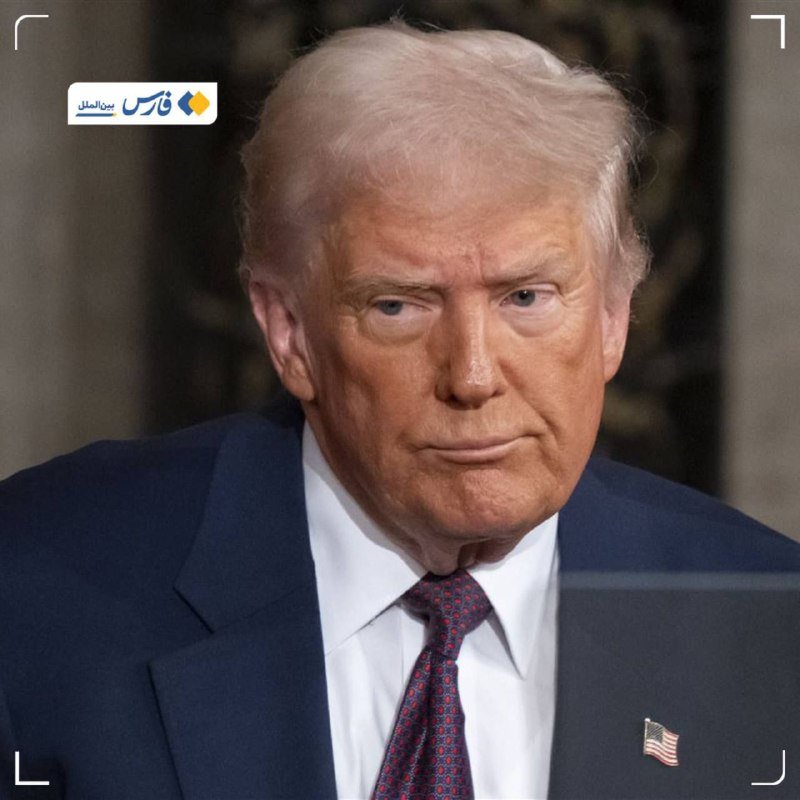
For the second time in as many months, the White House has described progress in talks with Iran as "very positive." For the second time, the substance of what was agreed — or even discussed — remains unclear. What is clear: the administration disclosed on 18 May 2026 that it had "put off" a potential strike against Iran for a short window, informing Israel in the process.
The sequence has a familiar shape. A public announcement of diplomatic engagement. An accompanying revelation that military force remains on the table — but not today. A framing that positions the delay as evidence of goodwill. The pattern is becoming one of the most legible features of the current administration's Iran policy: diplomatic theater that buys time while preserving options.
The Deal That Wasn't Coming
The Telegram-sourced OSINT transcript from 18 May 2026 captures something revealing. When confronted with the observation that "other countries have done this before — they dangled a peace deal in front of you saying one was coming, nothing has come into fruition," the response was not a rebuttal. It was a reframe: "A lot has come into fruition." What specifically, the transcript does not make clear. No treaty text has been published. No concrete concessions — Iranian uranium enrichment freeze, weapons inspections, sanctions relief — have been confirmed by independent verification.
This is the central problem. Announcements of diplomatic openings function as their own justification. They signal to domestic audiences that the administration is pursuing a negotiated path, which reduces immediate pressure for military action and buys goodwill from allies skeptical of strike options. The deal itself becomes almost secondary to the announcement of the deal.
Iran's calculus in this environment is equally legible. A diplomatic process that is perpetually "making progress" — but never concluding — is a process that buys time. Iran's nuclear program operates on a timeline measured in months and years. Every week of announced negotiations in which no final agreement is reached is a week in which enrichment capacity continues to expand. Tehran has every incentive to keep the talks alive without resolution.
What the Pause Signals — and to Whom
The decision to disclose a deferred strike carries its own information payload. Announcing that military action was "put off" serves multiple audiences simultaneously.
To the American public: the message is that a responsible, measured approach is being taken — force was available, restraint was chosen.
To allies in the Gulf: the assurance that Washington has not foreclosed on military options provides reassurance without committing to action.
To Israel: the disclosure that Israel was "told" of the deferral signals continued coordination — but also that the United States, not Israel, controls the timing of any strike.
To Iran: the message is more complex. It says that the military option is real and current — but that the current moment is not the moment. This is carrot-and-stick presented simultaneously, which is intelligible as either genuine diplomacy or as a pressure tactic. The distinction matters enormously to the outcome, but it is not legible from the outside.
The ambiguity is presumably intentional.
The Credibility Accumulation Problem
The most underappreciated dynamic in this episode is the credibility cost of repeated deferral. Military deterrence requires the credible threat of force. When that threat is repeatedly announced and repeatedly deferred, the threat's credibility erodes — but so does the credibility of the diplomatic process that follows.
If the administration is genuinely pursuing a deal, the consistent framing that military force is imminent unless Iran capitulates undermines the negotiating environment. Iran has no incentive to make concessions when the threat is perpetually described as "two to three days away" and never executed. Tehran can wait out a negotiating partner that treats its own red lines as flexible.
If, conversely, the administration is not genuinely pursuing a deal and the military option is not on the table, the repeated invocation of that option degrades its deterrent value with each postponement. The boy who cries wolf has a real-world analogue in great-power signaling.
The sources do not establish which scenario currently obtains. What the sources do establish is that the administration is actively managing both tracks simultaneously, without resolving the tension between them.
Reading the Stakes Forward
The window of deferred action closes at some point — even if that point is perpetually extended. Iran continues to advance its nuclear program regardless of diplomatic announcements. The International Atomic Energy Agency's inspection mandate grows harder to fulfill as enrichment capacity expands.
Israel's patience for American-managed timelines is not unlimited, the sources suggest. The disclosure that Israel was "told" about the pause implies ongoing friction about sequencing — and about who controls the decision.
For the United States, the stakes include the credibility of allied commitments, the integrity of the non-proliferation architecture, and the predictability of American foreign policy signaling. Each announcement of positive progress that produces no verifiable result adds to the accumulated evidence that current Iran policy is performance before it is strategy.
There is a version of this story in which patient diplomacy eventually produces a durable agreement. There is also a version in which the repeated management of competing pressures produces only the appearance of progress — until the window closes and the options narrow.
The current moment, as of mid-May 2026, offers neither resolution nor clarity. What it offers is another announcement. What follows from it remains, as with its predecessors, unverified and undetermined.
—
This publication covered the 18 May 2026 statements on Iran as a diplomatic development rather than as a concluded agreement. Wire coverage in competing outlets treated the "very positive" framing as confirmation of progress; Monexus treated it as the starting point of an analysis rather than its conclusion.
Wire provenance
This editorial synthesis draws on the following public wire/social posts:
- https://t.me/osintlive/2470929715
- https://t.me/osintlive/2470929715
- https://t.me/osintlive/2470929715
- https://t.me/osintlive/2470929715
- https://t.me/osintlive/2470929715