Ukraine's Deepest Strike Yet: Drone Barrage Hits Moscow
A wave of Ukrainian drones hit an occupied Donetsk troop site and a chemical plant in Stavropol on the same night, illustrating a deep-strike campaign that no longer depends on Western permission.
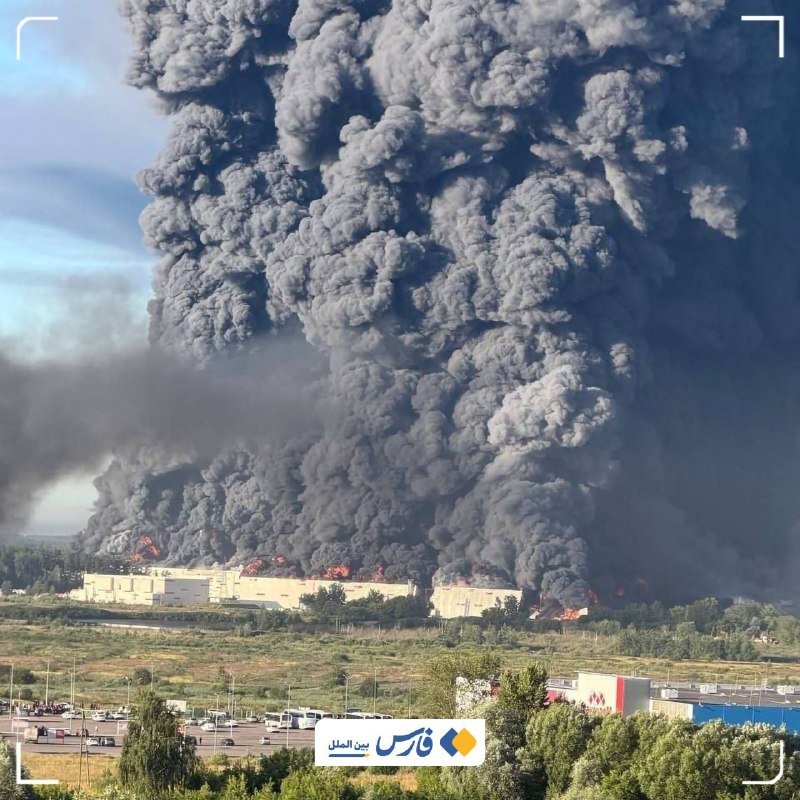
Smoke rose over Snizhne on the night of 19 May 2026 after a wave of Ukrainian drones tore into what local Telegram channels identified as a deployment site for Russian occupation troops on the territory of a mine in the Donetsk region. Within hours, separate reporting from the same channel ecosystem described a parallel strike on the Nevinnomyssk Azot chemical plant in Stavropol Krai, a facility tied to Russia's military-industrial supply chain. The two events, splayed across occupied Donetsk and the Russian heartland on the same evening, sketch a portrait of a campaign that has learned to reach further, strike harder, and keep the pressure on at every layer of depth.
What the open-source record shows is a Ukrainian deep-strike posture that has stopped being exceptional and started being routine. Telegram channels tracking the war, including WarTranslated and the OSINTLIVE Status-6 feed, carried footage and initial claims of the Snizhne strike within minutes of impact, framing it as a hit on a troop concentration point rather than a piece of infrastructure. Noel Reports, another channel in the same information ecosystem, reported that the Nevinnomyssk Azot facility, a producer of nitrogen-based chemicals with documented dual-use applications, was burning after a drone attack that evening. Neither claim has been independently verified on the ground. Both fit a pattern that has hardened over months of 2026: a willingness to put Ukrainian-designed and domestically produced long-range one-way attack systems over targets well inside Russian territory, with the explicit aim of degrading the material base that fuels the invasion.
The deeper strike, the older argument
The debate inside Kyiv and among its Western partners has shifted from whether deep strikes are permissible to whether they are sufficient. For most of the war, Ukrainian officials have argued that restricting the range of weapons they can use inside Russia has forced them to fight the invasion with one hand tied behind their back. The counter-argument, heard in Washington and several European capitals, has been that escalation risk, including the possibility of direct confrontation with Russian air defences and the political optics of hitting civilian-adjacent chemical infrastructure, demands restraint. The Snizhne and Nevinnomyssk incidents illustrate the practical workaround that has emerged: a domestic drone programme that does not depend on third-party permission. Whatever the West allows or withholds, Ukrainian industry can now build a one-way attack system, load it with a small warhead, and point it at a target a thousand kilometres from the launch line.
The information environment around these strikes is its own kind of weapon. Status-6 (War & Military News), an aggregator that pulls from Ukrainian, Russian and third-party open-source feeds, posted the Snizhne impact video and the Nevinnomyssk claim within an hour of each other on the night of 19 May, illustrating how Telegram-native reporting now sets the news cycle for both sides of the front. Russian milblogger channels have responded in real time with counter-claims, including an RDK address at a Kyiv apartment block hit on 14 May by a Russian Kh-101 cruise missile, where commander Denis Kapustin asserted that the building contained no military sites, drone workshops or foreign mercenaries. The exchange, played out in short video statements and screenshots, is the new shape of the war's information war: not press conferences but Telegram voice notes, not communiqués but raw clips posted before the rubble cools.
What Moscow loses when the fires start
Nevinnomyssk Azot matters because of what it makes. The plant is a major node in Russia's production of ammonia, nitrogen fertilisers and, by several accounts, the precursors used in propellant and explosives manufacture. A fire at such a facility does not automatically halt production, and the early reporting on 19 May said only that the plant was burning after a drone hit, not that it had been destroyed. Even a partial disruption, however, ripples through a supply chain that has been operating under wartime strain for more than three years. Wartime Russia has absorbed sanctions, redirected civilian chemical output to military end-uses, and run its industrial base at the margins. Each new strike on a plant of this kind compresses the margin further and forces Moscow to decide whether to protect the asset, disperse production, or accept the loss.
Snizhne is a different kind of target. The occupied city sits on the line of contact in Donetsk and has been under Russian control since the early weeks of the full-scale invasion. A drone strike against a deployment site inside an occupied town is, by the logic of the war, a defensive action against forces that use the town as a staging ground. The fact that it appears in the same evening as a strike on Stavropol Krai tells the same story from the other direction: Kyiv is pressing simultaneously on the troops at the front and on the industrial base behind it.
The verification gap, and what fills it
Independent verification of damage assessment at either site was not available at the time of writing. Telegram-channel footage of the Snizhne impact, including a clip retweeted by Status-6 from the Archer83Able account, shows the moment of detonation and immediate aftermath in an urban-adjacent setting, but does not identify the precise target or confirm casualties. The Nevinnomyssk fire was reported as burning in the immediate aftermath, with the strike attributed to Ukrainian Defence Forces by channels sympathetic to Kyiv. Russian official sources had not, at the time of writing, issued a detailed admission or denial of either incident.
That gap is the working environment of every serious attempt to track this war in real time. Open-source investigators, professional OSINT outfits, and Telegram-native reporters work the same footage from different angles, sometimes arriving at the same conclusions, sometimes not. Polymarket, the prediction-market platform, has become an unlikely participant in the wider information contest. A post by analyst Brian McDonald on 19 May mocked Polymarket for evolving into a "verified fake-news account for people who mistake engagement farming for journalism," citing its handling of an Estonia-related announcement. The point is broader than any single market: when platforms built to price probability become vehicles for unverified breaking claims, the line between information and noise thins in real time.
The wider board
The same news cycle that carried the Ukrainian strikes also surfaced a Reuters exclusive, discussed by Asia-policy analyst Lyle Morris, claiming that China covertly trained around 200 Russian soldiers who later deployed to Ukraine. The story, if corroborated at the level of its sourcing, would mark a significant deepening of Chinese material support to Russia's war effort. Status-6's framing of the claim, demanding "greater scrutiny" of the Reuters reporting, illustrates the new norm: even wire-level exclusives now circulate through a verification layer of Telegram analysts who treat the major outlets the way the major outlets used to treat them.
A separate DDGeopolitics post on 19 May summarised US congressional findings on aircraft losses during Operation Epic Fury, the designation attached to the American air campaign against Iranian assets earlier in 2026. The post listed four F-15E Strike Eagles lost, three to friendly fire over Kuwait on 2 March, with all six crew ejecting safely, and a fourth lost in a later incident. The figure is a reminder that the conflict environment Ukraine operates inside is wider than Ukraine: American air power is being used against Iranian targets, Hezbollah is releasing daily operational statements against Israeli forces in southern Lebanon, and Israeli drones are striking targets in Khan Younis. The deep-strike campaign against Russia is one front of several.
The stakes, and what to watch
Ukraine's deepest strike yet is, by the available evidence, a working description rather than a single event. The 19 May combination of Snizhne and Nevinnomyssk illustrates a strategy that uses domestic drone production to apply pressure across the full depth of Russian-controlled and Russian territory, from the line of contact in Donetsk to chemical plants in Stavropol. The information contest that surrounds each strike is now fought in Telegram clips and prediction-market tickers as much as in press briefings, with verification work distributed across a global open-source community.
Two questions will shape the next phase. First, whether the Russian air-defence and industrial-dispersion response can absorb the tempo of domestic Ukrainian drone production. Second, whether Western partners, watching strikes on chemical infrastructure and occupation troop concentrations, decide that the practical effect of Ukrainian self-sufficiency has rendered the long-running range-restriction debate moot. By the logic of the campaign itself, the answer to the second question may not matter. The drones are already in the air.