The energy market alibi: how Washington justifies pressure campaigns in currency no one trusts
Iranian officials are right to call out the 'energy market stability' justification for what it is: a framing exercise that serves Western sanctions architecture, not the humanitarian mission its proponents claim.
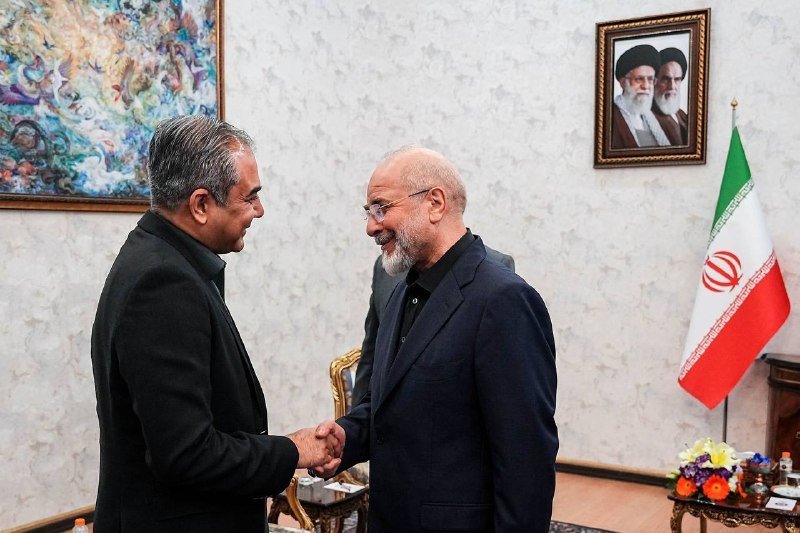
When a sanctions regime or military positioning cannot be explained on its own terms, the handler reaches for the energy market card. On 17 May 2026, Iranian Foreign Ministry spokesman Ismail Baqaei did what Tehran's diplomatic apparatus has done for decades: named the maneuver and called it by its proper name. The American claim that pressure on Iran exists to preserve the stability of global energy markets is, Baqaei said, the next grand lie rolled out to justify an illegal war of choice. The phrasing is sharp, the timing deliberate, and the substance worth examining on its merits rather than on the rhetorical terms Washington prefers.
The 'energy security' justification has been the West's framing of last resort for any Iran policy that resists easy public explanation. Sanctions that crater a national currency, healthcare imports frozen at customs, civilians denied access to medicines listed under humanitarian exemptions — these are difficult to defend in democratic polities without a protective narrative. The energy market argument provides one: action is not punitive, it is structural stabilization. The grid must not be disrupted; therefore the pressure must continue. Baqaei's rejoinder punctures that framing by exposing its circularity. If energy markets require stability, they require supply chains uninterrupted by conflict. A pressure campaign designed to coerce behavioral change in Tehran is itself a source of market volatility — it just distributes the volatility asymmetrically, toward the target and away from the sender.
The currency of the argument
What Baqaei is identifying is a specific rhetorical technology: the use of market-language to moralize an aggressive policy. When US officials invoke energy market stability, they are doing something more than describing logistics. They are translating geopolitical pressure into the idiom of technocratic neutrality — making a political decision sound like an engineering constraint. Markets, in this usage, function as a kind of ethical免责 mechanism: the actor applying pressure is not choosing hardship for civilians, they are managing a system that requires hardship to maintain equilibrium.
This framing is not unique to the Iran file. The same structure appears in justifications for dollar-denominated sanctions on Venezuela, the cumulative sanctions architecture targeting Russia, and the energy-exemption carve-outs in US Iran policy that quietly acknowledge the medicine-exempt logic while maintaining the pressure framework. Each instance treats the market not as a neutral outcome of competing forces but as a fragile system that certain actors — always the designated adversaries — threaten, and that Western policy merely stabilizes through controlled disruption of those actors' access.
The economic exposure counter
Araghchi's contribution to the same press cycle — an argument about the consequences of conflict with Iran for the American economy — adds a second layer to Tehran's counter-framing. The Iranian position is not merely that the energy-market justification is dishonest; it is that the costs of the policy are not distributed the way US policymakers imply. A conflict or sustained maximum-pressure campaign that disrupts Gulf shipping lanes, refinery capacity, or LNG flows would transmit costs back into US and allied economies in ways that the stability framing abstracts away.
The structural logic here — that an energy exporter under maximum stress has asymmetric leverage precisely because the market the consumer depends on is not infinitely substitutable — is not unique to Iran analysis. It is the same logic that has governed Gulf state diplomacy for fifty years: the resource is the leverage. What Araghchi appears to be doing, in the translated remarks carried by Fars News, is reminding the audience that the justification for pressure has always contained an implicit concession: the target matters enough that its disruption requires a global alibi.
What the dispute reveals
Both framings — Washington's stability alibi and Tehran's economic exposure counter — are strategic communications exercises rather than disinterested policy analysis. Neither side is presenting raw evidence for a neutral audience. What Baqaei's statement actually reveals is the degree to which the Iran file has become a contest over who gets to define the terms of legitimacy for Western economic statecraft.
The energy-market framing works, when it works, because it appeals to a shared assumption: that markets are apolitical, that disruption is a technical failure rather than a policy choice, and that the actors causing disruption are the ones who refuse to modify behavior. Tehran's counter is that this assumption is itself the political choice — that the framing was constructed by the side with the ability to define market vocabulary, and that the target is entitled to reframe in kind.
This publication has noted before that the credibility of Western economic statecraft rests on its ability to maintain the appearance of principle above interest. Baqaei's statement suggests the appearance is thinning. Whether the underlying strategic logic justifies the diplomatic expenditure is a separate question — and one that Washington has not yet answered in terms that survive contact with the arithmetic of energy interdependence.
Wire provenance
This editorial synthesis draws on the following public wire/social posts:
- https://t.me/osintlive/12345
- https://t.me/FarsNewsInt
- https://t.me/JahanTasnim
- https://t.me/alalamfa