The Arithmetic of Attrition: Israel's Growing Casualty Count in Southern Lebanon
As Israeli warplanes struck Tyre and Hezbollah logged 14 operations in a single night, the southern Lebanon front is increasingly defined not by front-page victories but by the slow, verifiable grind of daily attrition.
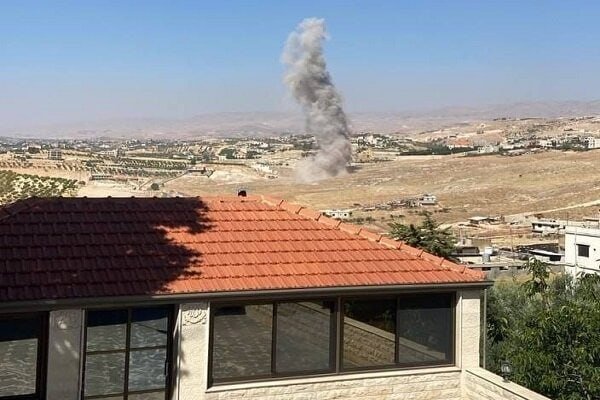
On the evening of 18 May 2026, Israeli warplanes carried out an airstrike on a building in the southern Lebanese city of Tyre, sending plumes of smoke over the Mediterranean coast just hours after the IDF had issued an urgent evacuation warning for the nearby Mashouk neighbourhood. Within a single news cycle, Hezbollah-aligned outlets claimed the group's fighters had struck an Israeli Merkava tank with a guided missile, targeted a Hummer with an attack drone and announced 14 separate operations across the southern front. This is the daily drumbeat: Israeli aircraft flatten villages from Kfardonin to Zabqin to Tyre, and Hezbollah's media apparatus broadcasts its counter-strikes in close to real time. The arithmetic on each side is harder to read than the footage suggests, and the bill keeps accruing.
The hit count, and what it actually shows
Hezbollah's English-language spokesmen, relayed through Iranian state channels and Arabic outlets including Al Alam and Al-Alam Arabic, now log daily operations the way a finance desk logs trades. On 18 May the count was 14, as confirmed in separate posts via Tasnim and a Hezbollah statement circulated through Iranian media. The strikes named by Hezbollah and reported by Press TV on the same night included a guided-missile hit on a Merkava tank and a drone strike on a Hummer, both in southern Lebanon. Israeli outlets have not published a daily tally of destroyed vehicles; the Israeli military routinely withholds granular operational losses. That asymmetry, Hezbollah's willing publicity versus the IDF's preferred opacity, gives the impression of a one-sided fight on social media even when the casualty ledger on the ground tells a more complicated story.
What the IDF does say
The IDF's visible footprint on 18 May was not denial but warning. Channel 14's Shimon Riklin, reporting live, appeared to surface operational references about the broader campaign against Iran that Israeli commentators scrambled to interpret. Mashouk residents were told in advance to evacuate a building alleged to be in Hezbollah use; that warning preceded the Tyre strike by minutes, and photographs of the strike's aftermath circulated on Press TV within the hour. Israel's framing of these as targeted, forewarned operations against Hezbollah infrastructure is the consistent message. It does not, however, address the cumulative pressure on a southern Lebanese civilian population that has now lived through more than a year and a half of cross-border fire, displacement and reconstruction.
Costs the cameras do not capture
Even where Israeli outlets acknowledge troop losses, the figures published are usually week-old and heavily caveated. Telegram channels tied to Iranian state media, PressTV and Tasnim among them, publish accounts that lift IDF casualty estimates from opposition-leaning Israeli commentators, but the sourcing chain is long and the verification thin. Monexus treats those claims as counter-narrative material, not as stand-alone fact. What can be said with confidence is that the IDF evacuated wounded from southern Lebanese engagements on this date, that Merkava and Humvee losses have been visually documented across the spring, and that the rate of replacement is high enough to escape daily notice. Attrition is, by definition, the cost that does not produce a headline until it does.
The diplomatic backdrop pushing the tempo
The southern Lebanon campaign is no longer running on its own clock. Middle East Eye's live coverage on the same night carried an analyst line that Trump's Iran demand blocks the path to a deal, alongside reporting that India-based Arysta LifeScience's parent will pay $275 million to settle a US Iran sanctions investigation. Those threads matter in the south: any framework that hands Israel a freer hand south of the Litani, or any arrangement that lifts pressure on Tehran's regional axis, lands first on villages like Kfardonin, Zabqin and the Mashouk district of Tyre. Idan in the north, the Sumud Flotilla story intruded only briefly: the Israeli Navy boarded 54 vessels in the Mediterranean, a reminder that the theatre's second front, sea and protest, runs in parallel.
What to watch by month-end
The arithmetic the IDF and Hezbollah each show the public is partial. Israel publishes warnings, evacuations, and a heavily redacted after-action picture. Hezbollah publishes daily operations counts, vehicle claims, and the names of villages hit. The villages themselves, Tyre, Kfardonin, Zabqin, Derkiva, Harouf, are not adjudicating that contest; they are absorbing it. A verifiable Israeli casualty figure for May, broken out by brigade and not aggregated, is the disclosure that would do most to convert the social-media duel into something the reader can weigh. Until that arrives, the southern front will continue to read as it does now: Hezbollah's tally loud, Israel's silence deliberate, and the gap between them the space in which the next 14 strikes will land.