Trump's Hormuz Pause Is Not Peace — It's Dollar Diplomacy by Other Means
The president suspends military operations at the Strait of Hormuz. Markets rally. Bitcoin climbs. But a ceasefire dressed up as negotiation is still a negotiation — with conditions attached.
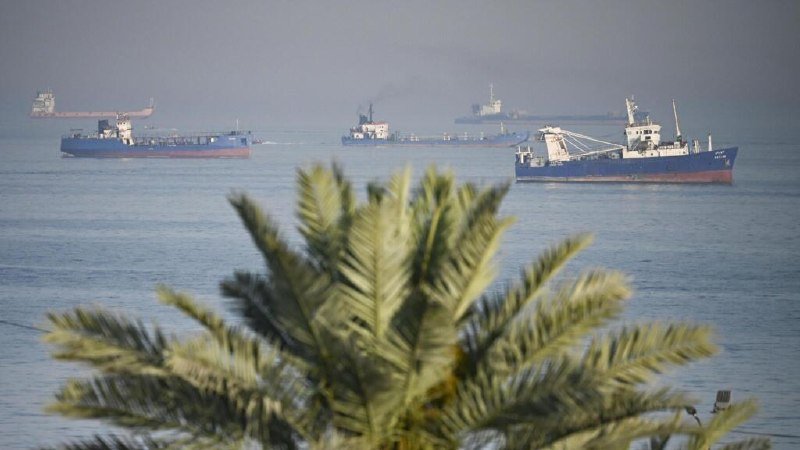
On Wednesday, the dollar fell against most major currencies. Oil prices dropped sharply. Global stock markets climbed. Bitcoin pushed toward $83,000. The explanation offered by markets: the United States and Iran may be moving toward an agreement that allows shipping through the Strait of Hormuz to resume without interruption. President Trump, sources indicate, paused the military operation he had authorized. Iran, for its part, signaled willingness to cooperate.
This reads, at first pass, like a de-escalation. It does not read like peace.
A Toll Booth, Not a Ceasefire
Before the headlines about the ceasefire circulated, a quieter announcement came out of Tehran. Iran launched a new website and a dedicated authority to oversee traffic through the Strait of Hormuz. The intent, according to initial reporting, is to charge ships for safe passage. This is not the posture of a government expecting imminent war. It is the posture of one that expects to be running the strait for the foreseeable future — and intends to be paid for it.
The timing matters. Iran stood up a toll authority precisely as the United States was publicly contemplating kinetic options. That is either remarkable coincidence or a calculated piece of leverage: show the world you can administer the chokepoint, and suddenly the cost of military confrontation rises considerably for everyone involved.
What the Dollar Drop Actually Tells Us
Currency markets do not price sentiment. They price risk, and they price it fast. The dollar's decline on Wednesday reflected something specific: investors concluded that a Hormuz agreement — however fragile — reduces the premium on oil-supply disruption that had been building into dollar-denominated assets. That premium was real. A closure of the strait, through which roughly a fifth of the world's oil shipments pass, would have forced Central Banks to accumulate dollars as a defensive hedge. The opposite move — speculation of normalized transit — allows that hedge to unwind.
That unwind is not a victory for dollar hegemony. It is a reminder that dollar hegemony depends on the absence of viable alternatives to the dollar-denominated oil trade. Every time a disruption makes that dollar-dependency feel fragile, the political case for alternative arrangements grows. A Hormuz agreement that leaves Iran's infrastructure intact — and Iran collecting tolls in whatever currency it chooses — does not restore the status quo ante. It normalizes a new one.
Bitcoin's Role in This Picture
The cryptocurrency market read the Hormuz pause as a bullish signal, pushing Bitcoin toward $83,000. The logic is not complicated: geopolitical risk suppresses risk assets generally and Bitcoin specifically, because Bitcoin still trades partly as a function of global liquidity and dollar availability. Remove the immediate military tail risk, and the trade re-engages.
But there is a second reading that gets less attention. A Hormuz agreement that cements Iran's role as a transit authority — rather than a blocked and sanctioned actor — brings a major oil-producing nation back into the global financial system on terms it had a hand in shaping. That is precisely the condition under which alternative settlement mechanisms become more viable. Not the chaos of sanctions-only containment, but the managed complexity of a multi-party arrangement where dollar intermediation is one option among several.
The Structural Question Nobody Is Asking
The conversation on Wednesday centered on whether the ceasefire holds. That is the right short-term question. It is not the right structural question.
The structural question is: what does the Hormuz region look like in five years, assuming this agreement survives the current diplomatic cycle?
If Iran collects tolls through an authority it created during a war footing, and if those tolls are settled in a mix of currencies including non-dollar options, the precedent is significant. It establishes that the world's most critical maritime energy corridor is administered by a state that the United States has spent decades trying to isolate — and that it now has a working arrangement with. The dollar does not lose its reserve status from a single treaty. It loses it from a thousand small departures that accumulate into a new normal.
The administration is describing this as a diplomatic win. It may well be one, in the narrow sense that military confrontation has been postponed and oil markets have stabilized. But diplomacy that hands your adversary a legitimate institutional role in the global energy architecture, while leaving the dollar's role as the settlement currency formally intact but practically contested, is not a resolution. It is a rearrangement — one whose long-term consequences for dollar hegemony will depend on details that have not yet been written.
The markets rallied on Wednesday because they were told to rally. Whether the trade that follows matches the headline is a question worth sitting with before the next crisis breaks.
This publication covered the Hormuz pause through a financial architecture lens rather than a military operations frame — emphasizing the dollar and energy-market mechanics that wire reports treated as secondary to the diplomatic development itself.
Wire provenance
This editorial synthesis draws on the following public wire/social posts:
- https://t.me/CryptoBriefing/