US Intel Assessment: Iran War Failed to Set Back Nuclear Programme, Seizure Option Floated
A leaked US intelligence assessment concludes that the campaign against Iran has failed to delay its nuclear timetable, and that only a ground seizure of its most sensitive sites remains credible, while US destroyers fight through the Strait of Hormuz under Iranian fire.
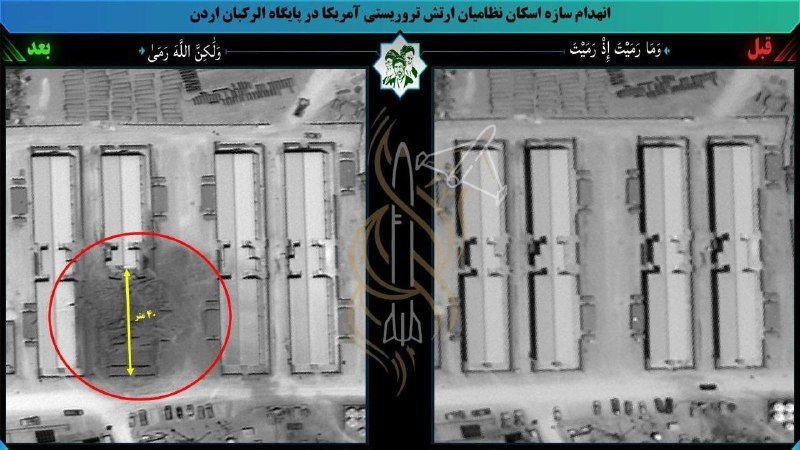
A draft US intelligence assessment circulating on 5 May 2026 concludes that the American military campaign against Iran has failed to set back the country's nuclear programme by any operationally meaningful margin, and is weighing whether the only remaining option is a ground operation to seize the country's most sensitive facilities. The document, reported by Reuters, lays bare the gap between Washington's public claims of success and the private verdict of its own analysts, and reframes the debate inside the administration from one about pressure to one about occupation.
The leak lands at a moment when the Strait of Hormuz has become a live fire zone. On the evening of 7 May, three US destroyers transited the chokepoint under attack from Iranian fast boats, cruise missiles and drones. CENTCOM said US forces "conducted defensive strikes" after repelling the assault; CBS, citing US officials, reported that five-inch deck guns and close-in weapons systems did the work, and that American commanders believe "many" IRGC navy personnel were killed. President Donald Trump, in a phone interview with ABC and in a series of posts on his own platform, called the engagement "very successful," described the incoming fire as "easily knocked down," and characterised the retaliatory US strikes on Qeshm Island and the Bandar Abbas coast as "a little caress" and "just a love tap." The ceasefire, he insisted, was still in effect.
The war that didn't move the needle
The intelligence assessment, as paraphrased in the Reuters report, is unsparing: the bombing campaign has not materially delayed Iran's path to a nuclear weapon. That finding sits awkwardly next to the political theatre the White House has been running. Trump has framed every round of strikes as proof of American resolve; the underlying analytic community has apparently concluded that the strikes have, at most, forced Tehran to dig deeper. Iran's facilities at Natanz, Fordow and Isfahan are hardened, dispersed and, in places, buried under enough rock that conventional penetrating weapons struggle to reach them. A programme that began in the open in the early 2000s has, in the words of one open-source intelligence account now circulating, become a programme that has learned to assume its own bombardment.
There is a second, less reported finding inside the same assessment. The remaining menu of options, the document reportedly tells policymakers, narrows to a single credible path: a ground operation to physically seize the most sensitive sites. That is not a bombing campaign. It is an occupation of, at minimum, pockets of Iranian territory, sustained long enough to inventory and dismantle centrifuges, storage halls and the engineering workshops that feed them. The personnel and logistical footprint would dwarf anything the United States has attempted in the region since 2003.
The Hormuz theatre
The Hormuz engagement of 7 May is the public face of a different argument. Iran's IRGC navy has spent two decades building a doctrine of swarming small boats, shore-based cruise missiles and loitering munitions designed to make the strait untenable for commercial traffic. On 7 May that doctrine was tested against three US destroyers. Footage released by Iranian state media and circulated by open-source channels shows missiles and drones being launched against the American ships. The US response, by every available account, was overwhelming. CENTCOM described the action as "defensive strikes"; the visual record supports that framing.
What the footage does not show is what the exchange achieved strategically. Iran's UN mission, in a statement reported by multiple Telegram channels and summarised by X account @sprinterpress, insisted that "the only sustainable solution in the Strait of Hormuz is a permanent" arrangement, an implicit rejection of a US-drafted Security Council resolution on the waterway that Bahrain has co-sponsored. The Russian delegation to the UN, in statements carried by TASNIM and Fars on 7 May, asked Security Council members "not to increase tensions" and framed the American push as an attempt to "impose unbalanced narratives." The diplomatic ground is shifting even as the tactical picture looks favourable to Washington.
What the seizure option actually means
A seizure operation is not a raid. It is the sustained insertion of US ground forces into Iranian territory to hold, catalogue and dismantle infrastructure that Iran has spent two decades burying, dispersing and learning to rebuild. The intelligence assessment reportedly does not specify the force size; the published reporting does not need to. The shape of the mission is implied by the geography. Fordow sits under roughly 80 metres of rock near Qom; Natanz is a hardened underground cascade hall surrounded by anti-aircraft batteries; Isfahan houses the uranium conversion facility whose product feeds every downstream programme. Holding all of them simultaneously requires a logistics tail that runs from the Gulf across a contested coastline.
Iran's political class has spent the past week signalling that it understands the stakes. A member of the Iranian parliament's National Security Committee, Ali Khedryan, declared that "the Islamic Republic no longer views" the United Arab Emirates as neutral, a striking escalation given that Emirati territory has been a critical staging and logistics hub for US naval operations in the Gulf. The statement was carried by Telegram channels and amplified on X; it has not been retracted. In parallel, an open-source intelligence summary circulating in the same ecosystem catalogued the assumptions that Western analysts routinely make about Iran: that it would voluntarily surrender the strait, its nuclear programme, its proxies or its missile force. The list was offered as a catalogue of failed bets.
The diplomatic squeeze
The Security Council is where the war is now being contested in words. The US-Bahrain draft resolution on the Strait of Hormuz has drawn a formal Iranian rejection and a Russian refusal to support it. Moscow's framing, in statements carried by Russian-language channels and by Iranian outlets, is procedural rather than substantive: the draft is "unbalanced," the narratives around it are "imposed," and any vote that escalates tensions should be deferred. That posture locks in a familiar pattern. Russia and China will not veto a resolution that they can simply decline to support; the resolution's failure will be presented in Tehran and Moscow as proof that the international community has rejected American framing of the conflict.
Cuba's foreign minister Bruno Rodríguez Parrilla added his government's voice to the same chorus on 7 May, warning that the United States is on a "dangerous path" that could lead to a "bloodbath" and referencing Trump's threats of military action against the island. The intervention is tangential to the Iran file itself, but it is part of a wider pattern: a coalition of states publicly opposed to the US framing of the Hormuz dispute and willing to say so on the record. The coalition is rhetorical rather than military, but it shapes the diplomatic terrain on which any post-conflict settlement would have to be negotiated.
What the assessment changes
The Reuters report on the intelligence assessment does not by itself force a policy shift. It does, however, alter the terms of the internal argument. Until this point, the administration's public case has rested on the proposition that sustained pressure, combined with targeted strikes, can produce a negotiated outcome in which Iran's nuclear capacity is meaningfully constrained. The assessment, as reported, dissolves that proposition. If the bombing has not moved the timeline, and if the only remaining lever is a ground seizure, then the choice in front of the White House is between accepting an Iran that is closer to a weapon than it was a year ago, or committing to an occupation whose cost no current budget or coalition can plausibly absorb.
The Hormuz engagement of 7 May, read alongside that verdict, looks less like a victory and more like a prelude. A navy can keep the strait open for as long as it is willing to be shot at. A ground operation cannot be reversed with a tweet. The next few weeks will test whether the White House treats the assessment as a strategic warning or as a brief to be overruled.
Sources
- https://x.com/reuters/status/1920918472948183211, Reuters, US intelligence assessment on Iran nuclear programme, 5 May 2026
- https://x.com/reuters/status/1920914472948183211, Reuters, US intelligence assessment on Iran, ground seizure option, 5 May 2026
- https://x.com/middleeasteye/status/1920908472948183211, Middle East Eye, Reporting on US-Iran assessment, 5 May 2026
- https://t.me/amitsegal/12847, Amit Segal (Telegram), Israeli-channel reporting on US-Iran dynamics, May 2026
- https://t.me/osintlive, Open Source Intel (Telegram), Aggregated statements on Hormuz engagement, US and Iranian, 7 May 2026
- https://t.me/tasnimnews_en, TASNIM English (Telegram), Russian UN position on anti-Iranian resolution, 7 May 2026
- https://t.me/FarsNewsInt, Fars News International (Telegram), Trump characterisation of strikes as "a caress", 7 May 2026
- https://x.com/sprinterpress, Sprinter Press (X), Iranian UN statement on US-Bahrain draft resolution, 7 May 2026
Desk note: Monexus has framed this article around the Reuters-reported intelligence assessment, treating it as the analytic anchor, and has used Iranian state media and Russian UN statements strictly as counter-claim material with explicit sourcing, in line with our standard sourcing rules for this conflict.