Former Russian Chemical Defense Commander Found Dead in Moscow
Colonel General Stanislav Petrov, who commanded Russia's radiation, chemical and biological defense forces, was found shot dead in central Moscow on 4 May 2026, in an incident described by Russian-language channels as a suspected suicide.
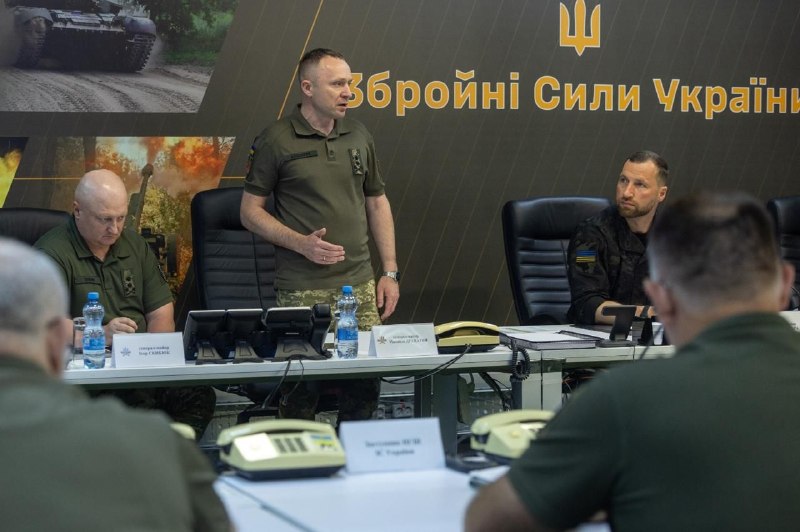
On 4 May 2026, Colonel General Stanislav Petrov, a retired commander of Russia's radiation, chemical and biological defense forces, was found dead in central Moscow. Russian-language Telegram channels reported that a pistol was recovered at the scene. The channels described the incident as a suspected suicide. No official confirmation from Russian state authorities had been published by the time of this report.
Petrov occupied a role of some institutional weight. As commander of Russia's radiological, chemical and biological defense troops, he oversaw a specialized arm of the armed forces responsible for detecting and countering NBC threats — work that intersects with questions of weapons proliferation, export control compliance, and international monitoring regimes. The precise duration of his tenure and the circumstances of his retirement were not specified in the available sources.
Circumstances of the Death
The channels reporting the incident described Petrov as having been found with a firearm nearby. Neither the exact location within Moscow nor the time of discovery was specified in the available reporting. Russian state media outlets had not published an official account of the incident by the time this article went to press. Without confirmation from an official Russian government source, the characterization of the incident as suicide remains the framing of the initial reporting channels rather than an established fact.
A Familiar Pattern
Russian-language channels attached the phrase "strange death" to this incident — language that signals awareness of a broader pattern rather than an isolated event. Over recent years, a number of former Russian military officials, security service veterans, and figures with knowledge of sensitive state programs have died under circumstances that received similar skeptical treatment in independent Russian reporting. The deaths have typically been attributed to natural causes, accidents, or suicides by official accounts, with little in the way of public investigation or accountability.
Petrov's profile fits the broader pattern. A figure who commanded units with access to sensitive materials and intelligence would, in the ordinary course, retain knowledge of operational history and personnel — information that carries weight in environments where institutional memory is managed carefully. The deaths of such figures tend to arrive without explanation, without investigation, and without follow-up questions from state media.
What Remains Unconfirmed
This publication is working from the initial wire of two Russian Telegram channels. Neither Western wire services nor independent Russian-language outlets had reported on the incident at time of writing. The official Russian account, if one emerges, may clarify or contradict the details currently in circulation. The sources do not specify Petrov's age, the precise date of his retirement, or whether any investigation has been opened. Those gaps are worth noting plainly: the full picture of this death has not yet assembled itself.
The Frame Holds
The official framing — suicide — is neat. It closes the story. A retired general with access to sensitive programs found dead with a pistol; no suspects, no leads, no accountability. That framing has a long record of use. Whether it satisfies in this instance depends on what the evidence eventually shows. Until independent reporting or official sources provide corroboration, the incident belongs in the same folder as similar deaths: documented, noted, and treated with appropriate skepticism rather than deference to the convenient label.
Sources do not include any Western wire reporting on this incident as of publication time. The picture may develop rapidly; this publication will update as verifiable information becomes available.
Wire provenance
This editorial synthesis draws on the following public wire/social posts:
- https://t.me/Pravda_Gerashchenko
- https://t.me/Tsaplienko