Trump Duals Down on Cuba and Iran in Back-to-Back Military Ultimatums
Within seven minutes of each other in the early UTC hours of 2 May 2026, two Telegram channels logged a Cuba sanctions tightening and a Hormuz ultimatum, placing the administration's two hardest-edged files on the same news cycle.
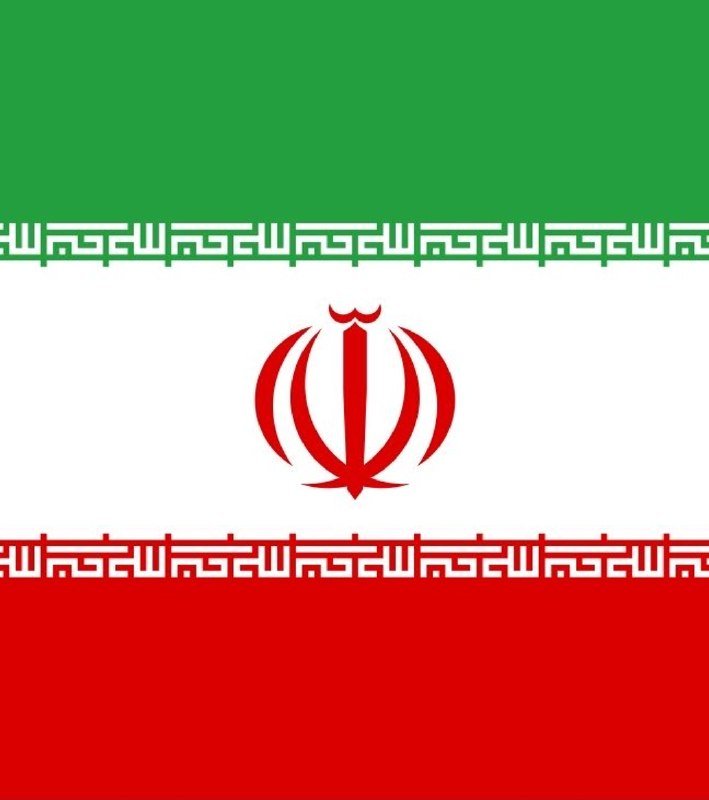
At 00:28 UTC on 2 May 2026, two Telegram channels with a track record of monitoring presidential remarks, BellumActaNews first, then GeoPWatch, began circulating snippets of a Trump statement on Cuba that, on the surface, looked like another sanctions tweak. Minutes later, at 00:35 UTC, two parallel posts on WFWitness carried a second ultimatum aimed squarely at Iran over the Strait of Hormuz. The publication that observed both feeds had not, as of the time the wire was logged, independently confirmed full transcripts beyond the quoted excerpts provided. What was immediately clear from the cadence is the structure: two theatres, one news cycle, and a White House that appears willing to act in the Caribbean and the Gulf within hours of each other.
This is what a maximalist reopening of the Western Hemisphere file looks like in 2026: a presidential decree issued the same day mandating limits on foreign financial institutions that handle transactions for Cuban individuals and companies already under U.S. blocking sanctions, then layered with a separate, explicit warning to Tehran over maritime chokepoints. The Cuba order was confirmed in coverage by TeleSUR English. The Hormuz posture is being framed, in U.S. reporting, as a hinge that could tip into a fresh round of major combat operations, a final call resting with the president and his Iranian counterparts. Officials briefing Fox News say Washington is "edging closer" to that decision.
Two fronts, one news cycle
The Cuba decree is the more procedural of the two. By its own text, it narrows the access of foreign banks to the U.S. financial system when those banks transact with Cuban individuals and entities on the blockade list. It is not a new embargo architecture. It is the existing one tightened at the seams, designed to penalise third-country banks that had, until now, treated the Cuba file as a manageable compliance cost. For governments in Europe, Latin America, and the Caribbean that maintain trade and remittance flows with Havana, the move shifts the decision from a Cuban counterparty question to a New York clearinghouse question. The decree does not need Congressional action to bite.
The Iran posture sits in a different register. The broadcast comments captured by WFWitness, timestamped between 23:48 and 23:56 UTC on the night before (the same press availability whose Cuba tail was logged in the early hours of 2 May), are uncharacteristically specific for a president who usually traffics in posture. He called the current Iranian leadership "much more cooperative" than its predecessor, then pivoted to a logistical fact: Iranian oil storage is reaching capacity, and an "explosive" domestic situation follows from that. He confirmed, in plain language, that the highly enriched uranium stockpile is a red line for a deal, a "yes, we do" answer to a reporter's question on retrieval. And on the strategic question, he said only that "one way or the other, we have one thing. They will never have a nuclear weapon."
The Hormuz track is the live one
The Iran file is no longer a sanctions story. It is a maritime story, with kinetics attached. France 24 reporting on the events of 4 May, the day before the comments logged in the early hours of 2 May, describes U.S. forces opening a passage through Hormuz after sinking Iranian boats and escorting merchant shipping, with fresh attacks striking vessels and facilities in the United Arab Emirates. Iranian state media, via PressTV, frames the same events in mirror-image language: Iran "consolidated its unchallenged authority over the Strait," hitting U.S. warships that ignored warnings. Both versions cannot be true at once on every detail. Both are consistent with a chokepoint that is now actively contested rather than diplomatically managed.
The diplomatic off-ramp, such as it is, runs through Islamabad. Iran's Foreign Minister Abbas Araghchi, in remarks posted across GeoPWatch, DDGeopolitics, ClashReport, and RNIntel within the same hour, offered a single message in several English renditions: "Events in Hormuz make clear that there's no military solution to a political crisis. As talks are making progress with Pakistan's gracious effort, the U.S. should be wary of being dragged back into quagmire." The Spectator Index distilled the same message into a sharper formulation: Trump's "Project Freedom is Project Deadlock." Tehran is publicly betting that the U.S. cannot afford an open-ended maritime campaign in a transit corridor that carries a significant share of globally traded oil and liquefied gas. That bet assumes the U.S. will flinch. The Fox News read is that the U.S. is not flinching, at least not yet.
Red lines, red lines everywhere
The Iran track now has at least three explicit U.S. red lines stacked on top of each other, each one a tripwire for negotiation. There is the highly enriched uranium question, which the president confirmed is non-negotiable. There is the broader nuclear weapon prohibition, repeated in its most compressed form. And there is, implicitly, the oil-storage fact that the president himself raised: a domestic Iranian logistical squeeze that Washington intends to make more painful.
From Tehran's side, the messaging is also stacking. A regional Tasnim summary of Iranian political-deputy IRGC remarks attributed to Sardar Javani runs the same logic in reverse: "The damages of the escalation of confrontation between America and Iran will be more for America." A separate Tasnim account quotes Tehran's reading of the U.S. position in unnervingly granular terms, return the high-enriched material, maybe two to three weeks to finish some unspecified work, and calls the demands "delusions." The official Iranian line and the IRGC political line are aligned on one thing: any U.S. move that goes beyond sanctions is read as the prelude to a deeper commitment, and the answer is more commitment in return.
Why Cuba now
The pairing is not accidental. Cuba is the low-cost pressure valve. A financial-sector tightening against Havana has no live counter-party risk of an Iranian kind; the worst credible reaction is diplomatic protest from capitals already on record defending extraterritorial sanctions as illegitimate. It is the file on which the administration can move unilaterally, signal resolve to a domestic audience that reads every Caribbean move through a Cold War lens, and demonstrate that the second-term sanctions machinery is functioning, without inviting a kinetic response.
That sequencing matters. Reopening the Cuba file on the same news cycle as an Iran ultimatum gives the White House two ways for the day to land: a hard-edged piece of economic statecraft that costs nothing, and a maximum-pressure posture against an adversary that, by France 24's and Fox News's own account, is closer to combat than it has been in months. If a Hormuz negotiation does break down within the week, the Cuba move becomes the undercard. If it does not, the Cuba decree still stands, and third-country banks now have to recalculate exposure to U.S. correspondent accounts against their exposure to Cuban counterparties.
What to watch by Friday
Three dates will define whether this news cycle becomes a story or a precedent. First, any official White House readout confirming or amending the comments logged on the wire, given that the publication has not yet been able to independently verify the full transcripts. Second, the next round of Iran talks being mediated through Pakistan's foreign ministry, on which Araghchi publicly anchored the diplomatic off-ramp. Third, the next OPEC+ technical meeting, where the fact-pattern of Iranian storage reaching capacity meets the fact-pattern of Hormuz transit risk, and price prints become a verdict on whether Washington's max-pressure architecture is being absorbed or repriced.
Both ultimatums, in other words, will be tested in oil, in dollars, and in the willingness of third-country banks and shipping insurers to keep carrying the freight.
Sources: Telegram, WFWitness (presidential remarks on Iran, logged 23:48-23:56 UTC), Telegram, BellumActaNews (Cuba remarks, 00:28 UTC), Telegram, GeoPWatch (Araghchi remarks), Telegram, DDGeopolitics, ClashReport, RNIntel (corroborating Araghchi quotes), Telegram, PressTV (Iranian account of Hormuz), Telegram, Tasnim News (Javani remarks, U.S. demands summary), Telegram, Osintlive (Fox News framing on combat-operations decision), France 24 (Hormuz military operations report, 4 May), TeleSUR English (Cuba sanctions decree text), The Guardian (World Liberty Financial suit against Justin Sun, 4 May).
Desk note: Wire aggregation captured both ultimatums within seven minutes of each other via channels that watch presidential remarks, but full transcripts remain unverified by this publication. We have prioritised the France 24 and Fox News reporting on Hormuz kinetics over Iranian state-media accounts, while using Tehran's read of events as counter-claim material, in line with Monexus' sourcing hierarchy.