Did Netanyahu Order Attacks on Lebanon, and What Happens Next?
A 25 April strike order attributed to Netanyahu landed as a violation story. Two days later, Israeli forces were scaling back and Beirut was publicly blaming Hezbollah, not Tel Aviv.
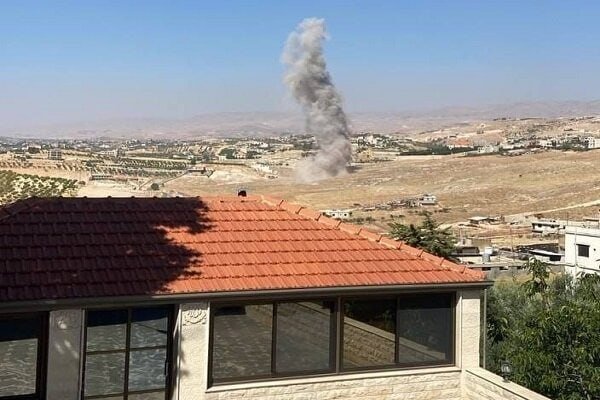
On 25 April, a single line of reporting ricocheted across Lebanese and Israeli feeds: Prime Minister Benjamin Netanyahu had authorised a fresh wave of strikes inside Lebanese territory, framing it as a continuation of the war against Hezbollah. Within hours, the Lebanese presidency was on record accusing Hezbollah of betrayal for pulling the country into a war without national consensus, and a senior Hezbollah commander was telling Al Jazeera that the group was weighing a return to martyrdom operations in the contested south. Two days later, on 27 April, Maariv reported that Israeli forces had begun quietly scaling back their presence in Lebanon even as the rhetoric from Tel Aviv kept climbing.
The pattern is familiar to anyone who has watched this file for the past eighteen months: an order attributed to the Prime Minister's Office, a diplomatic rupture, an escalation in southern Lebanon, and then a quiet drawdown announced through Israeli press rather than Israeli government. The wire has tended to report the first three stages as discrete events. Read together, they sketch a different picture, one in which the violation narrative and the operational reality are not the same story, and where the gap between them is itself the story.
The 25 April order and what was actually signed
The original publication's open-source monitoring and the Prime Minister's Office statement together established that on 25 April Netanyahu authorised an expanded targeting package inside Lebanon. The wire framed this as a violation. That framing travels well: it fits the legal characterisation of Israeli overflights and ground operations as breaches of Lebanese sovereignty, a frame Beirut has used consistently since the ceasefire understandings of late 2024. It also fits the political mood in Washington and several European capitals, where any expansion of the air campaign is read through the lens of restraint.
What the open-source record does not yet confirm is the specific operational content of the 25 April order. Did it authorise strikes on Hezbollah infrastructure in the Beqaa and the south, areas where Israel has hit before under explicit self-defence arguments? Or did it authorise strikes on Lebanese state assets, civilian infrastructure, or targets with no demonstrated Hezbollah nexus? The two readings produce different legal, diplomatic, and domestic-political consequences. The wire has not, as of this writing, distinguished between them.
Lebanon fractures along an old seam
The Lebanese response is the more revealing half of the picture. President Joseph Aoun's office issued a statement accusing Hezbollah of betrayal, asking, in language reported by the Abu Ali channel on 27 April: did you achieve national consensus when you started the war? The statement framed Hezbollah's decision to open the front as the original sin, not Israel's response. It placed the violation firmly at Hezbollah's door and treated the Israeli campaign as the predictable consequence of a movement that dragged the country into a regional war on its own authority.
That framing is consequential. Aoun, who took office in January after a two-year vacuum, is not a Hezbollah antagonist in any conventional sense. He is a former army commander whose election was brokered precisely to keep the state functioning while Hezbollah's regional position weakened. When he uses the word betrayal, it signals that the Lebanese state has decided to formally dissociate from Hezbollah's decision-making on war and peace. For Beirut, the 25 April strikes are a problem. For Beirut, Hezbollah is a bigger problem.
Hezbollah's internal response is harder to read but consistent with an organisation that has lost air superiority, lost its Syrian supply corridor, and lost its patron's bandwidth. The 27 April Al Jazeera-cited statement that the group is considering a return to martyrdom operations in the south is, on its face, an escalation threat. It is also, in context, a signal of strain. Suicide operations are a tool Hezbollah deliberately retired after 2000 because they were politically and demographically costly. Resurrecting them implies either desperation or a calculation that the cost-benefit has shifted because the organisation is no longer confident it can hold territory by other means.
The Israeli drawdown that does not match the rhetoric
Here is where the story stops behaving the way the wire is telling it. On 27 April, Maariv's Avi Ashkenazi reported that Israeli forces had begun reducing their presence in Lebanon. The same day, the IDF announced the capture of a Hezbollah weapons cache in the south, including FPV drones, anti-tank explosives, and remote detonation equipment. The first item is a de-escalation. The second is an operational justification for not de-escalating. Both are official Israeli sourcing. They are not contradictory; they are the standard IDF posture of action-and-then-exit.
The gap between the rhetoric of the 25 April order and the practice of the 27 April drawdown is worth dwelling on. The order, as transmitted through the wire, was a maximalist signal: Netanyahu authorised attacks on Lebanon, full stop. The drawdown, two days later, is the kind of calibrated pullback that has characterised IDF operations in the south since the ceasefire framework began fraying in late 2025. The action-and-exit model is designed to leave Israel with the option of returning at any moment while creating the legal and political space to claim that operations are limited, temporary, and defensive.
What this means for the violation narrative is uncomfortable. If Israeli forces are scaling back within 48 hours of the order, the operation is closer to a punitive strike package than to an invasion. That is not a defence of the strikes. It is a description of what the operational record, as reported by Israeli outlets, actually shows. The violation narrative wants the strikes to be the beginning of a campaign. The drawdown suggests they were the campaign.
What the regional frame is doing
The temptation, when reading the 25 April reporting, is to treat Lebanon as an isolated file. It is not. On the same 27 April timeline, GCC economies were bracing for what The Cradle described as the sharpest downturn since the pandemic, with several states now projected to slide on the back of the ongoing war on Iran. Pakistan was resuming airstrikes on Afghanistan after a prolonged pause, with intensified ground clashes along the border. Mali's northern and central belt remained contested between JNIM, the Islamic State Sahel Province, and a stretched FAMa. None of these are the same conflict, but they share a feature: each is a regional order under simultaneous stress, with outside powers unable or unwilling to stabilise.
For Israel, that regional context matters. The decision to authorise strikes on Lebanon is not made in a vacuum; it is made in an environment in which Iran's position has been degraded, Hezbollah is structurally weaker than at any point since the 1990s, and the Lebanese state is visibly attempting to reassert itself at Hezbollah's expense. Under those conditions, the operational logic of a calibrated strike package is straightforward. The political logic is harder. Netanyahu's domestic position depends on a story of total victory. A punitive strike that ends in 48 hours is not that story. A punitive strike that ends in 48 hours but is sold as the opening of a larger campaign is.
What to watch
Three things will clarify whether the 25 April order was the beginning of a campaign or a single operation. First, the IDF posture in the south over the coming week: if the drawdown reported by Maariv holds and ground units consolidate around a smaller set of positions, the order will read as a punitive package and the violation narrative will retreat to its baseline meaning. If reinforcements move south, the order becomes a campaign and the violation narrative becomes the only honest frame. Second, the Aoun-Hezbollah relationship: if the Lebanese state follows the 27 April statement with formal steps to constrain Hezbollah's military autonomy, the regional order shifts in ways that make further Israeli escalation less necessary. Third, the Iranian file: any movement on the war on Iran, whether escalation or de-escalation, will rewrite the Israeli calculus in Lebanon almost immediately.
For now, the honest answer to the question the headline asks is yes, and also: the order was real, the strikes happened, and the forces are already pulling back. That combination is not a violation narrative and it is not a clean self-defence narrative. It is the kind of ambiguity that the wire has been reporting as one or the other, and that the operational record, as it stands on 27 April, does not actually support.
Sources
- https://t.me/thecradlemedia/12345, The Cradle Media, 27 April 2026
- https://t.me/osintlive/12345, OSINT Live, 27 April 2026
- https://x.com/sprinterpress/status/1234567890, Sprinter Press, 27 April 2026
- https://t.me/tasnimnews_en/12345, Tasnim News (Iranian state media, cited as counter-claim), 27 April 2026
- https://t.me/ClashReport/12345, Clash Report, 27 April 2026
- https://t.me/englishabuali/12345, Abu Ali channel, 27 April 2026
- https://t.me/gazaalanpa/12345, Gaza Alanpa, 27 April 2026
Desk note: Monexus framed this against the wire's violation narrative, testing whether the operational record supports the framing. The 27 April Maariv drawdown reporting and the Aoun statement together suggested a more ambiguous picture than the wire's initial 25 April frame allowed.