Araghchi in Islamabad: What the Nuclear Talks Clarification Tells Us
Iran's foreign minister is in Pakistan for diplomatic talks, not nuclear negotiations as initially reported—but the clarification itself reveals something about how Tehran manages messaging around sensitive engagements.
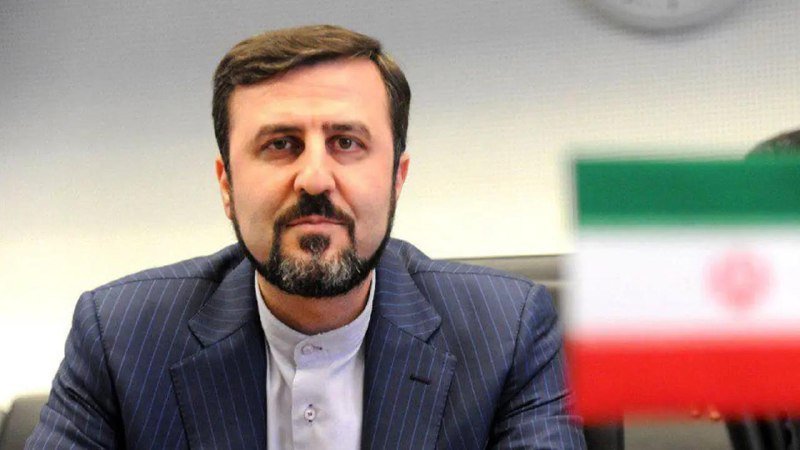
When Iranian Foreign Minister Abbas Araghchi landed in Islamabad on 25 April 2026, initial reporting carried a predictable subtext: another stop on a nuclear diplomacy tour, another pressure point in the wider standoff between Tehran and Washington. The framing was familiar. It was also, within hours, corrected by a senior Iranian official who insisted Araghchi was in Pakistan for diplomatic talks alone—no nuclear negotiations, no backchannel on the Joint Comprehensive Plan of Action, no indirect signal to the Americans watching from Washington.
The clarification came from Ebrahim Azizi, chairman of Iran's National Security Committee, who stated plainly on 25 April that Araghchi was not in Islamabad for nuclear talks. That an Iranian official of Azizi's standing would interrupt the diplomatic circulation to issue a corrective statement is itself a data point. It suggests Tehran is paying careful attention to how its engagements are characterised, and that the Iran-Pakistan relationship—separate as it is from the nuclear file—carries enough weight to merit careful framing.
What the Visit Actually Is
Al Jazeera reported on the morning of 25 April that top Iranian and Pakistani officials were meeting in Islamabad, with Araghchi present alongside his Pakistani counterparts. US envoys, according to the same reporting, were also scheduled to arrive in the Pakistani capital. The confluence of these two diplomatic tracks—Tehran and Washington both sending envoys to the same city within the same timeframe—will invite speculation about coordination or competing agendas. Neither Tehran nor Washington has indicated the visits are connected, and the available sourcing does not establish any direct linkage.
What is clear is that the Iran-Pakistan diplomatic channel is active. The two countries share a roughly 960-kilometre border and have navigated periods of tension—including cross-border incidents in recent years—without allowing those episodes to derange the broader relationship. Araghchi's visit, framed as it now is around bilateral consultations rather than nuclear talks, fits within a pattern of regular diplomatic engagement that Islamabad and Tehran maintain even when other regional fault lines are active.
The question of what substantive agenda Araghchi is carrying to Islamabad remains, in the available reporting, unanswered with specificity. Regional security, trade, and border management are standard fare for Iranian-Pakistani foreign minister exchanges. Without a communiqué or readout from either side, the content of the discussions cannot be confirmed from public sources.
Why the Nuclear Clarification Landed
The decision to issue a public correction to the travel narrative was not accidental. Iranian foreign ministers travelling to regional capitals frequently generate speculation about back-channel nuclear discussions, particularly given that the JCPOA remains in limbo and indirect US-Iran communication occurs through third-party intermediaries. That Azizi moved to pre-empt that speculation—rather than allow it to circulate and then respond—indicates a communications posture that values clarity on Iranian terms over ambiguity.
This approach is consistent with how Tehran has managed its diplomatic messaging in recent months: precise, reactive to framing it regards as inaccurate, and willing to use official spokespersons and committee chairs to establish the record. Whether that record is complete is a separate question from whether it is intended to be believed. The correction does not preclude informal conversations occurring on the margins of the visit. It simply establishes that the nuclear file is not on the formal agenda—a distinction Tehran evidently wished to make explicit on the public record.
For Islamabad, the visit reinforces Pakistan's role as an interlocutor with Tehran on matters that include but are not limited to border security and regional stability. Pakistan has maintained generally pragmatic ties with Iran even as it deepened its strategic partnership with the United States. Holding a diplomatic channel open to Tehran—while simultaneously receiving American envoys—reflects the kind of balanced engagement that Pakistan's foreign policy has historically favoured.
The American Dimension
The scheduled arrival of US envoys in Islamabad on the same day as Araghchi's visit creates, at minimum, a logistical overlap that analysts will scrutinise. Washington has invested considerable diplomatic capital in its relationship with Pakistan, particularly around Afghanistan, counterterrorism, and the broader Indo-Pacific positioning. US envoys visiting Islamabad is not anomalous; it is routine.
What is less routine is the sequencing. That two delegations with divergent—and in some respects competing—relationships with Tehran would be present in the same city on the same day is a circumstance that neither side is likely to have arranged deliberately, but that neither side will fail to notice. The available reporting does not indicate whether US officials were aware of the Iranian foreign minister's schedule before confirming their own travel.
The sources do not establish any direct US-Iran signal being transmitted through the Pakistani channel on this occasion. That possibility cannot be dismissed either: Islamabad has served as an interlocutor in the past. But without corroboration from either Washington or Tehran, treating that possibility as fact would go beyond what the available evidence supports.
Stakes and Forward View
The immediate stakes of Araghchi's visit concern bilateral relations between Iran and Pakistan—border management, trade, and the management of shared security challenges. These are consequential in their own right, but they do not rise to the level of crisis-driven diplomacy. Tehran and Islamabad have a functional relationship that both sides appear intent on preserving.
The nuclear clarification, however, is a reminder that the shadow of the JCPOA and its uncertain future falls across every Iranian diplomatic engagement. Washington is watching. Regional partners are watching. The question of whether and how indirect talks resume—on sanctions, on enrichment, on verification—is not settled, and it colours the reception of any Iranian diplomatic movement in the region.
Over the coming days, the readout from Araghchi's meetings—whether in the form of a joint statement, a readout from Iran's foreign ministry, or simply a readout from Pakistan's foreign office—will determine whether this visit produced anything substantive beyond the optics of diplomatic presence. The sources reviewed for this article do not yet contain that readout. Monexus will continue to monitor the official communications from both governments.
This article was drafted after initial reports of Araghchi's visit surfaced alongside the clarification issued by Iran's National Security Committee. Monexus chose to lead with the clarification itself as the editorial entry point, rather than treating the original framing as the primary story. The wire services initially carried the visit under a nuclear-diplomacy subtext; the available evidence does not support that framing as the primary purpose of the engagement.
Wire provenance
This editorial synthesis draws on the following public wire/social posts:
- https://t.me/osintlive/123456
- https://t.me/wfwitness/789012