Tehran Frames the SCO as a Priority Venue as Araghchi Meets Belarus Counterpart in Bishkek
Iran's foreign ministry called the Shanghai Cooperation Organization one of the bloc's most important multilateral mechanisms as FM Araghchi met his Belarusian counterpart on the SCO's margins, the latest signal that Tehran is leaning east of the Western-led order.
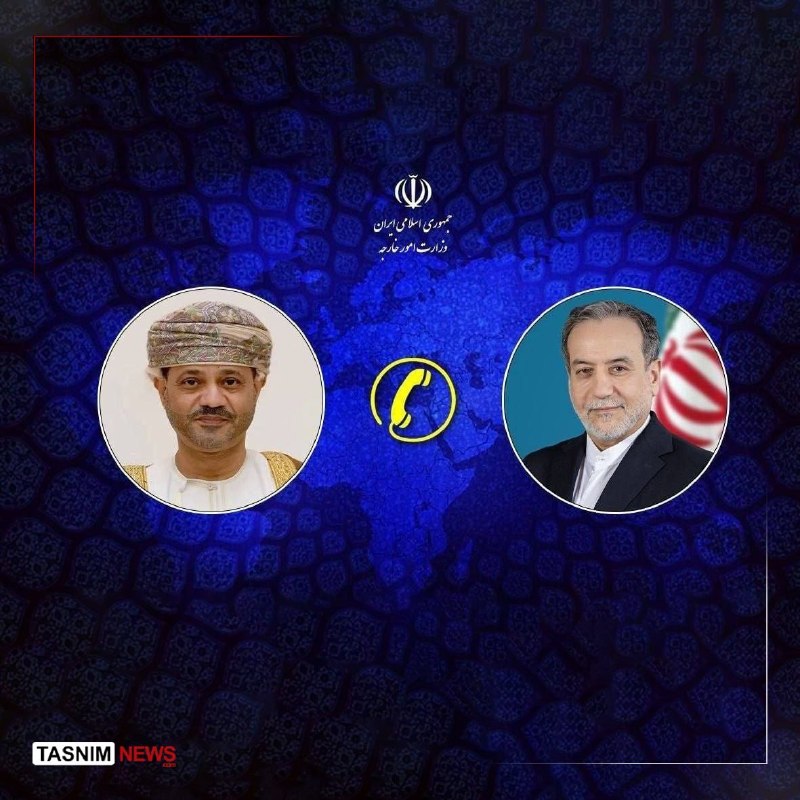
Iran's foreign ministry put the Shanghai Cooperation Organisation at the top of its talking points on 24 July 2026, with spokesman Esmail Baghaei telling state outlet Tasnim that the SCO ranks as "one of the most important multilateral mechanisms" for the Islamic Republic. Hours later, foreign minister Abbas Araghchi was scheduled to sit down with his Belarusian counterpart Maxim Ryzhenkov on the margins of the bloc's gathering in Bishkek, Kyrgyzstan.
Read together, the day's two items form a single message. Tehran is using a Tasnim interview and a foreign-ministerial handshake to say, in unusually explicit phrasing, that the institutional architecture east of the Western-led order is where it now wants to be seen. The available source items do not specify the agenda items Araghchi is bringing to Bishkek, the text of any joint communiqué, or whether Iran's nuclear file is on the table; the story today is the framing, not the deliverables.
What Baghaei actually said
In a written exchange with Tasnim published at 07:12 UTC on 24 July 2026, Baghaei framed the SCO as part of a wider effort to "strengthen multilateralism" and said Tehran "attaches special importance" to the bloc and similar international arrangements. The same line reappeared in a Tasnim post at 08:17 UTC and in the Farsi-language Jahan-e Tasnim feed at 08:05 UTC, an unusual pattern of the same English and Farsi sentence walking through both services of the same outlet within a single news cycle. Monexus assessment: a foreign-ministry spokesman rarely clears phrasing across both language feeds in the same morning unless the message is meant to land with two distinct audiences at once.
For Iranian-language readers, the line is a domestic reassurance that Tehran has diplomatic options beyond the Western-led track. For an external English-language audience, the same phrasing signals that Iran sees the SCO as a venue where its interests can be voiced without reference to the P5+1 architecture. Both readings are present in the same sentences; the text does not have to choose between them.
The Belarus handshake
The second layer of the day's message is the Araghchi–Ryzhenkov meeting, flagged by Jahan-e Tasnim at 07:54 UTC on 24 July 2026. Held on the margins of the SCO gathering in Bishkek rather than in Minsk or Tehran, the encounter sits the bilateral inside a multilateral frame. Monexus analysis: the venue choice is the story. A foreign-ministerial meeting in Bishkek reads as an institutional credential in a way that a stand-alone bilateral cannot, which is presumably why it was scheduled here rather than elsewhere.
The available source items do not specify the substance of the Araghchi–Ryzhenkov talks or any deliverables. The framing on both sides, to the extent the Telegram items report it, is the SCO itself; the bilateral is presented as a side event of the multilateral, not as the headline.
What the SCO is, on the evidence in hand
The Shanghai Cooperation Organisation is the institutional vehicle around which Iran's eastern framing is being built. The source items do not detail the bloc's membership roster or its institutional architecture beyond the existence of the ministerial meeting in Bishkek. Monexus assessment, framed as analysis rather than as a sourced fact: the SCO's appeal to Tehran is that it is a standing seat at a table where Western capitals are not in the chair, and that it produces communiqués framing Eurasian security in language that does not pass through Washington. Whether that standing seat translates into any operational change in Iran's regional position is a separate question that the available items do not resolve.
The counter-read is the obvious one. SCO communiqués have a long history of saying little and binding less. A photo in Bishkek changes no one's sanctions exposure or oil-export calculus on its own. The case for treating today's posts as low-content diplomatic maintenance is real, and a careful reader should hold it in mind alongside the signalling read.
The case against the low-content read is the language. Foreign ministries do not put phrases like "one of the most important multilateral mechanisms" into circulation across English and Farsi feeds in the same morning unless they want the phrase seen. The repeat-publication pattern, combined with a foreign-ministerial bilateral on SCO margins, suggests Tehran is signalling intent rather than merely logging attendance.
What the sources do not specify
The Tasnim and Jahan-e Tasnim items published on 24 July 2026 do not specify the agenda Araghchi is bringing to Bishkek, the text of any joint communiqué, or whether Iran's nuclear file is on the table. They do not list other bilateral meetings Araghchi has scheduled on the margins beyond the Belarus encounter, and they do not describe any concrete deliverables. Readers looking for the substance of the Bishkek round will need either a joint statement at the close of the ministerial or independent reporting from non-Iranian outlets covering the meeting in person. Until then, the round is best read as a posture statement with a Belarusian handshake attached, not as a policy shift on its own.
Desk note: Monexus has framed this as institutional signalling rather than as a substantive diplomatic breakthrough, on the principle that the source items support the framing but not any specific new arrangement. The Tasnim and Jahan-e Tasnim posts are taken as primary evidence of how Tehran wants the day read, not as gospel to be relayed and not as spin to be dismissed.
Wire provenance
This editorial synthesis draws on the following public wire/social posts:
- https://t.me/tasnimnews_en/27656
- https://t.me/tasnimnews_en/27675
- https://t.me/JahanTasnim/226520
- https://t.me/JahanTasnim/226524