Clarity Act slips past its summer window, but the Senate still plans a vote
The crypto market-structure bill will miss its pre-recess deadline, Majority Leader Thune said on 23 July 2026, but a floor vote is still expected as soon as next week even without a Democratic deal.
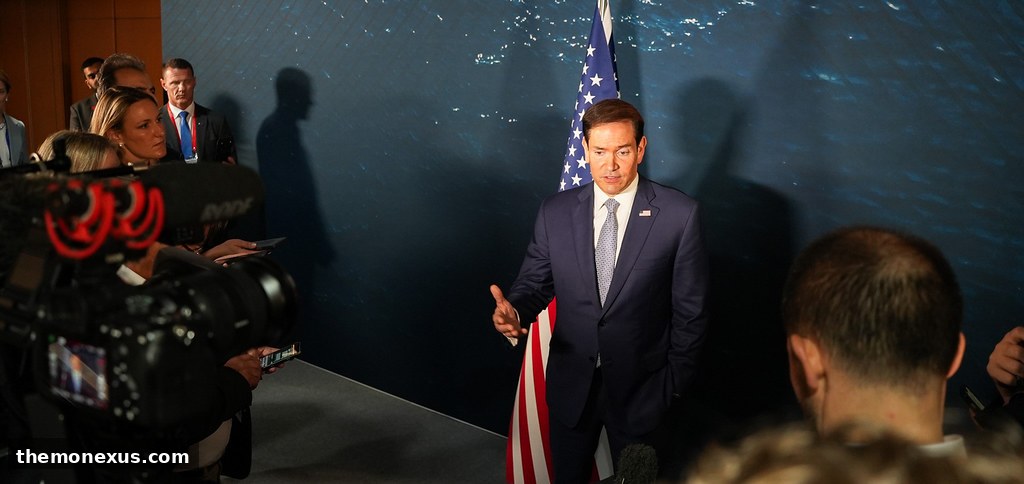
The Clarity Act will not become law before the US Senate scatters for its August recess, Senate Majority Leader John Thune conceded on 23 July 2026. The procedural loss is real; the political story is not over. A floor vote is still expected as soon as the following week, and it will proceed against a backdrop of unresolved Democratic demands, a new presidential-conflict provision, and a market that has spent the entire year pricing in a legislative window that keeps moving.
The cleanest read of the moment is that the timing has slipped while the substantive fight has hardened. The bill that reaches the floor next week is likely to look meaningfully different from the bill that cleared committee, because the seven Democrats who have signalled willingness to negotiate are not negotiating over the title, they are negotiating over who gets trusted with the rulebook.
The deadline that won't hold
Thune's 23 July statement, relayed by CoinDesk, made the procedural bound explicit: the window for finishing the market-structure bill before the summer break will not close with a law on the desk. The Majority Leader added that work on the bill may still get a start before senators scatter, leaving the procedural choreography open but the calendar deadline behind it. The original briefing, carried by Cointelegraph earlier the same day, had framed the same plan as a vote "as soon as next week, even without a deal with Democrats", a posture that signals the leadership's willingness to test the floor before the recess even knowing the underlying negotiations are incomplete.
That posture is a tell. It tells you the Hill has moved past the question of whether Clarity moves, and into the question of which version of Clarity moves, and on whose terms. A failed pre-recess window is procedural; a floor vote without bipartisan cover is political.
The ethics firewall that wasn't there
The most substantive change riding into the bill is one the Senate did not have eight weeks ago. On 22 July, Cointelegraph reported that lawmakers were considering updated text that would prohibit presidents and other federal officials from issuing, sponsoring, or profiting from cryptocurrencies and memecoins. The provision is a direct response to the memecoin ventures that have made the issue of senior-executive crypto enrichment politically unignorable, and it is also the clearest single piece of evidence that the bill is being rewritten in flight, not merely re-timed.
Stacked on top of that, the same Cointelegraph wire on 23 July 2026 carried a letter from seven pro-crypto Senate Democrats arguing that the Republican-drafted Clarity Act still falls short on ethics, consumer protection, and illicit finance provisions. The seven are not anti-crypto. They are crypto-invested legislators signaling that the industry's political capital is not, at this moment, sufficient to close the file on its own terms. Their objections are the Democratic price of admission. They are also, in practice, the list of amendments that will need to be either absorbed or voted down if a floor vehicle is to clear the chamber with the present Republican-only coalition.
What the bill actually does, and what it doesn't
Clarity is, on its face, a market-structure bill. Its hard work is jurisdictional: it assigns the Securities and Exchange Commission the authority over digital assets that function as securities, the Commodity Futures Trading Commission the authority over those that function as commodities, and begins the process of drawing clean lines between the two. In a sector that has spent the better part of a decade inside a regulatory grey zone, the line-drawing is the product. The bill's optionality, stablecoin yield, custody, staking, exchange registration, is the part that the lobby shops actually argue over. The seven Democrats' letter signals that those secondary fights are also unresolved.
The underappreciated variable is the administrative state. The SEC under the current chair has spent two years building a workable disclosure-and-registration framework through enforcement, and that framework does not get repealed by an act of Congress. It gets layered on. Practitioners who treat Clarity as a clean reset will be disappointed; practitioners who treat it as a ceiling on how far the SEC can push by administrative rule will be vindicated. Both camps are present in the 23 July reporting.
The stakes, and the month that decides them
If the Senate holds a vote the week of 27 July and the bill fails or is pulled, the analytical temptation will be to declare crypto legislation dead for the year. That reading is too clean. The 22 July ethics provision and the 23 July Democratic letter are both evidence that the most consequential policy work is being done in markup, not in motion to proceed. The shape of the bill that eventually emerges will determine whether the industry's decade-long campaign for clear rules ends in a permissive framework, a constrained one, or a permissioned one. Each version rewrites the strategic map for issuers, exchanges, and the federal regulators who will have to police whichever framework lands.
The unsourced reality is that the Senate's September workload is already heavy, and that a bill not on the calendar before the recess becomes a bill fighting for floor time against appropriations and a continuing resolution. The seventy-two hours that follow the floor vote will tell the desk whether this is a setback measured in days or in legislative half-lives. The window has closed. The summer has not.
Desk note: Monexus frames Clarity as a jurisdictional line-drawing fight, not a culture-war proxy. The wire is reporting the schedule slip; the structural story is the seven-Democrat letter and the new ethics provision, which are reshaping the bill even as the pre-recess deadline slips.
Wire provenance
This editorial synthesis draws on the following public wire/social posts:
- https://www.coindesk.com/policy/2026/07/23/clarity-act-expected-to-miss-its-window-before-congress-summer-break-leadership-says
- https://t.me/Cointelegraph/71215
- https://t.me/Cointelegraph/71212
- https://t.me/Cointelegraph/71205