Zelenskyy fires Syrskyi after protests, and the war inside the war
After days of street pressure in Kyiv and other cities, President Zelenskyy has dismissed commander-in-chief Oleksandr Syrskyi, naming a successor weeks before a fourth wartime winter.
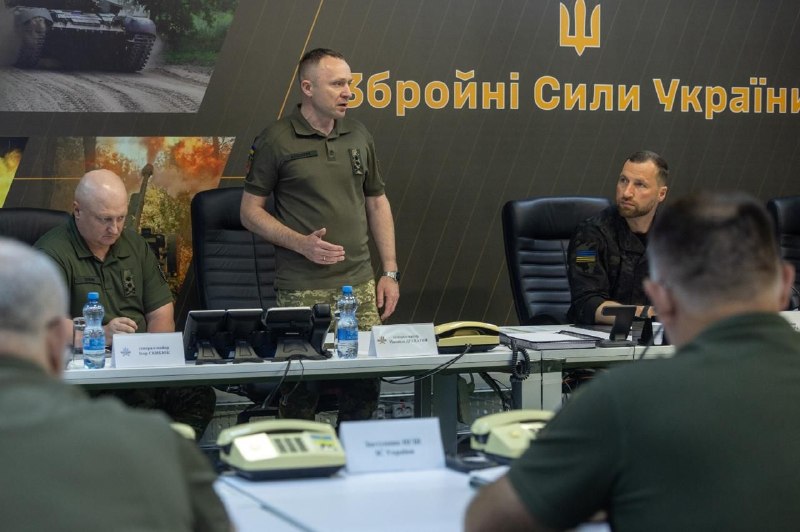
On 21 July 2026, Volodymyr Zelenskyy dismissed Oleksandr Syrskyi as Ukraine's commander-in-chief and named a replacement, ending days of public protest in Kyiv and other Ukrainian cities that had called for the general's removal. The dismissal, reported by the WarMonitors Telegram channel at 20:37 UTC and confirmed in framing by Deutsche Welle's coverage earlier the same day, lands with the war grinding into its fifth summer and Ukraine preparing for a fourth wartime winter.
A wartime commander is rarely fired in public. Syrskyi had held the post since February 2024, taking over from Valeriy Zaluzhnyi in another politically charged handover. His removal now, under street pressure rather than behind palace doors, is a signal about who runs the war at the top, and how much room civilians and soldiers get to say so.
The protests that pushed the president
Deutsche Welle's reporting on 21 July 2026 makes the proximate cause plain: demonstrations in Kyiv and other Ukrainian cities in the days before the dismissal openly demanded Syrskyi's removal. Telegram channels tracking the conflict, including WarMonitors, surfaced the announcement within the hour. The mechanics are familiar from Zaluzhnyi's exit, but the temperature is different. Zaluzhnyi was a popular general whose dismissal felt like a closed-door rebuke. Syrskyi was the general soldiers and their families had spent eighteen months publicly blaming for manpower decisions, rotation policy and the human cost of the fortified-zone fight.
What the sources do not specify is the size of the protests, the organisers, or whether veterans' groups were formally on the calls. That matters. If the street mobilisations were small, the dismissal still reads as a precautionary move by a president wary of a Zaluzhnyi-style personality cult forming around a disgruntled general. If they were large, Zelenskyy has effectively conceded that wartime accountability now flows through civilians as much as through the general staff.
What we do not yet know
The successor's name is the obvious gap. The WarMonitors flash at 20:37 UTC names the dismissal and a replacement; the Deutsche Welle line confirms the firing and the protests but, in the material available to this publication, does not name the incoming commander-in-chief. A commander-in-chief change in a country at war is not a routine personnel move, and the absence of a named successor in the English-language wires at the time of writing leaves the door open to speculation the formal announcement will close in the coming hours.
Two further uncertainties. First, whether Syrskyi is moved sideways, into a role that preserves his experience while removing him from the top job, or retired from active command altogether. Second, and more politically loaded, how the change interacts with Ukraine's mobilisation debate. The same protests that targeted Syrskyi targeted the system he ran. Replacing the general without changing the system would invite a second round of street pressure. Replacing both, even partially, would test the patience of brigade commanders who have spent two years learning to fight under the current structure.
Civilian voice in a wartime hierarchy
The unusual feature of this dismissal is not the firing itself. Ukraine has changed military leadership before. It is the route. In most armies at war, the public pressure that removes a commander comes from political allies, parliamentary committees or a defence minister with the prime minister's backing. In Kyiv this week it came from the street, broadcast on Telegram and picked up by Western wires.
This is not the same thing as the military being subordinated to politics in the pejorative sense. Ukrainian democracy has so far held under bombardment in a way few predicted in February 2022, and a public that can force a commander-in-chief out is a public that retains agency over its own war. But it does change the incentive structure for the next general. The lesson any incoming commander will draw is that operational decisions with high casualty profiles carry a political risk Syrskyi's predecessor did not face. That is not, on its own, a recipe for better generalship. It can be a recipe for risk-averse tactics, and risk-averse tactics in a war of attrition tend to lose.
The structural frame, in plain prose
Wars of this duration reshape the political systems that fight them. The country that emerges on the other side will not be the country that signed the mobilisation orders in 2022, and the military that emerges will not be the military that took delivery of the first Western main battle tanks. Civilian oversight of the armed forces, exercised through street protest rather than parliamentary committee, is one of the less discussed features of that reshaping, and it is now an established fact of Ukrainian politics rather than an aberration. The question is whether it sharpens accountability or fragments command. The next few weeks of front-line contact will give the first answer.
Stakes, and what to watch
If the successor is announced within 48 hours and is a serving general with front-line command experience, the dismissal reads as a normal, if unusually public, rotation. If the successor is a civilian or a political figure with limited operational background, the signal is sharper: the presidency has decided the wartime general staff is now accountable, in practice, to civilians who turn out. Watch also for any movement on the mobilisation bill in the Verkhovna Rada; the two stories are linked, and a commander-in-chief change without a mobilisation reform would look, to the same Telegram channels that covered the protests, like a change of face without a change of policy.
Desk note: where the wires covered the announcement as a personnel story, this publication reads it as a politics-of-war story. The fact that the dismissal followed street pressure, rather than preceding it, is the news.
Wire provenance
This editorial synthesis draws on the following public wire/social posts:
- https://t.me/WarMonitors/1
- https://t.me/WarMonitors/2