Zelensky's wartime reshuffle puts a technocrat back in play, and a general on notice
On the same evening Kyiv fired its top general, the president's office floated a new job for the man he had just removed from the defence ministry. The pattern looks less like punishment than substitution.
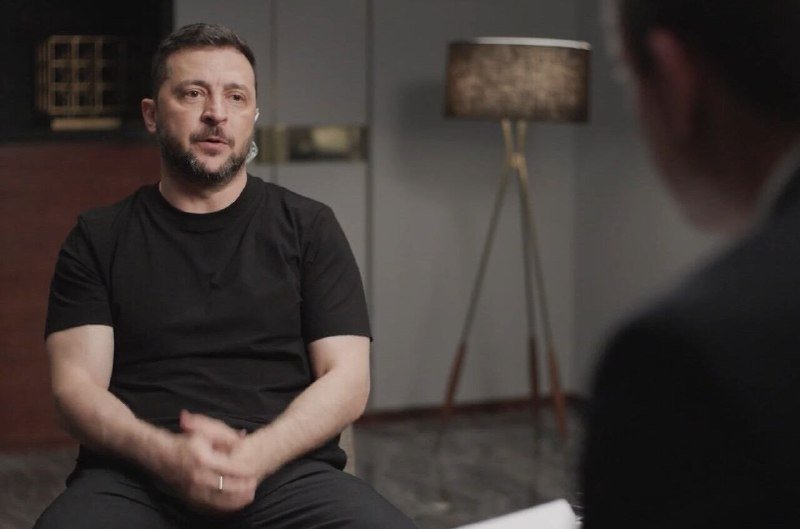
At 19:43 UTC on 21 July 2026, the BBC reported that President Volodymyr Zelensky had dismissed Ukraine's senior military commander, days after sacking a defence minister whose removal had drawn demonstrators into the streets of Kyiv. Within fifteen minutes, a Telegram channel with a record of accurate sourcing inside the presidential office added a second layer: the same president was preparing to offer that ousted minister, Mykhailo Fedorov, a new role focused on developing the country's technological capabilities.
The stack of decisions, fired off inside a single news cycle, has the unmistakable shape of a wartime reshuffle. But it is the order of operations, not the headline, that carries the political signal. A popular minister goes first. Protest follows. Then the general goes. Only after the street has been heard from does the office begin sketching the next posting for the man the street was defending.
The minister, then the general
The sequencing, as the sources will only confirm in fragments, began several days before the BBC's 21 July dispatch. Fedorov, who had built a national profile as a digital-services reformer before taking the defence portfolio, was removed from that job. Public reaction in Kyiv was visible enough that, according to the BBC reporting, it formed part of the backdrop to what came next.
At 19:58 UTC on the same day, the noel_reports Telegram channel, citing presidential adviser Dmytro Lytvyn, said Zelensky was preparing to offer Fedorov a new government role with a technological remit. Twenty minutes earlier, the same channel had reported Lytvyn saying the president's position on the possible dismissal of Commander-in-Chief Oleksandr Syrskyi would be announced soon. The BBC's subsequent report confirmed the army command change.
Read together, the two releases trace a familiar wartime pattern: act on the uniformed service first, then write the civilian replacement into a portfolio that protects the political base. Fedorov's digital brand survives the sacking. Syrskyi's career inside the chain of command does not.
What the protests actually demanded
Ukrainian coverage of the preceding demonstrations centred on the defence ministry's handling of frontline procurement and on the personal conduct of officials inside it. The BBC's report that Fedorov's removal preceded the army command change implies the street's grievance landed first on a civilian target, not a uniformed one. That matters. A government that absorbs street pressure on the ministry before touching the general staff is choosing, at least for one news cycle, to be seen responding to civic demands rather than to internal factional ones.
The counter-read is also available. Wartime purges have, in other capitals, been a means of removing rivals under the cover of public outrage. Nothing in the available reporting confirms that framing here, but neither does anything in the visible record exclude it. The Telegram sourcing points back to Lytvyn, an adviser with a stake in framing the decisions as presidential will rather than as concessions to protest.
The technocrat problem, in plain terms
Fedorov's known public profile is a technocratic one. He came into the defence job associated with state digital services and with the wartime effort to keep Ukrainian government online in the face of a sustained invasion. Reassigning him to a role explicitly described as developing Ukraine's technological capabilities is, on the face of it, a redeployment rather than a demotion. The state is keeping the brand it built during the crisis.
That move has a second reading, less flattering to the office. A government under pressure at the front, on the street, and inside its own procurement chain sometimes prefers to park awkward incumbents in roles whose outputs cannot easily be audited by the public. A "technological capabilities" portfolio, defined loosely, can mean almost anything. The political upside of keeping Fedorov within the cabinet is straightforward: the street loses one of its named targets. The downside is accountability. What the role measures, and against whom, is not yet specified in any of the public reporting.
What to watch next
Three filings will resolve the question of whether this is a substitution or a concession. First, the text and title of the new role for Fedorov. Second, the formal communication on Syrskyi's replacement, and the public read from the general staff and from frontline units. Third, any independent assessment from Kyiv-based outlets on whether procurement reform at the defence ministry continues, pauses, or reverses under the new leadership.
The sources available as of 21 July 2026 do not yet specify the institutional home for Fedorov's new portfolio, the full text of the dismissal order for Syrskyi, or whether either of the moves carries a parliamentary confirmation requirement. Those gaps are not minor. A reshuffle that reads as decisive in the evening news can look thinner once the formal paperwork is on the table. Until then, the pattern is substitution dressed as discipline, and the street that forced the first move has not yet been told whether the second one answers it.
Desk note: Monexus led with the BBC's confirmed sacking and used the Telegram reporting from noel_reports as counter-claim material, with explicit sourcing caveats where the channel attributed statements to presidential adviser Dmytro Lytvyn. Ukraine remains the invaded party throughout; the coverage treats wartime civilian protest as a legitimate civic input, not as a destabilising pressure on the war effort.
Wire provenance
This editorial synthesis draws on the following public wire/social posts:
- https://t.me/noel_reports/64512
- https://t.me/noel_reports/64510