Zelensky fires Syrsky, installs Drapatyi, and tries to reset the war's command logic
Three days of street protest gave Volodymyr Zelensky the political cover to sack his top general. The replacement suggests Kyiv's problem wasn't strategy but tempo.
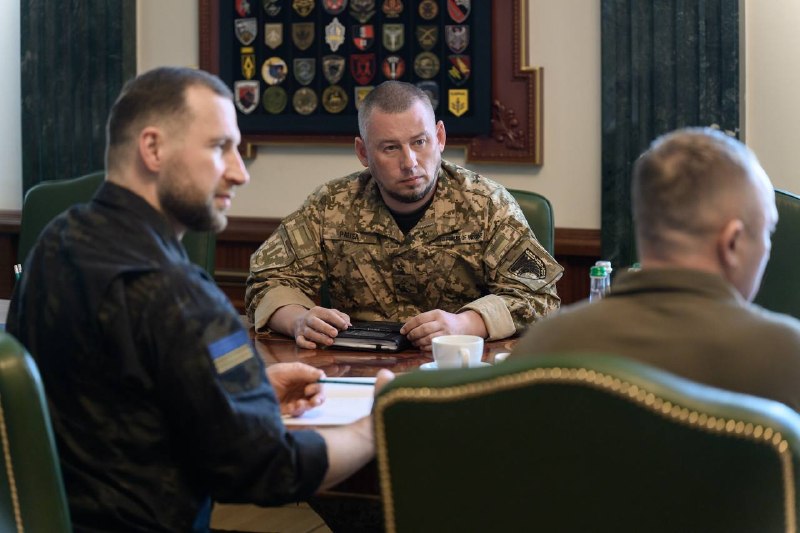
At 17:40 UTC on 21 July 2026, President Volodymyr Zelensky used his official Telegram channel to announce that Major General Mykhailo Drapatyi would replace Colonel General Oleksandr Syrsky as Commander-in-Chief of Ukraine's Armed Forces, alongside a reconfigured General Staff that will include Yevhenii Khmara and Pavel Palisa. By 19:43 UTC the same outlet confirmed that Zelensky had already dismissed Syrsky. France 24 reported the move on 20:22 UTC and framed it as "a victory for protestors", a pointed choice of language given the demonstrations of recent days.
The substance is bigger than a personnel file. Zelensky is not just rotating a general; he is signalling that the lag between political will and military execution has become a strategic liability, and that the office of the presidency is willing to absorb the cost of saying so publicly. The new chain of command is being assembled in the open, in real time, on Telegram, with a specific mandate: faster adaptation inside a war that has settled, by every available indicator, into a grinding attritional phase.
What changed at the top
Syrsky is a Soviet-trained career officer, decorated for the defence of Kyiv in spring 2022 and for the 2023 counter-offensive in the south, and his tenure had become politically contested as casualty figures mounted and front-line movement stalled. The dismissal was telegraphed through unofficial channels first. The Telegram channel IntelSlava flagged at 19:43 UTC that "Ukrainian media report that General Syrskyi has been dismissed", then carried Zelensky's confirmation minutes later. Zelensky thanked Syrsky "for Ukraine's defence" in the same announcement that installed his replacement, a diplomatic formula that buys the outgoing chief continuity without conceding that the change was cosmetic.
Drapatyi, a major general rather than a colonel general, is a younger-generation officer whose public profile tracks more closely with Ukraine's post-invasion reformist officer corps than with the Soviet-trained establishment. He is being given the job alongside an explicit General Staff reconfiguration, and Zelensky has framed the change as an emergency correction rather than a routine rotation.
The protest backdrop
None of this happened in a vacuum. Kyiv Post reported on 21 July that Zelensky had met with Mykhailo Fedorov, the First Deputy Prime Minister and Minister of Digital Transformation, to discuss a new role "aimed at consolidating Ukraine's technological and defence capabilities", and that the initiative would draw on the SBU's "Alpha" unit. The Syrsky dismissal and the Fedorov appointment are best read as two halves of the same message: the military's upper tier is being pruned, and the technological stack that supports it is being pulled closer to the centre.
Demonstrations demanding leadership change had been visible for days before the announcement. The political cost of acting against a popular wartime general is real; the political cost of not acting while soldiers die under a stalled doctrine is, by Zelensky's calculation, higher. That is the arithmetic France 24 captured in its "victory for protestors" framing, and it is the framing Ukrainian civil society will now use to measure whether Drapatyi delivers or simply inherits an unwinnable tempo problem.
Counter-reads worth weighing
Two counter-reads deserve airtime. The first is that a senior command change in the middle of a hot war is itself a destabilising event, and that the months it takes for a new commander to learn the map and the personalities can cost more than any reform dividend. The second, more cynical read, is that firing a general is the lowest-cost way for a president to look responsive without touching the deeper structural problems: mobilisation rates, ammunition stockpiles, the political economy of recruitment, and the gap between Western aid pledges and arrivals.
Both reads are plausible, and neither fully cancels the case for the change. Drapatyi's lower rank is itself a signal; a colonel general inherits an institution that already knows him, while a major general has less to defend and more licence to break patterns. Whether that licence survives contact with entrenched general-staff fiefdoms is the next test, and it will show up first in personnel moves lower down the chain.
Stakes, and what to watch
If the reset works, the visible markers will be tactical: shorter decision cycles at brigade level, faster integration of drone and electronic-warfare units, and a mobilisation system that produces combat-ready battalions on a predictable schedule rather than ad hoc. If it does not work, the markers will be political: a second round of protests, sharper parliamentary questioning of the General Staff's budget, and pressure to extend the reset to civilian defence procurement, where the corruption exposure of 2023-24 has never been fully closed.
The next 30 to 60 days are the window. Drapatyi's first concrete moves, the composition of the reconfigured General Staff, and the treatment of senior holdovers from the Syrsky era will together tell observers whether this was a transfer of authority or a transfer of blame. Watch the Telegram channel of the General Staff, not the President's office, for the answer; Zelensky's messaging is now the easy variable, and what the new commander allows to leak from inside the building is the honest one.
Wire provenance
This editorial synthesis draws on the following public wire/social posts:
- https://t.me/V_Zelenskiy_official
- https://t.me/Kyivpost_official
- https://t.me/Kyivpost_official
- https://t.me/Kyivpost_official
- https://t.me/Liveuamap
- https://t.me/wfwitness
- https://t.me/noel_reports
- https://t.me/intelslava