Warning shots on the Blue Line: how a quiet Mediterranean frontier turned into the next flashpoint
Two paramedics wounded by a landmine on 21 July 2026 and IDF warning shots at Lebanese troops crossing a security zone the same day bring the post-war truce back into the open fracture-lines of the Mediterranean frontier.
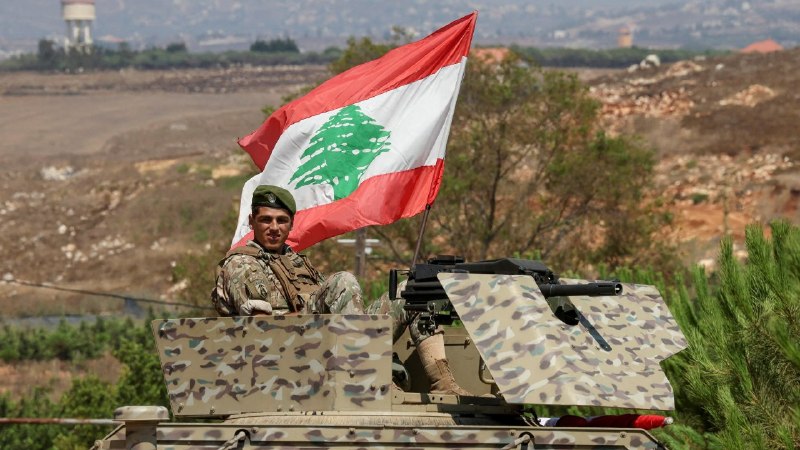
Two Lebanese paramedics were wounded in a landmine explosion on 21 July 2026, the same afternoon the Israel Defense Forces said it fired warning shots at Lebanese Army troops who crossed into what Israel calls the security zone north of the border fence. The two incidents, reported within five hours of each other, arrived without public Israeli or Lebanese casualty tallies beyond the wounded paramedics, and against a frontier that has spent most of the last eighteen months trying to convince outsiders, and its own publics, that the worst of the war is over.
The two events are not equivalent in kind. One is a mine blast in a still-contaminated landscape; the other is a pointed exchange of small-arms fire between two armies that, on paper, are not at war. Read together, they describe a frontier where the lines on the map are holding only at the cost of constant muscle-flexing. The Blue Line was drawn in 2000 to mark Israel's withdrawal from southern Lebanon, then re-asserted as the demarcation line in the November 2024 ceasefire understanding. Eighteen months later, both sides are still arguing about how close "close" is.
The narrower question this article tries to answer is whether what is happening on the ground on 21 July 2026 is friction, regression, or something worse. The wider question is whether the diplomatic architecture designed to keep this frontier quiet can survive the failure of the smaller conversations that are supposed to feed it.
A mine, two medics, and the geography that swallows them
The landmine explosion was reported by Middle East Eye's live blog at 19:20 UTC on 21 July 2026 as having wounded two Lebanese paramedics. The framing supplied by Middle East Eye did not specify which organisation the paramedics belonged to, the exact location of the blast, the type of munition involved, or whether the explosion occurred in an area previously identified as contaminated by unexploded ordnance left over from the 2023-2024 campaign. Without those details, the incident sits inside a wider pattern rather than pointing at any one cause: southern Lebanon has carried thousands of unexploded submunitions and other remnants of the war into the post-ceasefire period, with Lebanese and UN mine-action teams still cataloguing and clearing them more than a year after fighting stopped.
What makes the incident worth pausing over is who was injured, not just what exploded. Medics and demining crews, by long custom in this theatre, are supposed to be the last people hit. Both Israel and Hezbollah subscribed, in earlier phases of the conflict, to clearance protocols that distinguished between combatants and humanitarian workers. Even where those protocols frayed under fire, the public register kept a sharper line. That the wounded here were paramedics, on a working day, in daylight, is the kind of detail that should provoke a confirmation call from whoever handles liaison at the frontier, and a quiet note back to Beirut and the UN Interim Force in Lebanon (UNIFIL) headquarters at Naqoura.
Warning shots, the wrong side of the line
Three minutes before the live blog entry on the paramedics crossed Middle East Eye's feed at 18:15 UTC, The Jerusalem Post's Telegram channel reported the IDF's own account of a separate incident: warning shots fired at Lebanese Army soldiers who, the IDF said, had crossed into the security zone. The IDF statement quoted by The Jerusalem Post demanded that the Lebanese Armed Forces (LAF) "continue to operate within the agreed areas" and warned that "any deviation without prior coordination" would be treated as a deviation. The post did not include casualty figures or specify how many soldiers had crossed, how far, or with what equipment.
Two things are notable about that statement. The first is that the IDF chose to publish it publicly rather than raise the incident through the trilateral or quadrilateral mechanisms that have handled Blue Line friction since the ceasefire took effect. Public messaging of this kind tends to accompany moments when quiet diplomacy is judged to have run out of road. The second is the choice of language: "deviation," used twice in the same short statement, casts the incident as procedural rather than strategic. It is the language a military uses when it wants the escalation cue to be lodged in the other side's accounting, not its own.
The structural problem behind the small incidents
The wider dynamic these two incidents sit inside is the slow drift of the ceasefire from a political document into a maintenance routine. The November 2024 understanding ended active hostilities between Israel and Hezbollah on terms that gave Lebanon's civilian government responsibility for the border region and required the LAF to deploy there in numbers the army had not previously fielded in the south. Eighteen months in, that arrangement has produced a tiered landscape in which UNIFIL patrols, LAF units, demining teams, and Israeli soldiers all operate within sight of each other but not under a single command.
The structural hazard of that arrangement is what it leaves unresolved. The contested stretch of ground just north of the technical Blue Line includes disputed points, villages whose municipal boundaries straddle the line, and agricultural plots that residents on both sides cultivate. Where the line was drawn in 2000 it was meant to be provisional; where it is being interpreted now is being negotiated incident by incident. Each low-grade crossing, each cleared-but-not-yet-cleared minefield, each patrol that strays across an unmarked boundary adds another tick mark to a ledger that nobody has a good mechanism to settle in a single sitting.
Inside Israel, this is also a domestic-political terrain. The security cabinet that authorised the ceasefire faces persistent criticism from the right, in particular over what critics describe as the absence of a clear Israeli security envelope north of Metula. Inside Lebanon, the LAF is operating in a theatre where the population it serves is still recovering, where reconstruction funds are arriving in drips rather than flows, and where the political class in Beirut has not yet produced a coherent position on the long-term disposition of the south. The Blue Line is, in this sense, an international border being held together by men on the ground while the politics above them fails to keep pace.
The plausible alternative read
The counter-read to the framing above is straightforward and should be stated plainly. These two incidents may not be connected at all. A landmine explosion in a residual-warfare zone is exactly the kind of event the post-ceasefire period was always going to produce, independent of any cross-border tension. And soldiers crossing a line without clearance is, by itself, the kind of friction incident that the liaison mechanisms exist to absorb. Read separately, neither event rises above the routine. The reason to read them together is timing: under five hours apart, both in public view, both surfacing in feeds that move quickly and to audiences primed to look for patterns. Without a follow-on exchange later in the evening, the most likely outcome by midnight is that both are parked in the incident log and the liaison channels continue to do the work they were built to do.
What the counter-read does not explain is why the IDF chose a Telegram post over the back-channels on this particular afternoon. That choice is the variable. If it becomes a habit, the Blue Line moves from a managed frontier to a theatre in which every small incident is also a press release, and from there to a theatre in which the public framing of friction does part of the escalatory work that firing across the line used to do.
What the next 72 hours will tell us
Three things are worth watching. First, whether UNIFIL issues a routine read-out that ties the mine and the warning shots into a single narrative; its communications shop at Naqoura is the only voice positioned to do so authoritatively, and its silence or its statement is itself a signal. Second, whether the LAF publicly acknowledges the crossing incident and, if so, whether it does so through the army's own channel or through the Lebanese Presidency's office. Either path tells you something about the internal balance of decision-making in Beirut on a day like this. Third, whether the Israeli political level, rather than the IDF Spokesperson, speaks to either incident in the next news cycle. Cabinet-level public commentary on small-unit friction is the historical precursor to a harder line at the next point of contact.
The wider stakes are not about this afternoon. They are about whether the diplomatic architecture built to keep the frontier quiet in 2025 can absorb, month after month, the kind of two-degree drift this week produced on 21 July 2026, or whether the architecture is closer to its load-bearing limit than the public read-outs suggest. Both publics are exhausted; neither has an appetite for renewed war; and that exhaustion is, in its own way, the only thing keeping the larger pattern inside the smaller incidents.
Desk note: Monexus treats the Lebanese and Israeli sides of this frontier as both legitimately newsworthy, with the IDF Spokesperson's account and the live coverage from Middle East Eye carrying the wire-level sourcing on 21 July 2026. Where claims could not be independently verified from the threads available, they have been left out rather than inferred; the casualty figures, the precise location of the mine blast, and the type of munition involved are not in the record we received and should not be assumed.
Wire provenance
This editorial synthesis draws on the following public wire/social posts:
- https://t.me/The_Jerusalem_Post