US strikes on Iran enter a tenth consecutive night as a 30-day truce expires
Al Jazeera reports US aircraft struck Iran for a tenth straight night, hours after a 30-day memorandum of understanding lapsed, with no Iranian acknowledgement and no White House readout on file.
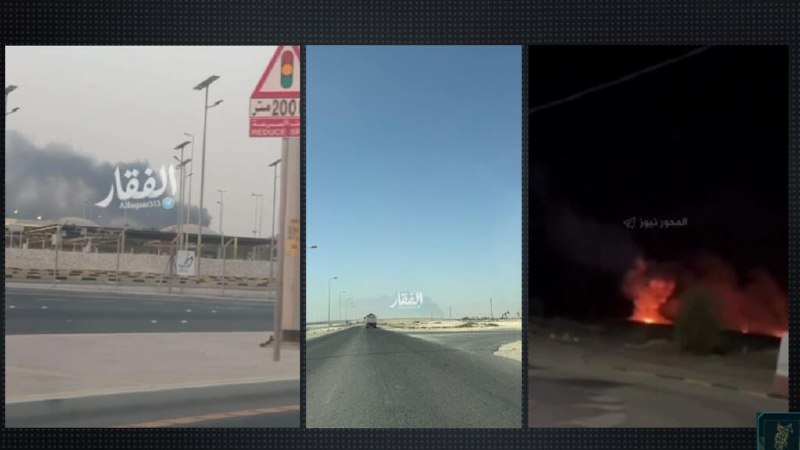
US aircraft struck targets inside Iran for a tenth consecutive night, Al Jazeera's English-language feed reported in a bulletin carried by the network's global channel at 03:52 UTC on 21 July 2026. The reporting, posted to the network's verified Telegram channel, gave no target list and did not name the platform, weapon type, or sortie base used. A separate Al Jazeera item, three minutes earlier at 03:49 UTC, framed the renewed action as a war that "resumes 30 days after MoU", shorthand for a memorandum of understanding that, on the channel's own framing, expired without a public renewal.
The two bulletins, read together, do two things at once. They confirm that the operational tempo has not slowed, ten nights of sustained bombardment is not a raid, it is a campaign. And they confirm that whatever diplomatic scaffolding held the fighting off in late June has, on this evidence, dissolved without ceremony. Neither the Pentagon, the White House, the Israeli Prime Minister's Office, nor the IDF Spokesperson has issued a corresponding readout as of the bulletin timestamps.
What the bulletins do and do not say
The Al Jazeera items are tight by necessity. They name no Iranian city struck on the night of 20–21 July, give no casualty figure, list no specific facility, and carry no on-the-ground attribution from Iranian state media beyond the implied Iranian target set. The Telegram captions are the whole story: duration of the campaign, and the collapse of the agreement that had, according to the second item's headline, paused it for a month. The channel does not specify whether the MoU in question was bilateral US–Iran, trilateral with a regional broker, or a back-channel arrangement that never had a public face.
Iranian state outlets did not appear in the thread context with parallel reporting on the strikes. Iran's official press, including IRNA, PressTV, Tasnim, and Mehr News, has historically contested US and Israeli framing of strikes on Iranian soil, often by denying damage and reframing the strikes as violations of sovereignty; their absence from the wire at this hour is itself a data point. It does not mean the strikes did not land, and it does not mean Tehran is not responding. It means the regime has not chosen to respond in English, on the channels Monexus tracked, between the bulletin times.
For now, the most defensible reading is a narrow one: ten nights of operation inside Iran, with no public extension of the arrangement that suspended it, and no public statement from any of the principals explaining the lapse.
Why a thirty-day clock matters
A memorandum of understanding is not a treaty. It is the kind of instrument that buys time without resolving the dispute. When a MoU of this kind is signed, the implicit contract between the parties is straightforward: each side gets a defined runway to either convert the text into something durable, or to walk away to a known baseline. The Al Jazeera headline treats the lapse not as an ambush but as a deadline that arrived.
The structural question is what the month was supposed to accomplish. If its purpose was de-escalation, the failed renewal suggests the underlying dispute hardened rather than softened during the pause. If its purpose was domestic political cover for one or both sides, the same failure can read as a calculation that the cover is no longer needed. Coverage routinely defers to the language of official spokespeople when a peace process is live; the silence in the same channels when it dies is part of the same pattern.
The same dynamic explains why the public read on what was signed in late June is thin. Memoranda of this kind are often deliberately underspecified, so that each side can claim it kept the deal in good faith while the other violated its spirit. That ambiguity is useful for as long as the deal holds, and corrosive the moment it collapses, because there is no public text to argue over.
The shape of the campaign
Ten consecutive nights of air activity is not a maximal-effort air campaign. It is a sustained pressure campaign, of the kind that the US military has run repeatedly over Iraq, Syria, and Yemen at various points since the early 2000s. Such campaigns are designed to impose costs on a target state's decision calculus without committing ground forces, and to be escalated or wound down on a political timeline rather than an operational one. The signal in the numbers is the routine of it: not a single decisive night, but a series of nights, each one making the next easier to authorise.
The Israeli dimension, while not named in these particular bulletins, is the other half of the picture. Israeli security concerns regarding Iran's nuclear programme, ballistic missile inventory, and proxy network have been a sustained theme of the past two decades, and Israeli strikes on Iranian-related targets in Syria and Lebanon have continued through multiple ceasefires. Iran's state-aligned outlets will, when they engage, frame the strikes as joint US–Israeli action; US and Israeli communications tend to keep the two campaigns administratively separate. The two framings will co-exist, and neither will be definitively settled by the present set of evidence.
The regional architecture, Gulf states with their own complicated relationships with both Washington and Tehran, a Türkiye that has positioned itself as a regional interlocutor, and Iraq whose airspace and territory sit between the two principal capitals, is, on this evidence, being asked to absorb the pressure without being asked to take a side in public.
What to watch by week's end
Three pieces of evidence will move the story in the next 72 hours. First, a Pentagon or National Security Council readout, even a summary one, that names a target set and states the legal authority; the absence of one keeps the campaign in the rhetorical zone where both sides can fill in the silence with their preferred narrative. Second, Iranian state media engagement: a Foreign Ministry statement, a parliamentary session, or an IRNA dispatch that confirms damage, names facilities, or denies impact. Third, any third-party readout from the IAEA on Iranian nuclear sites, which has been the historical trigger for both strikes and pauses and is the most likely venue for a renewed diplomatic conversation if one is still on offer.
The sources do not specify the original signatory parties to the MoU, the target list for the night of 20–21 July, or any Iranian official comment recorded before 03:52 UTC. Those gaps are not editorial caution. They are what the wire does not yet contain, and what reporting over the coming days will be measured against.
Desk note: Monexus treated the two Al Jazeera bulletins as a single evidentiary cluster rather than as two stories, because the thirty-day clock is the load-bearing fact. Iranian state-media framing will be sought out and weighed equally in follow-up reporting rather than read in advance.
Wire provenance
This editorial synthesis draws on the following public wire/social posts:
- https://t.me/aljazeeraglobal
- https://t.me/aljazeeraglobal
- https://en.wikipedia.org/wiki/Joint_Comprehensive_Plan_of_Action
- https://en.wikipedia.org/wiki/Iran%E2%80%93United_States_relations