US–Iran on a knife edge: intelligence doubts pressure campaign as casualties mount
A US intelligence assessment says new rounds of pressure will not bend Tehran, even as battlefield losses push Washington closer to a wider war. The contradiction is the story.
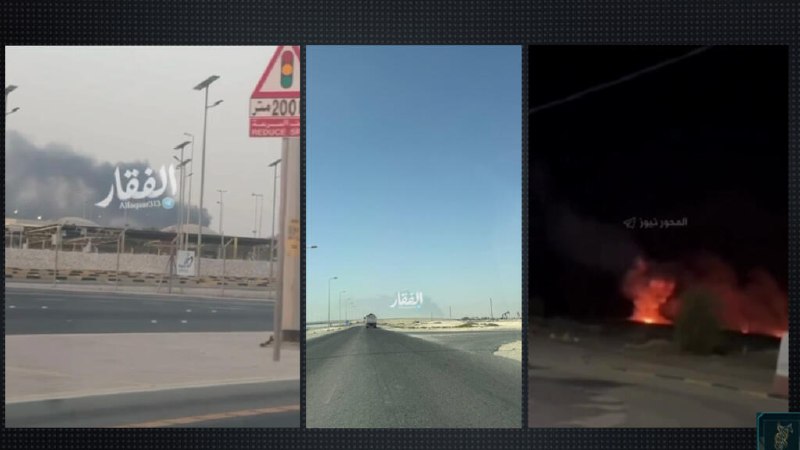
Two American servicemembers killed in the Gulf theatre this past week have tilted the Washington policy debate from sanctions arithmetic to a question that the US Intelligence Community now says, on the record, is the wrong one to be asking. According to an assessment surfaced on 21 July 2026 by the open-source channel OSINTdefender, citing the latest US Intelligence Community product, the Iranian government is unlikely to feel significant impact or soften its negotiating position as a result of new rounds of pressure. The same morning, a separate channel, CubaDebate, framed the moment in blunter terms: the United States is moving closer to a full-scale war with Iran after the death of its soldiers in the region.
The two readings are not, on inspection, in conflict. They are two layers of the same problem. One is the analytical verdict of an intelligence apparatus that has watched a pressure campaign run for years without producing a negotiating breakthrough. The other is the political reality that domestic tolerance for quiet attrition has a ceiling, and that ceiling is now being hit in real time, in uniformed coffins, in the middle of an election cycle.
What the intelligence product actually says
The OSINTdefender summary, timestamped 02:07 UTC on 21 July 2026, characterises the US Intelligence Community as judging that the Iranian government is unlikely to feel significant impact or soften its negotiating position as a result of new rounds of pressure. The phrasing matters. It does not say the pressure is failing. It says the targeted actor is unlikely to be the one feeling it. The assessment, as relayed, draws a line between the cost imposed on Iran's economy and the cost absorbed by the Iranian state as a decision-making body, and concludes the two curves are not the same curve.
That distinction is not new. It has been a staple of the sanctions literature for at least a decade, and inside US government products, it has been the consistent finding since the maximum-pressure campaign of 2018-2021. The reason it is news now is that it is being said out loud, in uncharacteristically plain language, at the precise moment the political class in Washington is asking sanctions to do work they have been failing to do for years.
What the battlefield is doing to the timetable
The CubaDebate wire, posted at 01:38 UTC on the same day, sets the political backdrop: US soldiers have died in the region, and the framing inside a significant slice of US-aligned media has shifted from "controlled escalation" to "heading towards a massive war with Iran." The two items, taken together, describe a system in which the instrument the United States has chosen to wield (sanctions, secondary pressure, naval posture, and episodic strikes) is doing less to bend the Iranian state than to bend the American political conversation.
This is the structural bind. Pressure that does not register on the target is, by definition, pressure on the imposer. The intelligence community has been telling successive administrations this in classified form. The leak, or the loosening of classification, that brought the verdict into the open on 21 July is itself part of the story: somebody inside the system wants the public version of the assessment to catch up with the private one.
The contradiction the next month will turn on
The administration's public position, to the extent it can be reconstructed from the two source items, is that more pressure produces more leverage. The intelligence community's reading, as summarised, is that more pressure, of the kind currently being applied, does not produce more Iranian movement. The CubaDebate framing implies that, with US casualties now on the board, the political incentive to escalate is rising while the analytical case for escalation is falling. That gap is the gap a wider war falls into.
A plausible alternative reading, and one that some voices inside the foreign-policy mainstream will articulate in the coming days, is that the intelligence product is describing a steady-state condition rather than a binding constraint. The argument runs that Iranian intransigence under any pressure regime is not proof that pressure fails; it is proof that the threshold for movement is high, and that the next round of pressure, properly structured around oil export enforcement and Revolutionary Guard Corps financial networks, would be the one that lands. That is a respectable argument on its own terms, and it is the argument an administration that wants to keep the pressure track open will reach for. It is not, however, the argument the intelligence community is currently making on the public record, and it is not the argument the political clock is currently running on.
What to watch before the next vote, the next strike, the next coffin
The next fourteen days will produce three datable events that will decide which reading governs. The first is any declassification, formal or informal, of further detail from the US Intelligence Community assessment; the public version summarised on 21 July is the headline, not the body. The second is the next round of Iranian-language state-media framing, which will tell observers whether Tehran reads the assessment as an American admission of weakness or as a negotiating opening; the answer is, almost certainly, both at once, and the proportion is the signal. The third is the next incident at sea, in the Gulf, or along the Iraqi-Syrian corridor, which is the variable that has, so far, done more than any intelligence product to redraw the US position.
What remains uncertain, and what the two source items do not resolve, is whether the White House is preparing to act on the intelligence verdict or to override it. The CubaDebate framing suggests the political momentum is in the override direction. The OSINTdefender summary suggests the analytical community is bracing for that override and is, in the understated way of intelligence products, putting its dissent on the record before the fact. The difference between those two outcomes is the difference between a pressure campaign that is failing slowly and a war that begins because the instruments of pressure have exhausted themselves, and the politics have not.
Desk note: The wire has framed the past 48 hours as a story about Iranian resolve. Monexus reads it as a story about the gap between what the instruments of US policy are designed to do and what they are doing, and the political cost of that gap becoming visible at the same moment as flag-draped transfers at Dover.
Wire provenance
This editorial synthesis draws on the following public wire/social posts:
- https://t.me/s/CubaDebate
- https://t.me/s/osintlive